Introduction
Few decades have left a more unapologetic, electric imprint on men’s grooming than the 1980s. It was a decade that dared — loudly, boldly, and with extraordinary volume. Hair was not merely a style choice; it was a manifesto. From the boardrooms of Wall Street to the neon-lit stages of rock arenas, a man’s hairstyle communicated his tribe, his attitude, and his aesthetic universe.
Decades later, the influence of 1980s mens hair trends has not merely survived — it has evolved. Designers, stylists, and tastemakers continue to revisit this era’s most iconic silhouettes, reinterpreting them through the lens of contemporary grooming, modern texture techniques, and elevated product knowledge.
Whether you are drawn to the rebellious geometry of the new wave undercut, the sun-drenched romance of feathered layers, or the audacious drama of a sculpted power coiff, this guide celebrates 12 defining 1980s mens hair trends — and shows you exactly how to wear them today.
1. The Classic Mullet
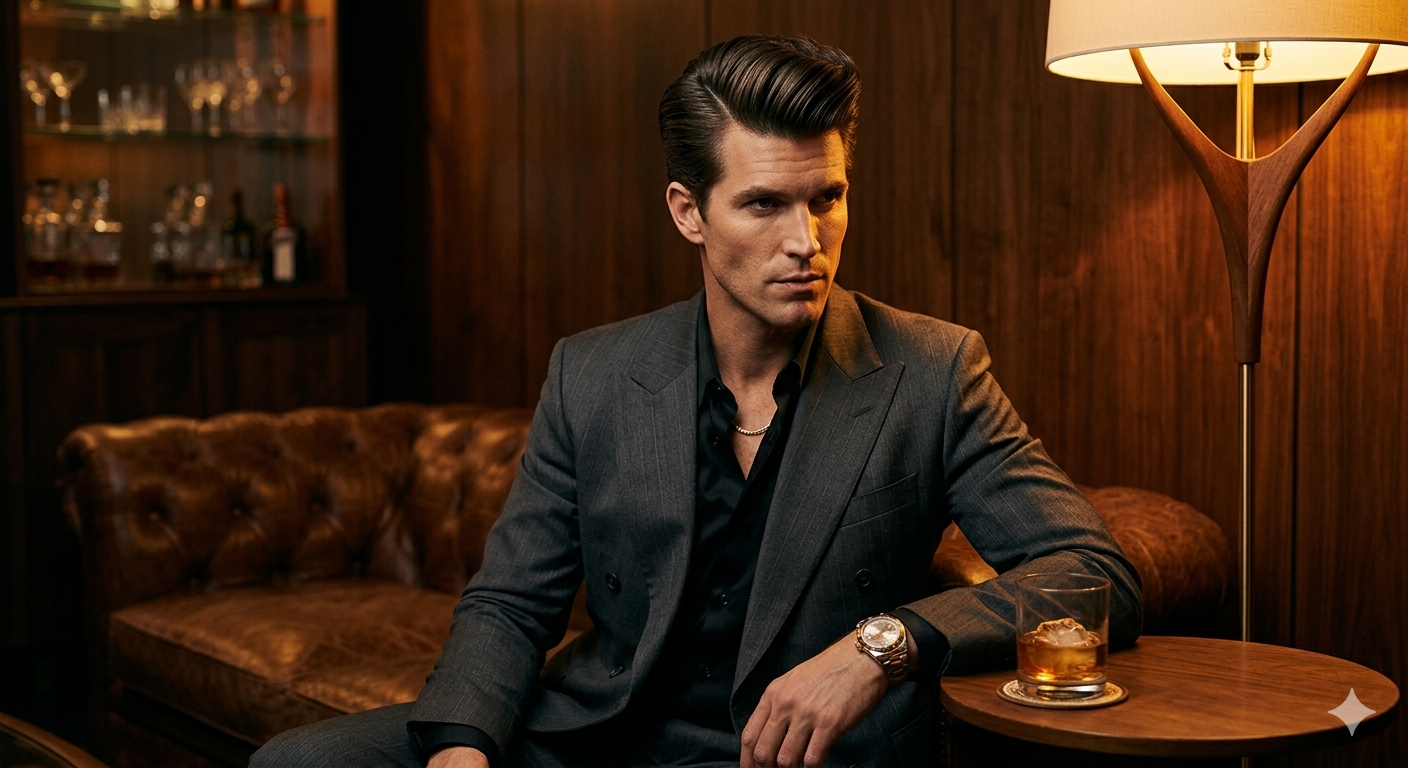
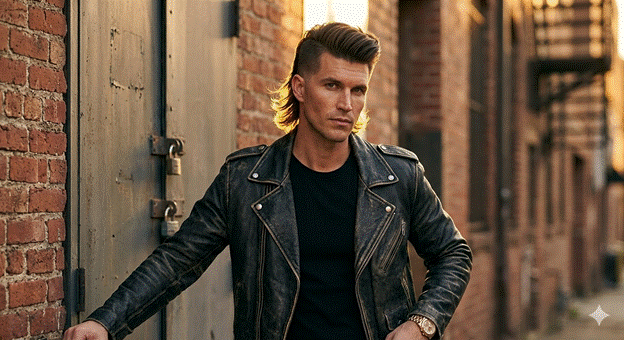
No hairstyle captures the contradictory spirit of the 1980s quite like the mullet: business at the front, party at the back. Originally popularized by rock musicians and later adopted across subcultures worldwide, the mullet was both practical and theatrical — a cut that worked in an office and thrived on a stage.
The modern interpretation softens the severe disconnection between front and back, opting instead for a more graduated, textured transition. The result is a cut that retains the mullet’s irreverent energy while feeling decidedly contemporary.
Styling Tip: Ask your barber for a textured, disconnected back with a fade on the sides rather than hard-clipped length. Use a light pomade to define the front and a sea salt spray on the back for natural movement. Tonal contrast — darker roots, lighter ends — elevates the look into editorial territory.
2. Feathered Layers
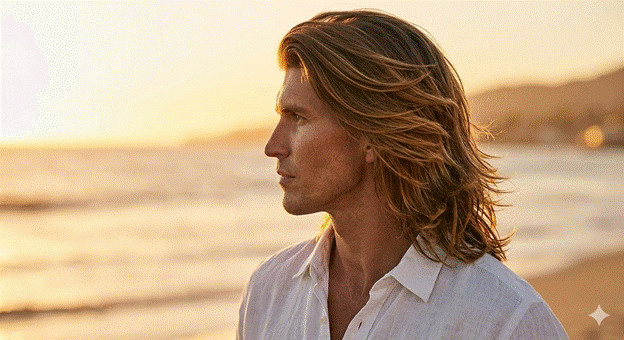
The feathered hairstyle — those long, swept-back layers parted dramatically at the center or side — is one of the era’s most romantically beautiful expressions of masculinity. Inspired by the golden-hued California surfer aesthetic, feathered layers communicated sun, freedom, and effortless confidence.
Today, feathered layers are experiencing a quiet but deliberate revival among men who gravitate toward the softer, more organic side of retro grooming. The texture and movement of feathered hair photographs beautifully, making it a natural for editorial and social content.
Styling Tip: Grow hair to at least collar length before asking your stylist for long layers swept back from the face. A round brush blow-dry lifts and separates the layers. Finish with a lightweight shine serum — just a single drop — to achieve the luminous, wind-kissed effect that defines the look.
3. The Jheri Curl
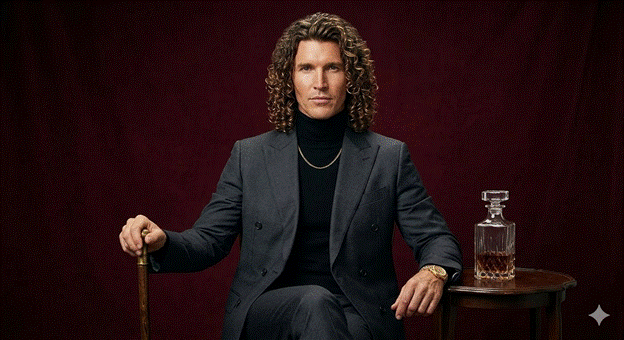
The jheri curl is one of the most culturally significant hairstyles in 20th-century grooming history. Defined by its softly coiled, moisturized ringlets with a characteristic sheen, the jheri curl blended glamour and edge in equal measure. Stars from Michael Jackson to Ice Cube made it an enduring icon of Black style and cultural identity.
Contemporary interpretations of the jheri curl celebrate its heritage while updating the chemical process with gentler, more nourishing curl-enhancing techniques that prioritize hair health without sacrificing the signature lustrous finish.
Styling Tip: Work with a stylist experienced in curl activation to achieve modern jheri curl results. Moisturizing activator creams and a consistent moisture routine are essential. A satin pillowcase preserves the curl definition and shine overnight, maintaining the polished aesthetic the style demands.
4. The New Wave Undercut
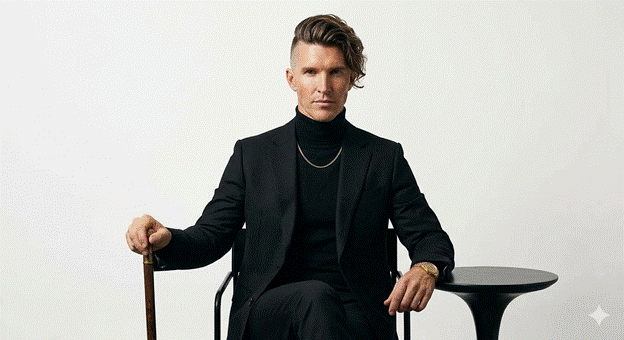
As post-punk gave way to new wave in the early 1980s, a new vocabulary of men’s grooming emerged — sharp, architectural, and deeply deliberate. The new wave undercut featured closely cropped or shaved sides with a dramatically longer, often side-swept or slicked top. It was confrontational geometry made glamorous.
This silhouette forms the direct ancestor of today’s most popular men’s cuts. The contemporary undercut owes everything to the new wave era — and wearing it with an awareness of that lineage adds a layer of considered stylishness that elevates it beyond trend.
Styling Tip: The modern new wave undercut works best when the top is kept longer than the cut’s 1980s predecessors — approximately three to four inches — allowing for versatility in styling. A strong-hold clay swept to one side recreates the era’s signature swoop with a matte, editorial finish.
5. The Power Coiff
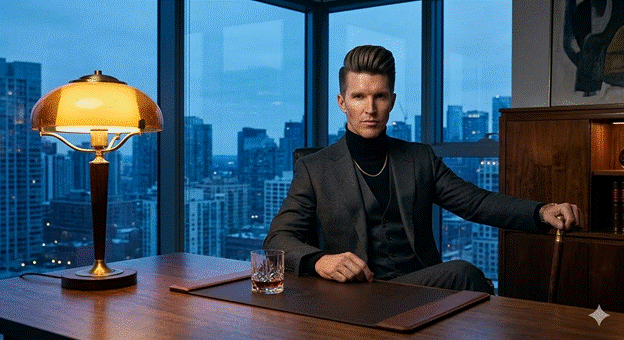
The power coiff was the hairstyle of ambition. Worn by Wall Street brokers, Hollywood executives, and political figures alike, it was large, structured, and immaculately groomed — a sculptural display of control and authority. Volume was achieved through vigorous blow-drying and generous amounts of hairspray, resulting in a silhouette that commanded any room it entered.
Worn today with slightly reduced volume and a modern matte product, the power coiff becomes a statement of confident masculinity that feels fresh rather than retro.
Styling Tip: A volumizing mousse applied to damp hair, followed by a high-heat blow-dry with a paddle brush, creates the essential volume. Finish with a medium-hold pomade to tame the shape without the era’s signature helmet stiffness. The result is structure without rigidity — authority without effort.
6. Frosted Tips
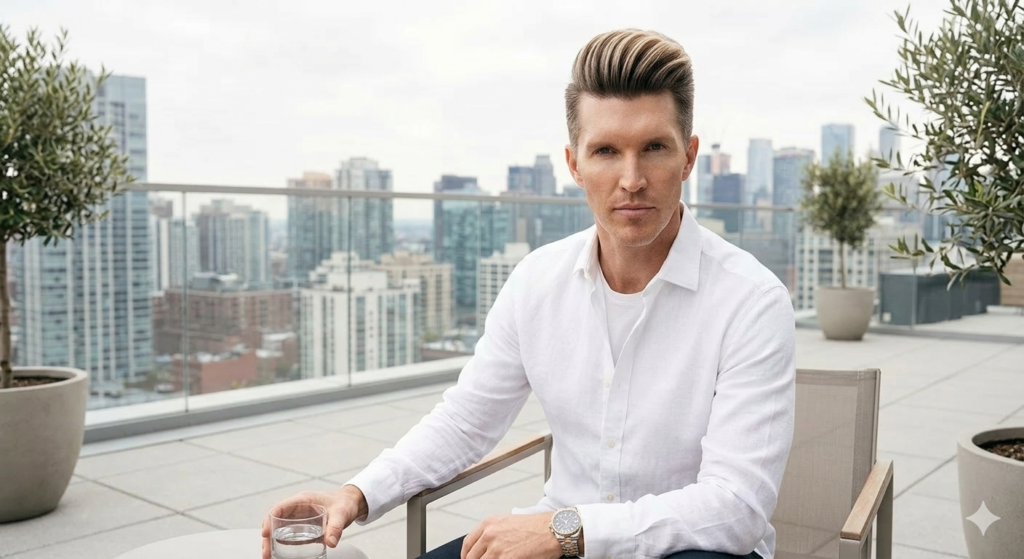
Frosted tips — the selective lightening of just the very ends of the hair — emerged in the mid-to-late 1980s as a grooming shortcut to the sun-bleached, surf-ready look. Against darker bases, the contrast created a naturally dimensional effect that required surprisingly little maintenance beyond the initial color application.
Modern frosted tips have been elevated significantly by today’s color techniques. Balayage-inspired approaches allow colorists to paint the ends with extraordinary precision, creating a gradient that looks genuinely sun-kissed rather than artificially constructed.
Styling Tip: Request a hand-painted tip lightening rather than a traditional cap frost for a softer, more organic result. Cool ash tones work beautifully for lighter complexions; warm golden tips suit olive and deeper skin tones. A purple toning shampoo used weekly keeps the lightened ends fresh and vibrant.
7. The Slicked-Back Look
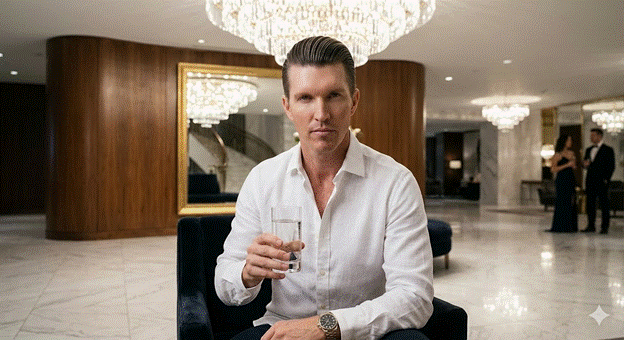
The slicked-back hairstyle distilled the 1980s power aesthetic to its most elemental form. Inspired equally by 1950s greaser culture and the decade’s obsession with visible luxury, the slicked-back look was sharp, intentional, and deeply cinematic. Gordon Gekko made it the visual shorthand for unapologetic ambition.
Today, the slicked-back style retains all of its commanding presence while benefiting from superior modern products that provide hold and shine without the heavy, greasy residue of traditional pomades.
Styling Tip: Apply a water-based pomade to towel-dried hair and comb straight back with a fine-tooth comb. The key is uniform tension — no rogue pieces. For a contemporary update, allow a single loose piece to fall at the forehead for an intentional undone quality that reads as deliberately stylish rather than simply neat.
8. The Rat Tail
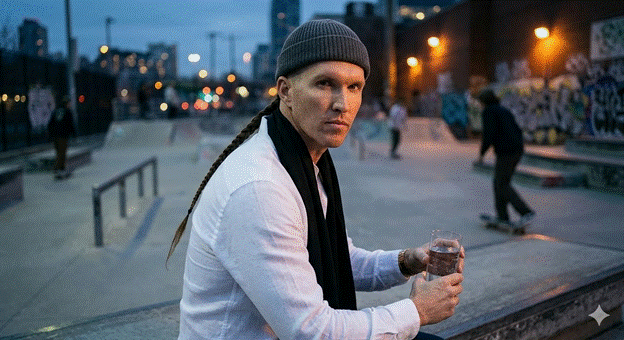
Perhaps the most polarizing entry in any catalog of 1980s mens hair, the rat tail was a narrow, elongated strand of hair grown at the nape of the neck while the rest of the head remained shorter. In its heyday it was a mark of subcultural identity — a quiet act of grooming rebellion.
Today, the rat tail is being reclaimed by fashion-forward communities as an act of conscious, ironic style. Worn deliberately and with awareness of its aesthetic heritage, it functions less as nostalgia and more as a sophisticated sartorial gesture.
Styling Tip: A contemporary rat tail works best when it is thin, well-defined, and no longer than mid-back length. Keep the rest of the hair very clean and sharp — a tight taper or fade — so the contrast is stark and intentional. Braid the tail for a more refined finish, or leave it loose for maximum visual impact.
9. The Big Perm
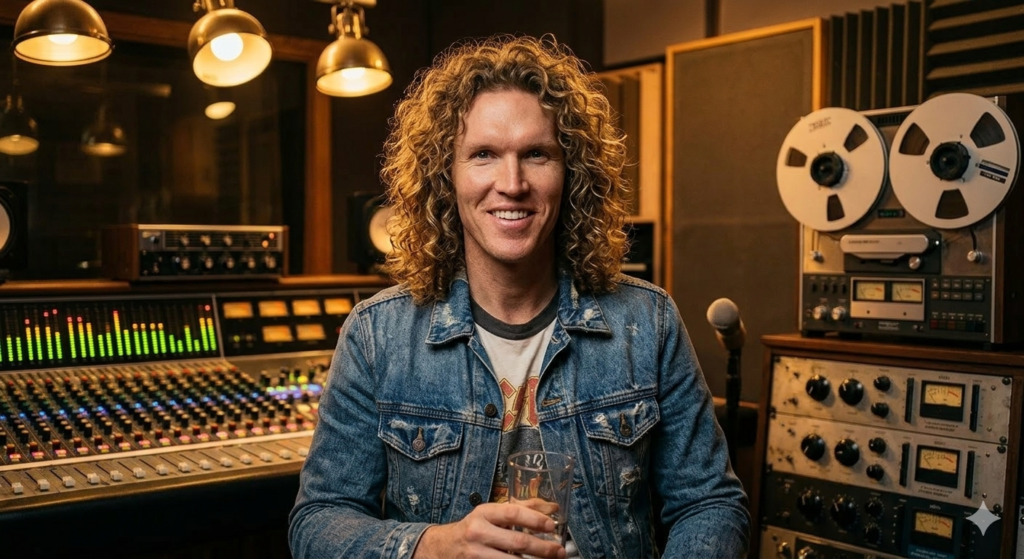
In the 1980s, the perm was democracy in hair form — men of every subculture, from rock stars to suburban accountants, embraced the voluminous, bouncy ringlets that a chemical perm delivered. Big, unapologetic curl was the defining texture of the decade, communicating energy, movement, and a certain joyful excess.
The modern interpretation of the men’s perm prioritizes natural-looking curl patterns over the uniform, tight coils of the original. Today’s technique creates waves and curls that appear entirely organic — effortlessly textured rather than chemically processed.
Styling Tip: Consult with a stylist who specializes in modern perms to determine the correct rod size for your desired curl. Larger rods produce loose, beachy waves; smaller rods create tighter ringlets. A sulfate-free shampoo and a rich curl-defining cream will maintain the texture’s integrity between appointments.
10. The High-Top Fade
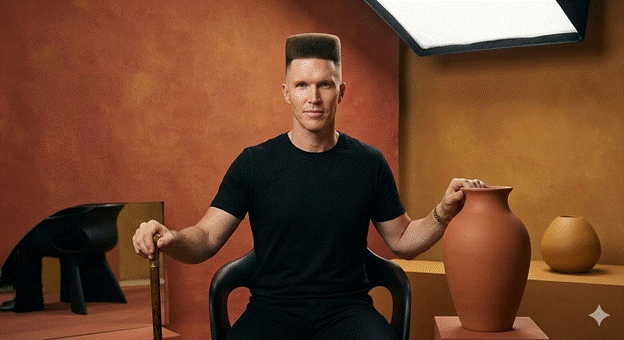
Born from the intersection of hip-hop culture, Black barbering artistry, and the era’s love of sculptural boldness, the high-top fade is one of the most architecturally extraordinary hairstyles ever conceived. The hair at the crown was grown out and shaped into a perfectly flat, geometric platform while the sides were faded to skin — a precise, dramatic juxtaposition of structure and sharpness.
Today, the high-top fade is celebrated both as a cultural landmark and a contemporary style statement. Its geometric precision aligns naturally with the current fashion world’s appreciation for architectural menswear and clean, structural aesthetics.
Styling Tip: Maintenance is the foundation of a perfect high-top fade — plan for a barber visit every two to three weeks to maintain the fade’s sharpness. A styling sponge or twist technique builds and defines the top’s texture. Moisturizing the hair daily preserves the crown’s definition and prevents the flattening that undermines the silhouette.
11. The Mohawk
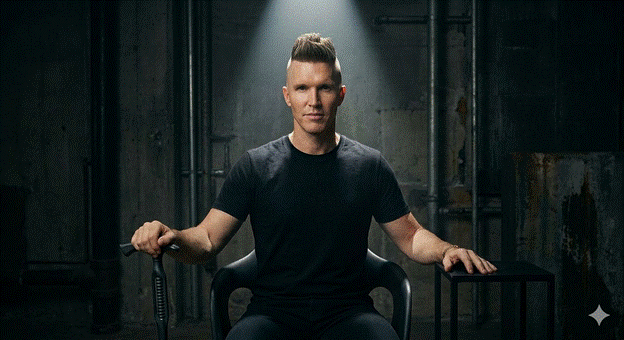
The mohawk’s 1980s iteration was a product of punk’s collision with mainstream culture — shaved sides, a central strip of hair styled vertically to maximum height, often in vivid, non-natural colors. It was confrontation as aesthetic, identity as architecture, an unmistakable declaration of individuality.
Worn today in a softened form — the faux hawk, or a low-key mohawk with texture rather than rigid height — this silhouette retains its energy while achieving a modern wearability that the original never sought.
Styling Tip: A modern mohawk works beautifully as a medium-length, textured strip with a skin fade on either side. A strong-hold matte clay provides the lift and definition needed to build the central strip upward. For color, a single bold tone on the strip against natural sides creates a clean, high-impact contrast.
12. The Crimped Look
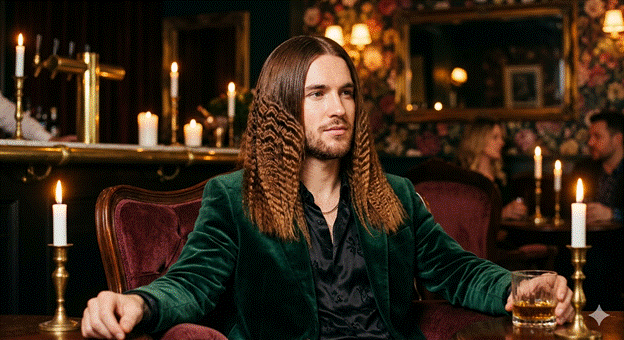
Crimping — creating a zig-zag, rippled texture across the hair using a specialized iron — was one of the 1980s’ most purely playful and visually dramatic styling techniques. It transformed straight hair into a textured, dimensional landscape of angular waves, adding extraordinary visual volume and movement.
Today, crimping has returned in a far more refined form. Applied selectively to the mid-lengths and ends rather than the entire head, modern crimping creates a sophisticated texture effect that photographs with remarkable depth and artistry.
Styling Tip: Use a modern ceramic crimping iron with adjustable heat settings, and apply a heat-protectant spray generously before styling. For a contemporary approach, crimp only the lower two-thirds of the hair and leave the roots smooth — the contrast between sleek roots and textured lengths creates a distinctly modern editorial quality.
Conclusion
The 1980s was not a decade that asked permission — and that uncompromising confidence is precisely what makes its hair legacy so enduring. These 12 defining trends represent a spectrum of masculinity, creativity, and cultural expression that no subsequent decade has fully replicated.
What makes these styles so compelling today is not nostalgia alone. It is the recognition that truly iconic style transcends its era. The mullet, the jheri curl, the high-top fade, the power coiff — each carries within it a design intelligence, a cultural resonance, and an aesthetic boldness that remains as relevant and inspiring now as it was four decades ago.
Wear these styles with the context they deserve — as statements of intention, craft, and identity. The 1980s demanded you be seen. That invitation remains open.
SEO FAQs
FAQ 1: What were the most popular mens hairstyles in the 1980s?
The most iconic 1980s mens hairstyles included the mullet, the jheri curl, the power coiff, the new wave undercut, feathered layers, and the high-top fade. Each was tied to distinct subcultures and music genres, from rock and punk to hip-hop and new wave, making the decade one of the most stylistically diverse in grooming history.
FAQ 2: Are 1980s mens hair trends coming back in style?
Absolutely. Many 1980s mens hair trends have experienced notable revivals in recent years. The mullet, undercut, slicked-back look, and permed texture have all re-emerged on runways, in barbershops, and across social media platforms. Modern stylists are reinterpreting these silhouettes with updated techniques and products that make them feel fresh and contemporary.
FAQ 3: How can I modernize an 1980s hairstyle?
The key to modernizing any 1980s hairstyle is reducing the volume and rigidity of the original while preserving its essential silhouette. Replace heavy-hold hairsprays with matte clays or light pomades. Introduce texture through modern cutting techniques rather than chemical processes. Keep the structure intentional but allow for natural movement — the result honors the era without feeling like a costume.
FAQ 4: What products were used for 1980s mens hairstyles?
The 1980s relied heavily on aerosol hairsprays for volume and hold, Brylcreem and oil-based pomades for the slicked styles, and curl activator sprays for jheri curls. Today’s equivalents — water-based pomades, matte styling clays, texturizing sprays, and nourishing curl creams — deliver superior results with better hair health and a more natural finish.
FAQ 5: Which 1980s hairstyle suits modern professional settings?
The slicked-back look, the refined power coiff, and the new wave undercut translate most naturally into modern professional environments. Each offers structure and intention without the overt theatricality of styles like the mohawk or high-top fade. With contemporary products and a slightly reduced scale, these cuts project authority and grooming sophistication in any setting.