Introduction
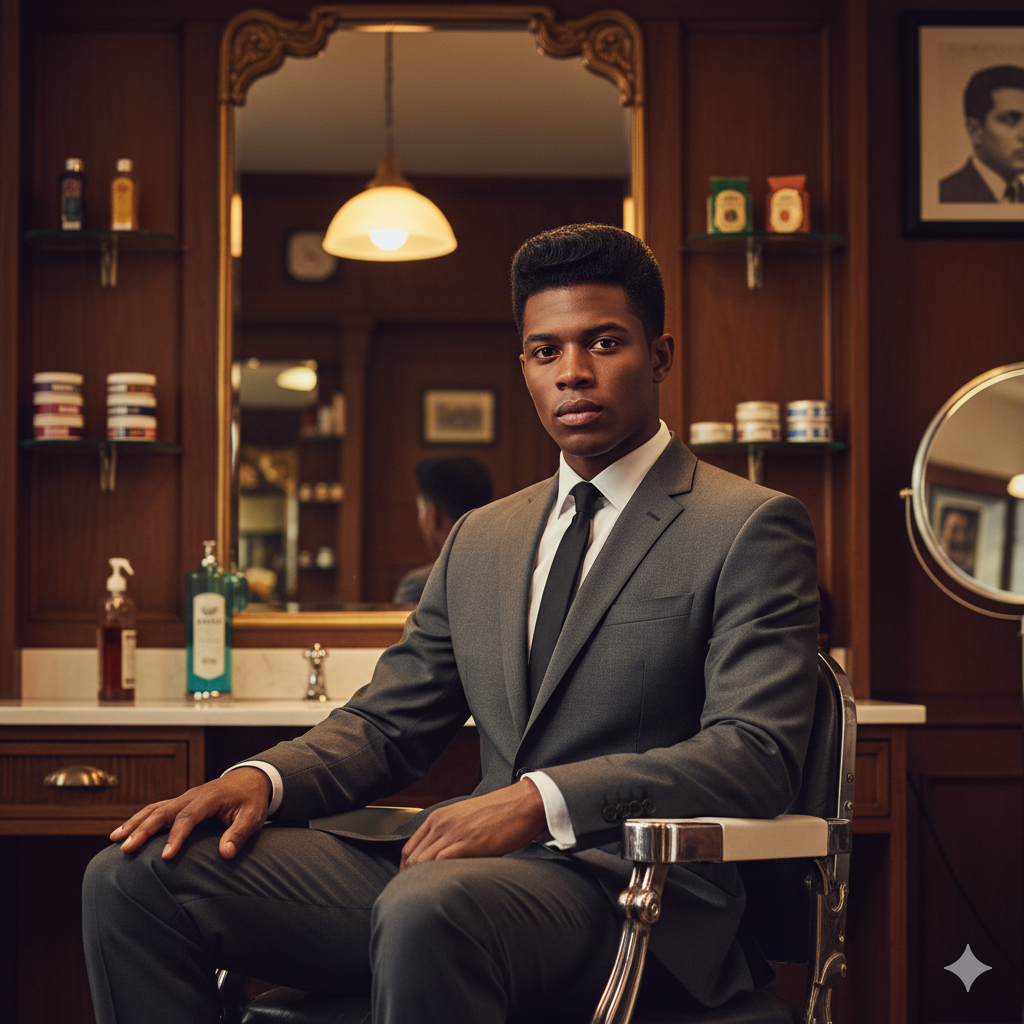
Few decades in fashion history have produced a more enduring legacy in men’s grooming than the 1950s. It was an era of bold silhouettes, carefully sculpted hair, and a new kind of masculinity — one that straddled the line between polished respectability and brooding rebellion.
From the grease-swept Pompadour favoured by rock and roll icons to the collegiate cleanliness of the Ivy League cut, 1950s mens hairstyles captured the tension of an entire generation finding its identity. They were not simply hairstyles — they were declarations.
What makes these styles so remarkable is their staying power. Decades later, they continue to appear on modern runways, in barbershop portfolios, and on the most stylish men in contemporary culture. In this guide, we explore 12 iconic 1950s mens hairstyles — their history, their character, and exactly how to wear them today.
1. The Pompadour
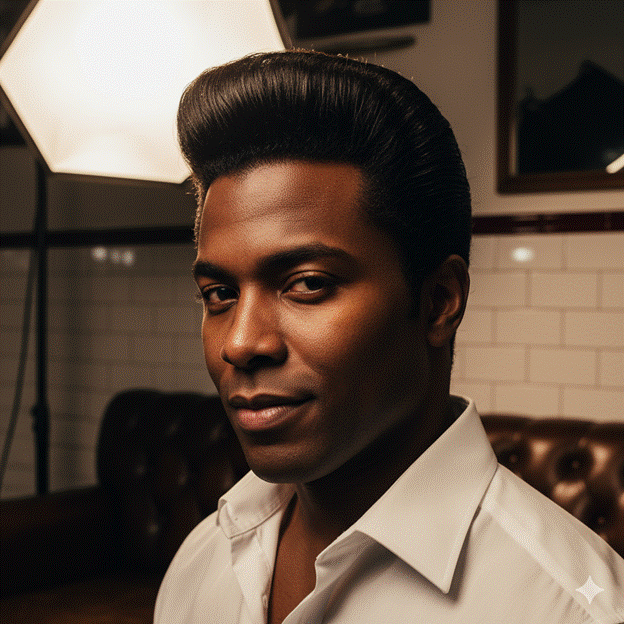
No hairstyle defines the 1950s more completely than the Pompadour. Swept dramatically upward and back from the forehead, this style created a towering volume that became the visual shorthand for the entire decade’s masculine aesthetic.
Originally associated with Madame de Pompadour of 18th-century France, the style was reinvented in the 1950s by a generation of rock and roll pioneers. The result was something entirely new — part elegance, part rebellion, and entirely unforgettable.
Today’s Pompadour is interpreted with greater versatility: tighter fades on the sides, looser volume on top, and styling products that offer hold without the rigidity of classic petroleum-based pomades.
✦ Styling Tip: Use a matte clay for a modern Pompadour or a high-shine water-based pomade for the authentic 1950s finish. Work product through towel-dried hair and use a fine-tooth comb to sculpt upward from the roots.
2. The Duck’s Ass (DA)
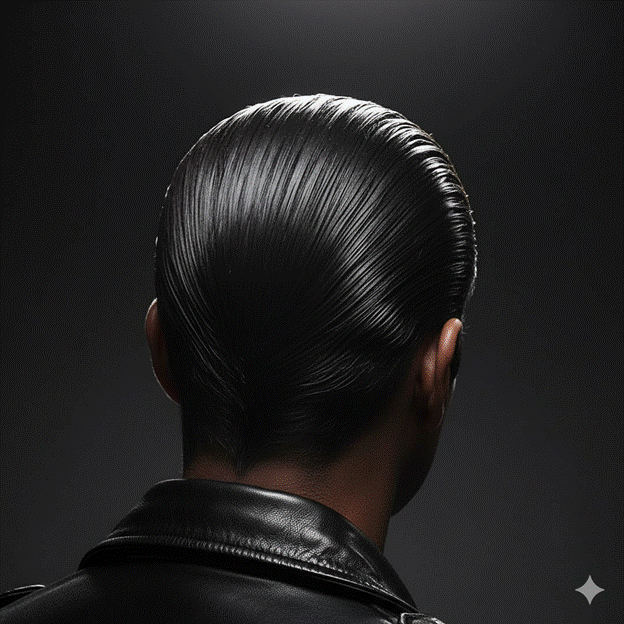
Rebellious, irreverent, and impossibly cool — the Duck’s Ass, or DA, was the hairstyle of choice for the mid-century greaser subculture. The sides were combed back toward the center of the head and met at the nape in a distinctive ridge, mimicking the tail of a duck with knowing irony.
While the Pompadour announced itself from the front, the DA made its statement from behind — a deliberate gesture toward those watching as you walked away. It was worn with leather jackets, turned-up collars, and a studied indifference to convention.
The DA remains a compelling style choice today for men who want their hair to carry character and a sense of narrative. It pairs beautifully with a classic taper cut on the sides.
✦ Styling Tip: A petroleum jelly-based pomade provides the slip needed to coax the hair toward the center. Use a fine comb to define the central parting at the nape and finish with a light-hold hairspray to set the shape without stiffness.
3. The Slicked-Back Look
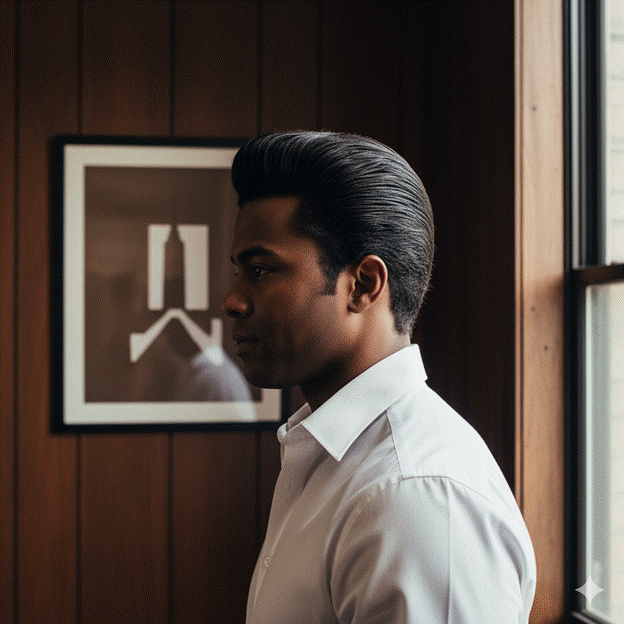
Where the Pompadour reached upward for drama, the slicked-back look swept everything smoothly rearward in a composition of controlled sleekness. The hair was combed straight back from the forehead, lying flat and luminous against the skull — a style that projected authority and intentional restraint.
The slicked-back look was the preferred choice of businessmen, film stars, and the well-dressed urban professional of the 1950s. It communicated discipline and refinement in a way that required considerable effort to appear entirely effortless.
In contemporary barbering, this style is frequently paired with a skin fade or hard part to modernise the silhouette while preserving its essential character.
✦ Styling Tip: A high-shine pomade applied to damp hair creates the classic lacquered finish. Use a wide-tooth comb first to distribute the product evenly, then a fine-tooth comb for final definition. Allow to air dry for maximum hold.
4. The Ivy League Cut
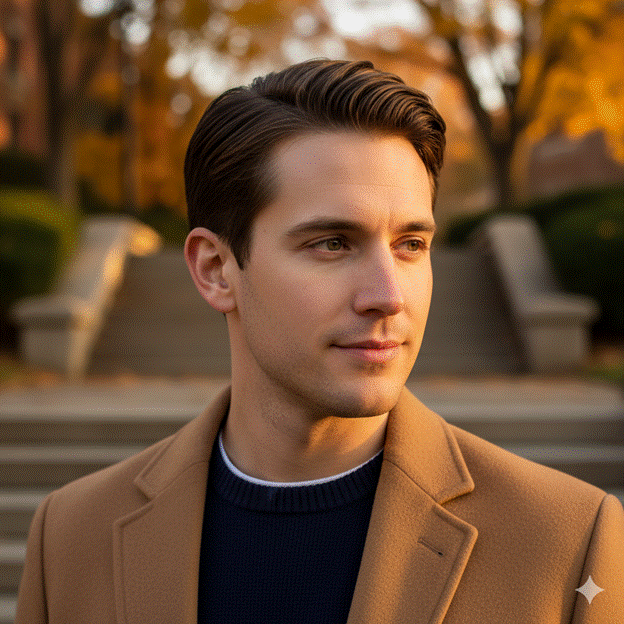
The Ivy League cut — also known as the Harvard Clip or Princeton — was the collegiate counterpoint to the greaser rebellion happening elsewhere in 1950s culture. Clean, cropped, and impeccably groomed, it was the hairstyle of academic ambition and East Coast preppy sensibility.
The style featured a short side part with slightly longer hair on top — enough to comb to one side with a clean, crisp line. There was nothing excessive about it. Every element was in service of clean, approachable elegance.
The Ivy League cut has never truly gone out of fashion. It remains one of the most universally flattering and professional men’s cuts available — a style that works as confidently in a boardroom as it does at a weekend garden party.
✦ Styling Tip: Ask your barber for a 1 or 2 on the sides with a scissor finish on top. A light pomade or cream applied to slightly damp hair and combed to one side with a sharp part produces the definitive Ivy League finish.
5. The Flat Top
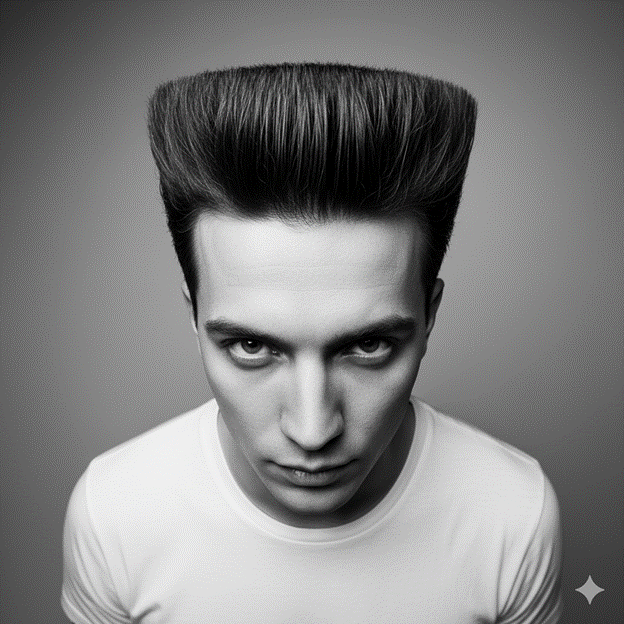
The Flat Top was geometry made manifest in hair — a precisely levelled surface of cropped hair on top, elevated slightly above the sides, creating a silhouette of startling architectural clarity. It was a style that demanded both excellent technique from the barber and confident self-presentation from the wearer.
Popularised in part by military culture and later adopted by jazz musicians and urban fashion-conscious men, the Flat Top occupied an interesting middle ground between disciplined precision and expressive individuality.
The modern Flat Top has evolved with refined fades on the sides and more creative interpretations of the flat surface — sometimes slightly rounded, sometimes with geometric designs cut into the sides.
✦ Styling Tip: Flat Tops require regular barbershop visits every 2–3 weeks to maintain the level surface. A firm-hold gel or wax applied to dry hair keeps the top surface crisp throughout the day.

6. The Crew Cut
The Crew Cut is perhaps the most enduring and universally adopted men’s hairstyle of the 20th century, and it reached its cultural apex in the 1950s. Short on the sides, slightly longer on top, and tapered cleanly at the neck — it was simplicity elevated to an art form.
Originally associated with collegiate rowing teams and military service, the Crew Cut communicated physical readiness, confidence, and no-nonsense masculinity. It was the style of men who did not need to announce themselves through their appearance — their presence was enough.
Today the Crew Cut remains as relevant as ever, particularly in its modern interpretation with skin fades and textured finishes that add contemporary dimension to the classic form.
✦ Styling Tip: The proportions of a Crew Cut matter enormously — ask your barber to leave enough length on top to create slight texture. A small amount of matte wax worked through the top adds definition without weight.
7. The Side Part
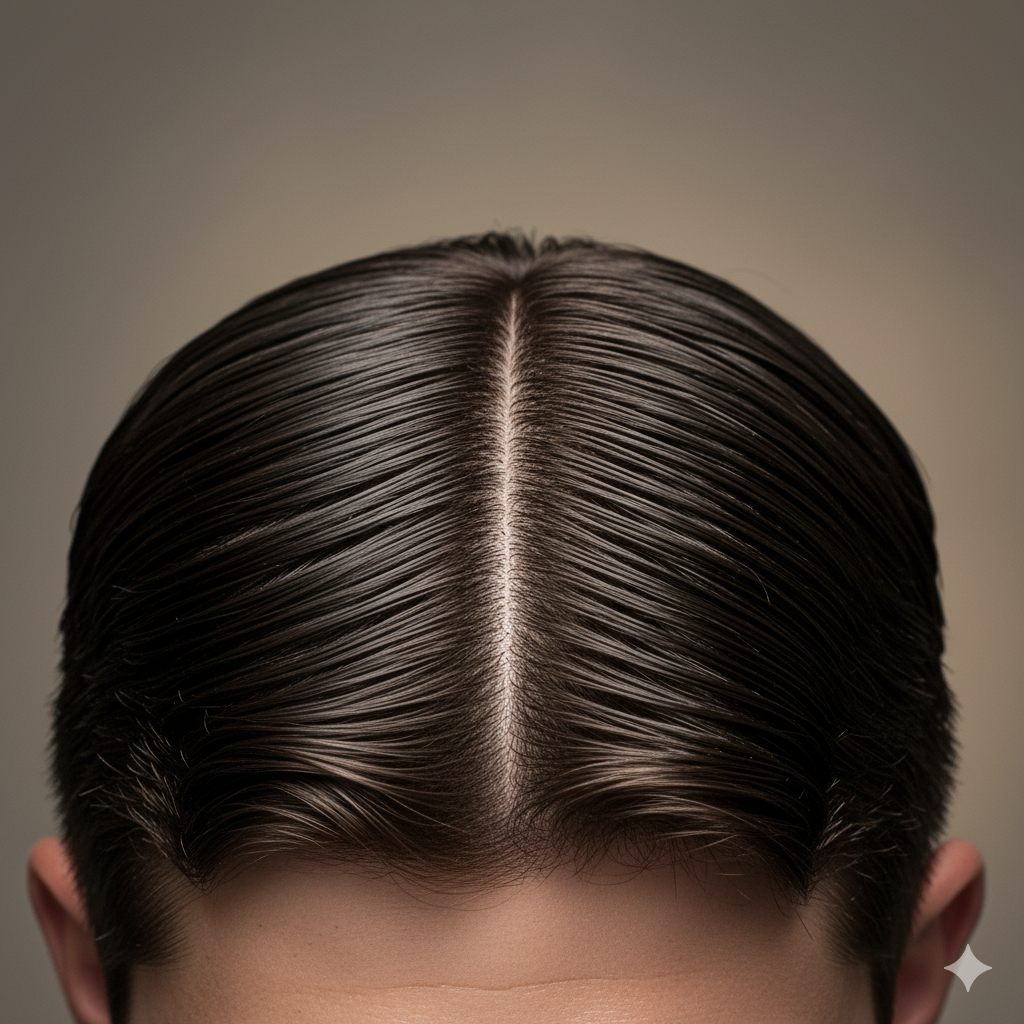
The Side Part was the defining element of mid-century masculine elegance — a clean, deliberate line drawn through the hair that divided the world into neat halves with authoritative clarity. In the 1950s, it was worn by everyone from Hollywood leading men to the man behind the bank counter.
What the Side Part offered was visual organisation and a sense of intentional grooming that signalled care, precision, and self-respect. The part itself was a statement — proof that this man had stood before his mirror that morning and attended to the details.
The contemporary Side Part is frequently paired with an undercut or taper fade, creating a modern tension between the classic upper architecture and the refined lower silhouette.
✦ Styling Tip: Use a fine-tooth rat-tail comb to create a sharp, clean part. Apply a medium-hold pomade to damp hair and comb firmly to one side. The part should be arrow-straight from the front hairline to the crown.
8. The Boogie Cut
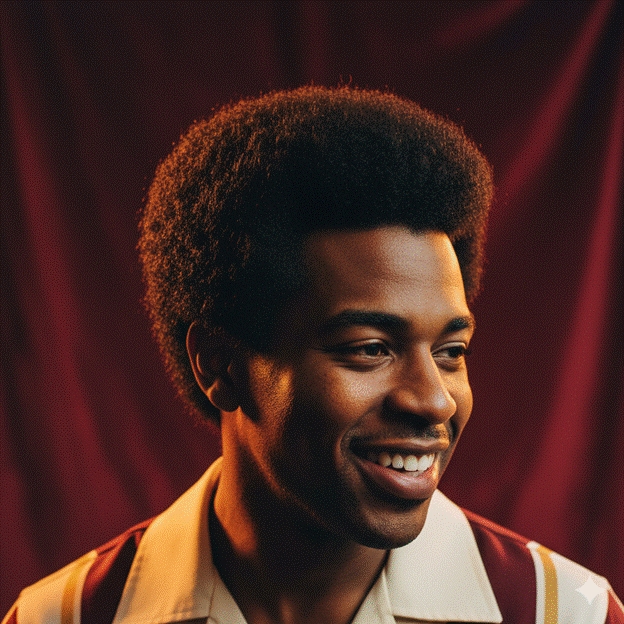
The Boogie Cut occupied a fascinating stylistic territory between the full sweep of the Pompadour and the compactness of the Crew Cut. The hair was worn short on the sides and back but with considerable volume on top — combed back in waves or curls that carried a relaxed, rhythmic energy perfectly suited to the era’s dance halls and jazz clubs.
It was a style for men who wanted to move freely — men whose social lives demanded hair that could survive a dance floor and still look deliberate at the end of the evening. The Boogie Cut had an easiness to it that more severe styles lacked.
Revived periodically by rockabilly and vintage fashion communities, the Boogie Cut brings an irresistible nostalgic charm to any contemporary wardrobe.
✦ Styling Tip: Natural-hold pomades or hair creams work best for the Boogie Cut’s relaxed texture. Finger-style the hair back from the forehead while damp, allow to dry naturally, and finish with a light-hold spray to preserve the wave.
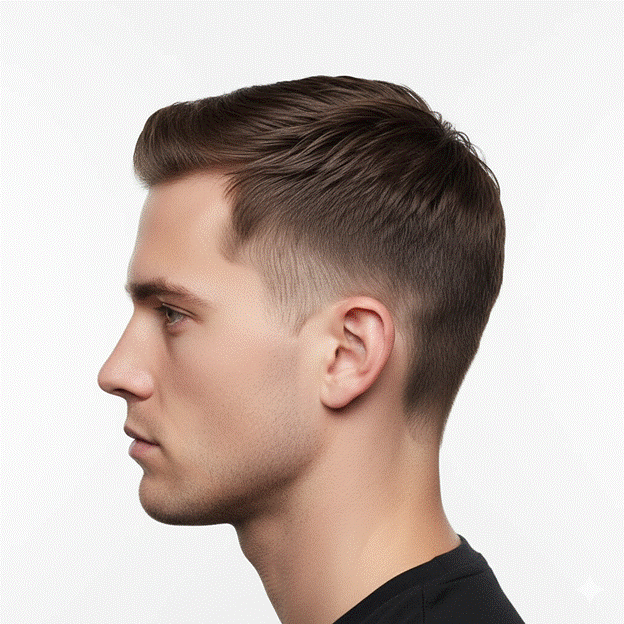
9. The Contour Cut
The Contour Cut was a style defined by its relationship to the shape of the head — close on the sides, graduated carefully over the occipital bone, and shaped at the nape to follow the natural contours of the skull. The result was a remarkably clean, sculptural look that prioritised form over flamboyance.
This was a style for the man who understood that subtlety could be its own form of sophistication. The Contour Cut required exceptional barbering skill to execute well — its beauty was in the seamlessness of the graduation rather than any dramatic visual gesture.
The principles of the Contour Cut live on in today’s skin fades and blended tapers, making it one of the most influential technical styles in the history of men’s barbering.
✦ Styling Tip: Regular visits every 3 weeks are essential to keep the graduation clean. Ask your barber for a tapered neckline rather than a blocked one to preserve the natural, sculptural quality of the style.
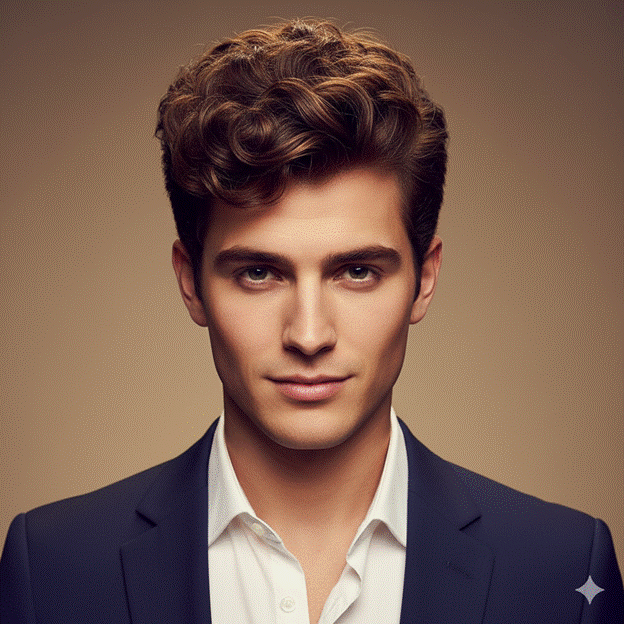
10. The Quiff
Where the Pompadour relied on sheer volume swept dramatically backward, the Quiff directed its energy forward and upward — a roll of hair at the front hairline that broke toward the forehead with casual, effortless charm. It was a style that felt both deliberate and spontaneous, which was perhaps its greatest achievement.
The Quiff was the province of the style-conscious young man who wanted the visual impact of the Pompadour without its full theatrical commitment. Paired with a clean taper on the sides, it created a silhouette that was simultaneously cool and approachable.
The modern Quiff remains one of the most popular men’s hairstyles globally — its proportions updated, its finish options expanded, but its essential character unchanged since the 1950s first gave it to the world.
✦ Styling Tip: Blow-dry the front section of hair upward and forward using a round brush to build the Quiff’s characteristic lift. A medium-hold pomade or styling cream maintains the shape without rigidity throughout the day.
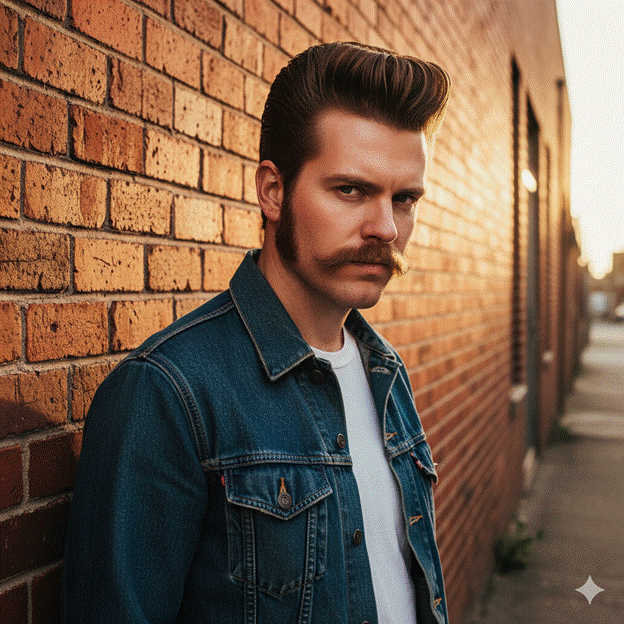
11. The Rockabilly Style
Rockabilly style was less a single hairstyle than a complete aesthetic philosophy — an attitude worn on the head as much as expressed through a guitar. Drawing from both country music traditions and urban rock and roll culture, the Rockabilly look combined elements of the Pompadour, the DA, and the Boogie Cut into something uniquely kinetic and expressive.
The hair was typically swept back with significant volume, often with sideburns extending to the mid-ear, and finished with the distinctive shine of a heavy pomade. It was a look that communicated passionate engagement with sound, style, and the sensory pleasures of mid-century American culture.
Rockabilly style has maintained a devoted global following across seven decades, with vintage enthusiast communities keeping every detail of the aesthetic alive and meticulously observed.
✦ Styling Tip: Heavy petroleum pomades such as Murray’s Superior are the authentic product choice for Rockabilly styling. Apply liberally to dry hair and use a wide-tooth comb to build volume before defining with a fine comb. Sideburns should be maintained at a precise length — typically level with the mid-ear.

12. The Butch Cut
The Butch Cut was the 1950s at its most elemental — hair cut uniformly short across the entire head, as close to the scalp as practicable while retaining enough length to read as a textured surface rather than a shaved head. It was a style of radical simplicity and unambiguous practicality.
In an era of elaborate grooming rituals and product-intensive styles, the Butch Cut was an act of deliberate refusal — a declaration that the wearer had better things to think about than his hair. Paradoxically, this very indifference gave it a particular kind of cool.
Today the Butch Cut is experiencing a significant revival among men who appreciate low-maintenance grooming without sacrificing intentional style. Paired with well-maintained facial hair, it projects confidence and understated modernity.
✦ Styling Tip: The key variable in a Butch Cut is the guard length — a No. 3 produces a soft, textured finish while a No. 1 approaches a buzz cut. A moisturising scalp serum applied every other day keeps the skin beneath healthy and the short hair looking its best.
Conclusion
The 1950s were a decade of extraordinary stylistic invention in men’s grooming — a period when hairstyles became cultural statements, social signals, and works of personal artistry. From the theatrical sweep of the Pompadour to the architectural precision of the Flat Top, every style in this era was worn with intention and commitment.
What makes these 12 1950s mens hairstyles so remarkable is not simply their historical significance, but their living relevance. Each one can be worn today — reinterpreted through modern barbering techniques and contemporary styling products — while retaining the essential spirit that made them iconic in the first place.
Find the style that resonates with your personality, find a skilled barber who understands the proportions, and wear it with the quiet conviction of a man who knows exactly who he is. That, ultimately, is the real lesson the 1950s have to teach us about style.
Frequently Asked Questions
Q1. Are 1950s mens hairstyles still fashionable today?
Absolutely. Many 1950s hairstyles — particularly the Pompadour, Quiff, Side Part, and Crew Cut — remain perennially fashionable and appear regularly in contemporary barbering trends. Their enduring popularity is a testament to the strong visual principles underpinning each style.
Q2. What products were used for 1950s hairstyles?
Petroleum-based pomades such as Brylcreem, Dixie Peach, and Murray’s Superior Hair Pomade were the standard products of the era. They provided the high-shine, firm-hold finish characteristic of the decade’s looks. Modern alternatives include water-based pomades, which offer similar aesthetics with easier wash-out properties.
Q3. Which 1950s hairstyle suits a round face shape?
The Pompadour and Quiff are particularly flattering for round face shapes, as the vertical height they add elongates the face and creates a more oval visual proportion. The Flat Top can also work well for the same reason, drawing the eye upward and adding perceived length to the face.
Q4. How do I ask my barber for a 1950s hairstyle?
Bring clear reference images to your appointment — this is always the most effective communication tool. Describe the length you want on the sides (usually short to medium taper), the texture and volume you want on top, and the product finish (matte or high-shine). The more specific your visual reference, the better the result.
Q5. Can 1950s hairstyles work for men with fine hair?
Yes — in fact, several 1950s styles are exceptionally well-suited to fine hair. The Side Part, Ivy League Cut, and Slicked-Back Look all work with fine textures, as the styling products provide the body and definition that fine hair naturally lacks. Volumising pomades and blow-drying techniques can add the lift needed for Pompadour or Quiff styles.