Introduction
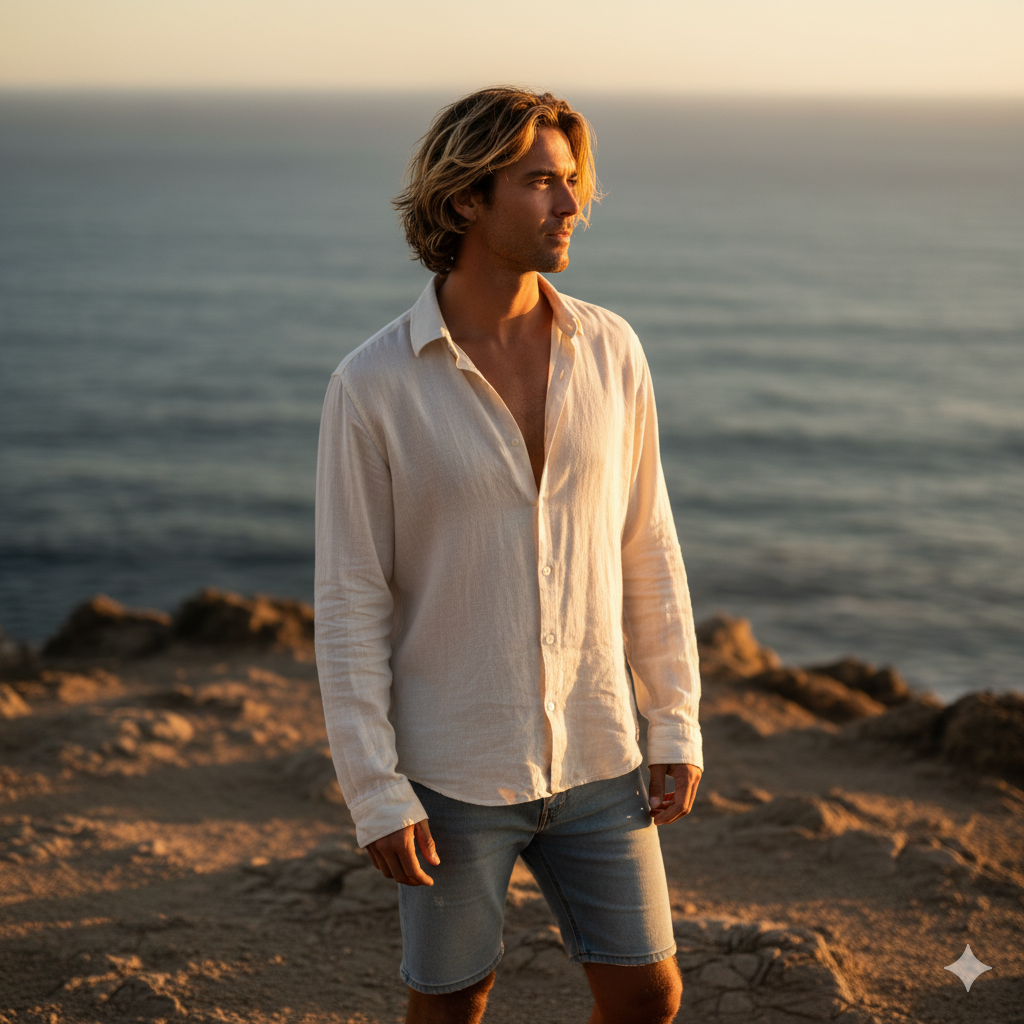
There is a particular kind of freedom encoded in surfer hair. It moves like the tide, carries the memory of salt and sun, and announces its wearer as someone who has chosen experience over convention. Surfer hairstyles for men have long transcended the beach — they have infiltrated fashion weeks, editorial spreads, and the wardrobes of the world’s most stylish men.
What distinguishes surfer hair from other casual styles is its paradox: it looks completely unstudied while requiring genuine knowledge to achieve and maintain. The perfect wave of texture, the salt-kissed lightness, the effortless volume — none of it happens by accident.
In this guide, we explore 11 of the most compelling surfer hairstyles for men — from the classic mid-length shag to the modern textured crop — complete with styling guidance to help you capture that coastal aesthetic wherever you happen to be.
1. The Classic Mid-Length Surfer Shag
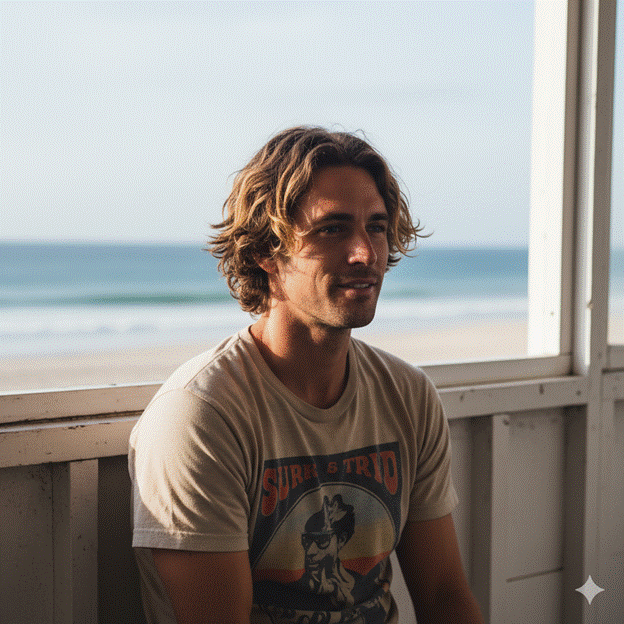
The mid-length surfer shag is the archetype — the hairstyle against which all others in this genre are measured. Falling somewhere between the ear and the shoulder, it is characterised by natural layering, effortless texture, and a relaxed volume that seems to belong perpetually to the morning after a long swim.
The shag works across a remarkable range of face shapes. Its layered construction adds width to narrow faces while the falling length softens stronger jawlines. It is, in the truest sense of the word, a democratic hairstyle — generous with its flattery.
In its modern interpretation, the shag is often worn with subtle highlights — a few lighter strands through the crown that mimic the natural bleaching effect of prolonged sun exposure. The result is a colour story that feels entirely organic.
Styling Tip: Apply a salt spray to damp hair and scrunch upward from the ends, then allow to air dry for genuine texture. Avoid brushing once dry — run fingers through the hair instead to preserve the natural separation between sections.
2. The Textured Crop with Surfer Fringe
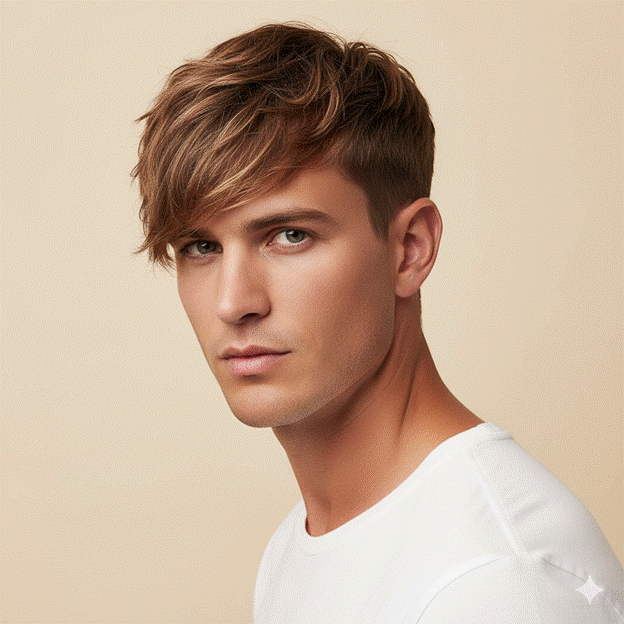
The textured crop brings the surfer aesthetic into sharper, more architectural territory. Shorter on the sides and back, with deliberate texture built into the top and a fringe that falls loosely across the forehead, this style manages to feel both casual and considered simultaneously.
The fringe is the defining element here — not the blunt, geometric fringe of European fashion but something looser and more organic, as if it arrived at its current position by chance rather than by design. It frames the face beautifully and adds an element of effortless cool that few other styles can match.
This is an excellent choice for men who want to reference the surfer aesthetic without committing to longer hair. The crop keeps things practical while the texture and fringe deliver the full coastal character.
Styling Tip: Use a low-shine styling cream worked through towel-dried hair, then push the fringe forward and slightly to one side. Allow to dry naturally for an organic result, or use a diffuser on a low heat setting for added volume at the roots.
3. The Sun-Bleached Wavy Style
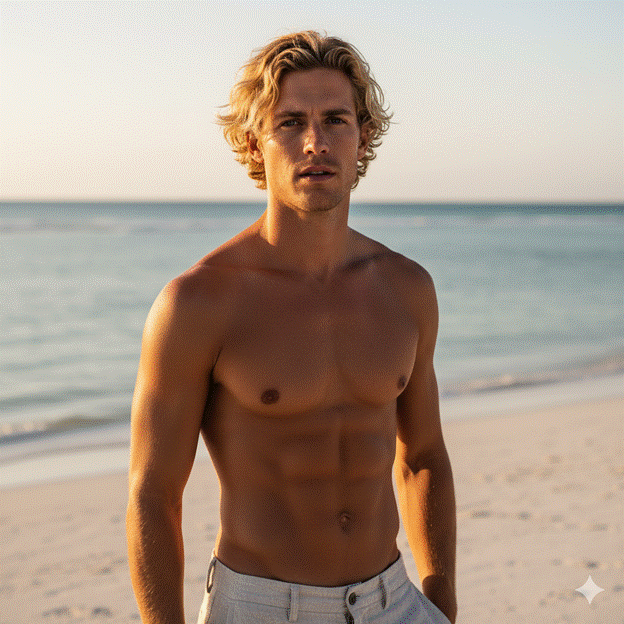
Few hairstyles communicate the surfer lifestyle as immediately as the sun-bleached wave. This is hair that tells a story — of mornings on the water, of afternoons drying in the sun, of a relationship with the natural world that has left its mark in the most visible way.
The colour work is as important as the cut in this style. Natural-looking highlights concentrated toward the ends and crown — ranging from honey gold to warm platinum — create the depth and dimension characteristic of genuine sun exposure. The best versions look entirely accidental.
The waves themselves should feel loose and unforced, with movement that changes throughout the day. This is a living hairstyle — one that evolves from morning to evening with admirable unpredictability.
Styling Tip: Invest in a quality balayage or freehand highlighting service with a colourist who understands natural sun-bleach patterns. At home, alternate between a moisturising conditioner and a protein treatment weekly to keep bleached strands strong and hydrated.
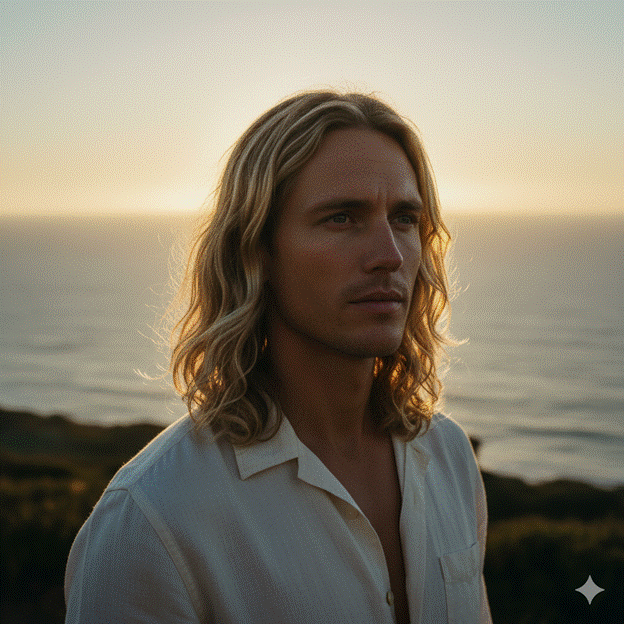
4. The Long Surfer Hair with Centre Part
Long surfer hair with a centre part is perhaps the most romantically evocative style in this collection — flowing, tactile, and possessed of a visual drama that is entirely its own. Falling past the collar and parted cleanly down the centre, it carries associations with freedom, movement, and a certain philosophical indifference to convention.
This style demands healthy hair above all else. At longer lengths, any damage becomes visible and detracts significantly from the overall effect. A consistent deep conditioning routine and careful heat protection are non-negotiable if this look is to achieve its full potential.
Worn loose, it has a romantic, almost cinematic quality. Pulled back loosely, it becomes something more practical without losing any of its character.
Styling Tip: A weekly hair mask applied to the mid-lengths and ends will maintain the moisture and sheen that long surfer hair requires. Part with a fine-tooth comb while the hair is slightly damp for the cleanest, most natural-looking centre line.
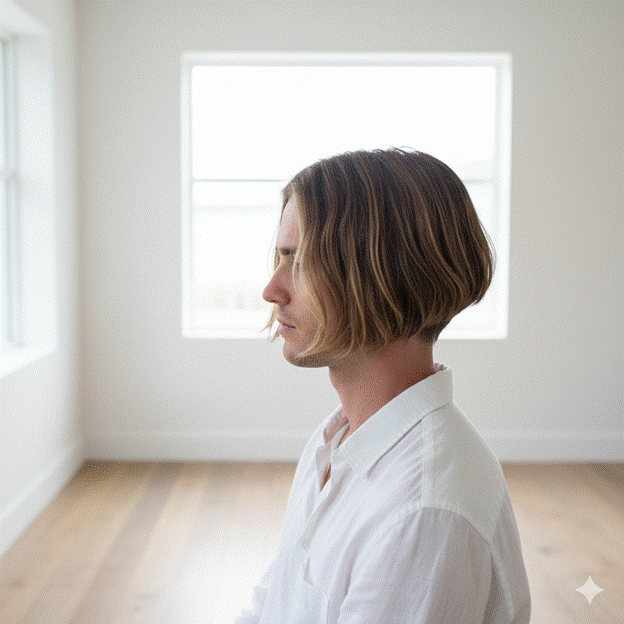
5. The Beachy Tousled Bob
The beachy tousled bob sits at the intersection of structure and spontaneity — short enough to be practical, long enough to carry genuine texture and movement. Cut roughly to the jaw or just above, with layers that remove weight and encourage natural wave, it is the surfer hairstyle for the man who appreciates precision within apparent chaos.
What distinguishes the beachy bob from its more formal counterpart is everything that happens after the cut — the salt spray, the air drying, the deliberate refusal to over-style. The goal is a surface that looks actively windswept rather than carefully arranged.
This style has grown significantly in popularity within men’s fashion editorial, appearing regularly on the pages of publications that take grooming as seriously as clothing.
Styling Tip: After cutting, ask your stylist to point-cut the ends to remove weight and encourage wave. At home, apply texture spray to dry hair and scrunch to activate movement. The bob should never look too neat — a degree of controlled dishevelment is the whole point.
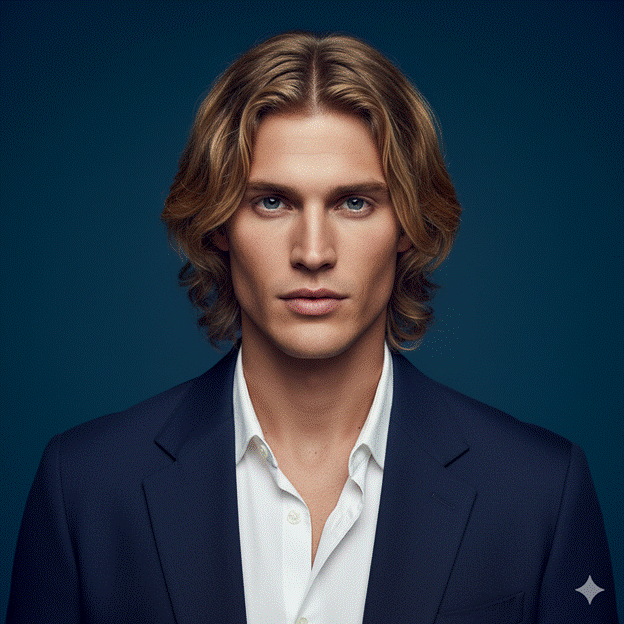
6. The Curtain Haircut (Surfer Version)
The curtain haircut — hair parted in the middle and falling to either side of the face — has experienced a remarkable renaissance across contemporary men’s fashion, and its surfer interpretation is among the most compelling expressions of the style.
Where the classic curtain is worn smooth and somewhat formal, the surfer curtain embraces wave, texture, and a looseness at the ends that gives it a decidedly coastal character. The parting remains the anchor, but everything either side of it is given room to move freely.
This style is exceptionally flattering on men with oval and heart-shaped faces, as the falling curtains frame the face symmetrically and draw the eye toward the cheekbones and eyes.
Styling Tip: Blow-dry the roots upward for volume before allowing the lengths to fall naturally. A medium-hold sea salt spray applied while the hair is still warm from drying will set the wave in place while preserving the natural movement that defines this style.
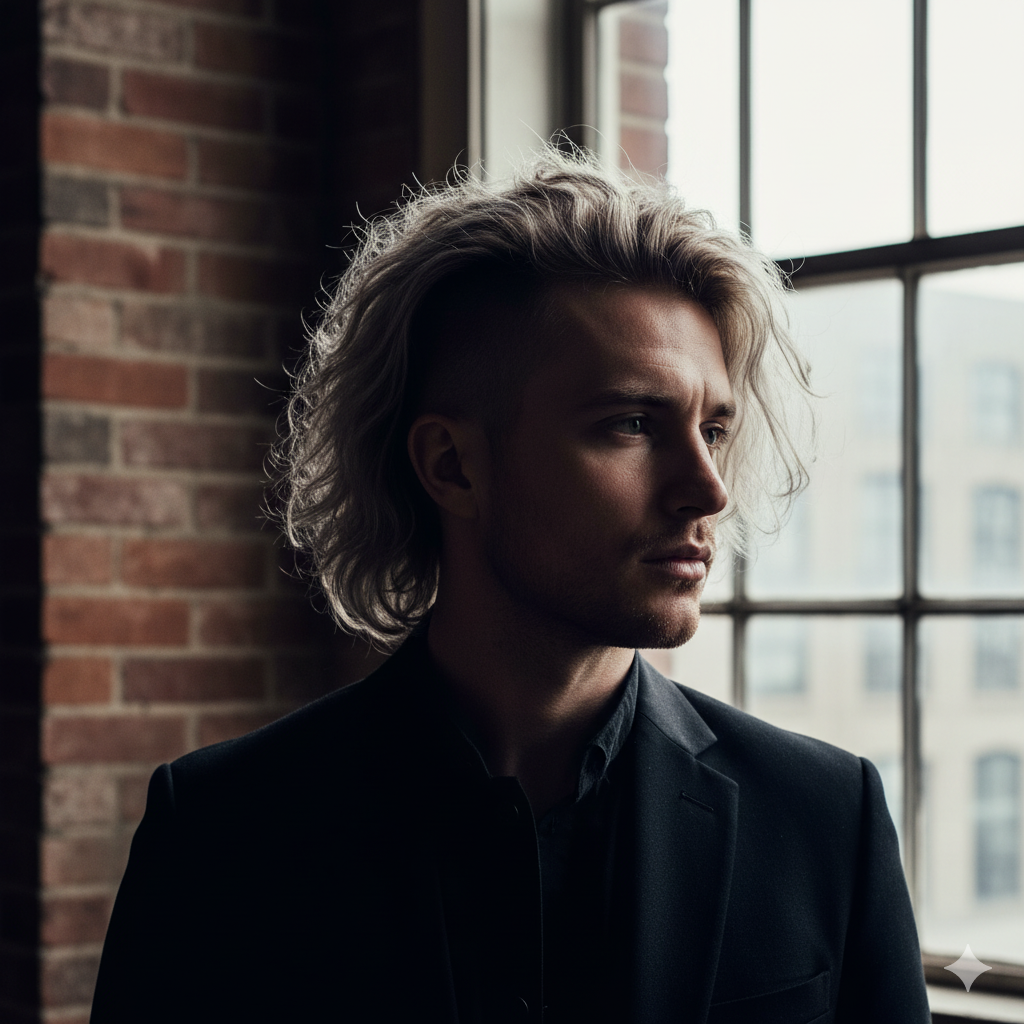
7. The Undercut Surfer Style
The undercut surfer style is where coastal aesthetics meet contemporary barbering — a deliberate tension between the clean, architectural lines of the undercut and the free, organic texture of longer surfer hair on top. The result is a look of studied contrasts that feels simultaneously polished and relaxed.
The longer top section retains all the wave, texture, and effortless volume associated with surfer hair, while the undercut sides frame the face with precision and create a silhouette of considerable visual impact. It is a style that works as confidently at a creative studio as it does at a beach bar.
The key to this style is maintaining the distinction between the two elements — regular barbershop visits keep the undercut sharp, while the top section benefits from minimal intervention and maximum natural texture.
Styling Tip: Keep the undercut refreshed every 3–4 weeks to maintain the contrast. For the top section, resist the temptation to over-style — a single pass of salt spray through slightly damp hair and a natural dry is all that is required.
8. The Surfer Mullet
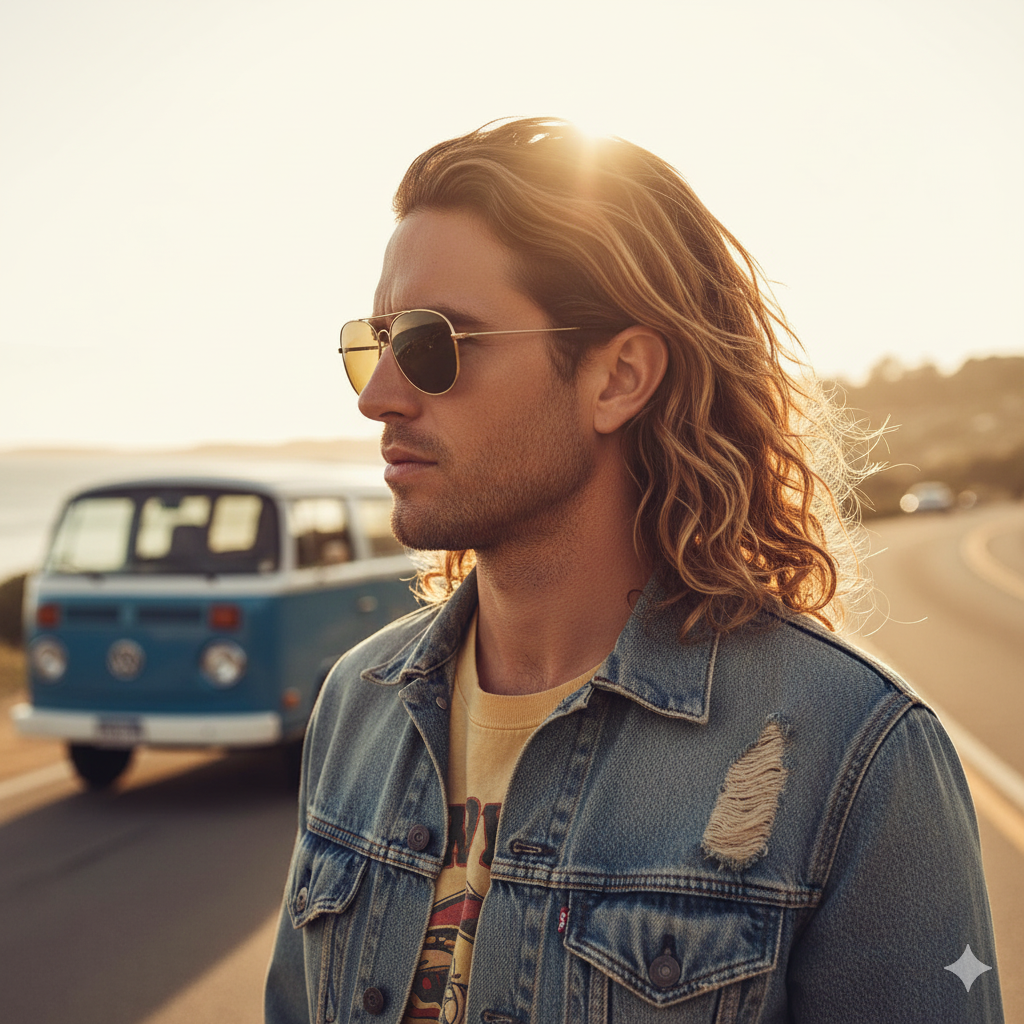
The mullet’s return to contemporary fashion consciousness has been nothing short of extraordinary — and its surfer interpretation is among the most stylistically coherent and convincing arguments for the revival. The surfer mullet takes the basic structure of the original and softens every edge: the front and sides are worn with gentle texture rather than slicked or cropped severely, and the back falls in loose, natural waves rather than a blunt curtain.
The result is a hairstyle that feels progressive and fashion-forward while referencing both the surf culture of the 1970s and the current appetite for retro-inflected men’s grooming. It is worn by some of the most visible names in contemporary fashion and music, lending it a cultural currency that extends well beyond the beach.
Confidence is the non-negotiable styling product for this look — it is a hairstyle that rewards commitment absolutely.
Styling Tip: The surfer mullet requires a skilled cutter who understands the proportions — too much length at the back and it tips toward pastiche; too little and the character is lost. Ask for graduation rather than a blunt cut at the back, and keep the sides light and textured rather than tight.
9. The Short Surfer Crop
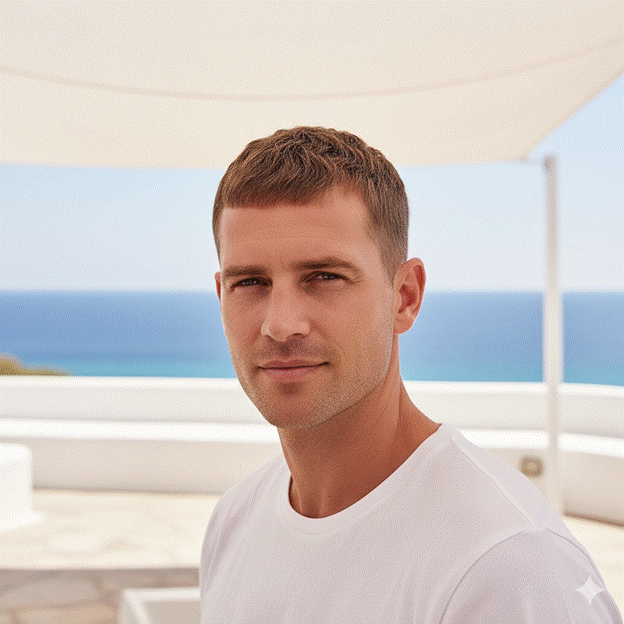
The short surfer crop proves that you do not need significant length to communicate the coastal aesthetic. Cut close on the sides and back with a textured, slightly longer top, this style carries its surfer character through finish and product choice rather than length — the right texture spray transforms a conventional short crop into something that reads immediately of salt air and open water.
This is the most practical entry point into surfer hairstyles — low maintenance, universally flattering, and entirely appropriate across all professional and social contexts. It is surfer hair for the man whose life does not always permit the luxury of longer locks.
The short surfer crop is also the most accessible style for men with naturally straight hair, as the short length minimises the challenge of creating convincing wave or texture.
Styling Tip: A matte texture paste or sea salt clay worked through dry hair with the fingertips creates the short crop’s characteristic dishevelled surface. Work the product in using circular motions rather than combing through, to preserve the natural separation between sections.

10. The Surfer Bun
The surfer bun is equal parts practicality and aesthetic statement. When longer surfer hair is gathered loosely at the crown or nape — not in the architectural precision of a formal topknot but in the easy, slightly imperfect gather of someone who needed their hair out of their face for the next wave — it creates a look of remarkable effortless appeal.
The looseness is everything. Strands that escape to frame the face are not a failure of grooming; they are the entire point. The surfer bun should always look as though it has just survived something — as though its wearer arrived directly from the water with barely a pause.
Worn with a clean t-shirt or an open linen shirt, the surfer bun communicates a sense of unhurried, sun-warmed ease that is very difficult to replicate through any other means.
Styling Tip: Use a seamless elastic or a thin fabric tie rather than a standard hair band to avoid creasing the hair at the point of the bun. Leave several strands loose around the hairline and temples intentionally — this is not carelessness but craft.
11. The Dreadlock Surfer Style
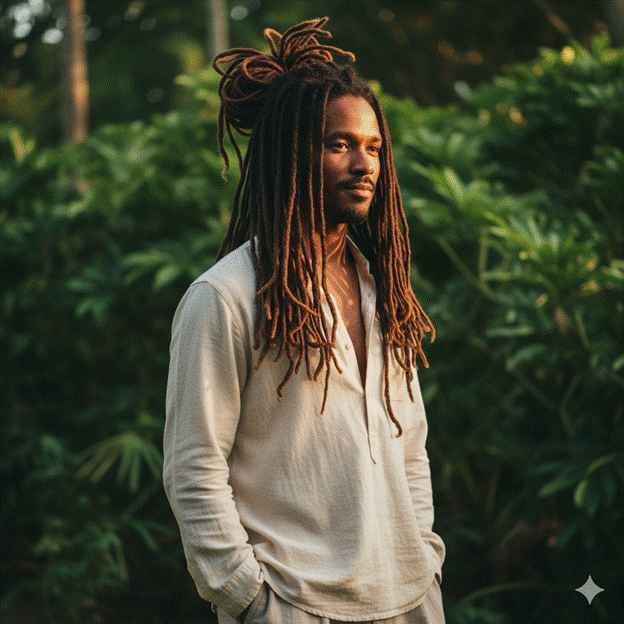
Surfer dreadlocks represent the fullest possible expression of the coastal lifestyle’s relationship with natural hair — a style that requires patience, commitment, and a genuine philosophical alignment with the slow, organic processes of the natural world. They are hairstyles as biography, carrying the full evidence of their wearer’s choices and values.
In the surf community, dreadlocks have a long and celebrated history — their practical durability in salt water and their visual association with freedom and countercultural independence making them a natural fit for a lifestyle built around ocean and movement.
Modern surfer dreadlocks are worn with greater variety than ever before — loose and flowing at shoulder length, gathered in a high bun, or adorned with beads and wraps that add individual character to a style that is inherently personal.
Styling Tip: Healthy dreadlocks require consistent scalp care — a lightweight oil applied to the scalp weekly keeps the skin nourished without causing buildup at the loc roots. Salt water, paradoxically, is one of the best natural loc-tightening agents available, making the surf lifestyle a genuine asset for dreadlock maintenance.
Conclusion
Surfer hairstyles for men occupy a unique position in the broader landscape of men’s grooming — they are simultaneously the most natural-looking and the most carefully considered styles available. Their apparent effortlessness is a cultivated quality, the product of the right cut, the right products, and a willingness to let hair behave according to its own logic rather than imposing rigid structure upon it.
Whether you choose the flowing romanticism of long surfer hair with a centre part, the architectural contrast of the undercut surfer style, or the accessible practicality of the short surfer crop, the common thread is a relationship with texture, movement, and natural character that sets these styles apart from every other category in men’s hair.
Find your version of the coastal aesthetic, care for it consistently, and wear it with the unhurried confidence of a man who knows that the best things in life — like the best waves — cannot be rushed.
Frequently Asked Questions
Q1. What products are best for surfer hairstyles?
Salt spray is the essential product for achieving authentic surfer texture — apply to damp hair and scrunch for maximum wave and separation. Matte styling creams and texture pastes are ideal for shorter surfer crops, while lightweight oils and leave-in conditioners are essential for maintaining the health of longer sun-bleached styles.
Q2. Can surfer hairstyles work for men with straight hair?
Absolutely. Salt spray and braiding damp hair overnight are the most effective techniques for creating wave in naturally straight hair. A diffuser attachment on a low heat setting can also build convincing texture. For longer straight hair, the curtain cut and sleek centre-part surfer style both work beautifully without requiring natural wave.
Q3. How often should you trim surfer hair?
Every 8–12 weeks is a suitable maintenance schedule for most surfer hairstyles. Regular trims remove split ends and maintain the shape and layering that give surfer styles their characteristic texture. Longer styles benefit from a dusting trim — removing minimal length but refreshing the ends — to keep the hair looking healthy rather than overgrown.
Q4. Are surfer hairstyles appropriate for professional environments?
Many surfer hairstyles translate well into professional settings, particularly the textured crop, curtain cut, and short surfer crop. The key is in the finish — a matte product and a degree of intentional styling bring these styles within the boundaries of professional grooming norms while retaining their essential coastal character. Longer styles such as the surfer shag and bun are most common in creative industries.
Q5. How do you maintain the colour in bleached surfer hairstyles?
Use a purple or blue toning shampoo weekly to neutralise any brassiness in bleached tones. Always apply a heat protectant before any heat styling, and deep condition every 7–10 days to counteract the drying effect of bleach. Avoid prolonged sun exposure on bleached hair without a UV-protective hair product applied, as additional sun damage on already-processed hair can cause significant breakage.