
Introduction
There is something about the arrival of autumn that makes a man want to sit down in the barber’s chair and say: something different.
Fall carries with it a natural invitation to reinvention. The wardrobe shifts — heavier fabrics, richer tones, layered textures. The light changes — warm and golden in the afternoon, cool and atmospheric by evening. And the hair, more often than not, should shift along with it. The haircut that served you through a humid summer may not be the one that best accompanies a perfectly fitted coat and a cashmere scarf.
This guide presents 12 of the most compelling fall haircuts for men right now — each one chosen for its seasonal appropriateness, its compatibility with autumn’s wardrobe and aesthetic, and its enduring visual power beyond the fleeting cycle of trend. Whether you prefer the precision of a sharp fade or the organic freedom of a wolf cut, these 12 haircuts cover every end of the spectrum with authority.
Book your appointment, bring this guide, and step into autumn looking exactly like you intended.
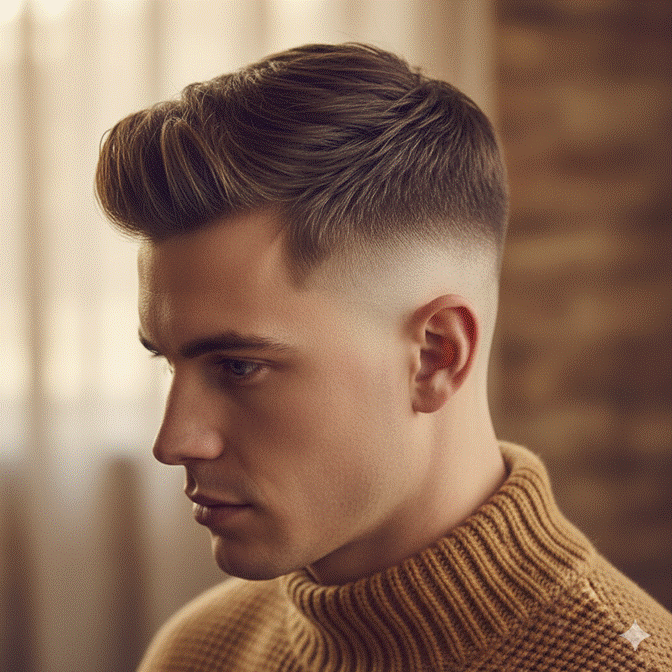
1. The Textured Crop with Drop Fade — Fall’s Perennial Favourite
The textured crop with a drop fade has established itself as one of the most consistently requested men’s haircuts across every season — and autumn is where it genuinely thrives. The drop fade follows the natural curve of the head behind the ear, creating a clean, graduated line that feels more organic and refined than a standard high fade.
On top, the textured crop’s layered, matte-finished surface plays beautifully against the season’s wardrobe. Against chunky knitwear, wool overcoats, and flannel shirts, the slight dishevelment of the textured top creates a visual contrast that feels entirely intentional — groomed where it matters, relaxed where it can afford to be.
✦ Barber Tip: Apply a matte clay to slightly damp hair and rough-dry upward and forward with your fingers for the effortless textured finish that defines this cut. The key is the matte finish — avoid any product with shine, which immediately flattens the texture and removes the visual interest that makes this style work.
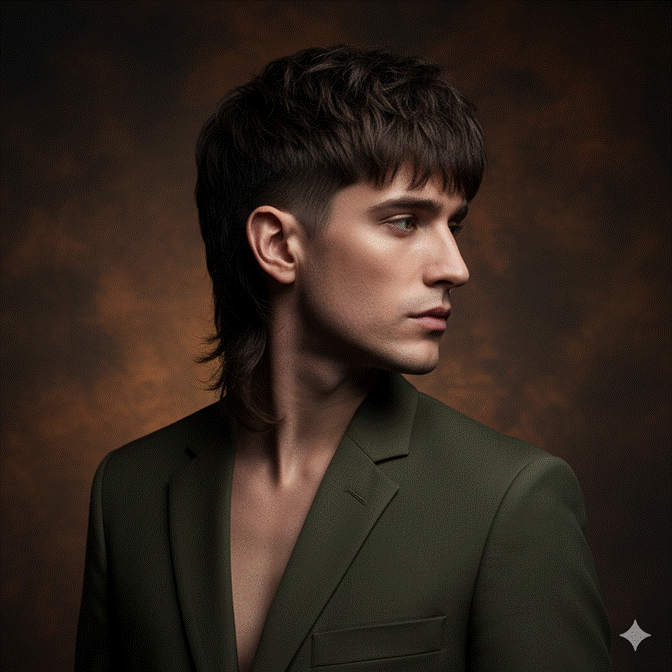
2. The Modern Mullet — Fashion’s Most Surprising Fall Comeback
The modern mullet is perhaps the most dramatic proof that no haircut is ever truly finished — only waiting for the right cultural moment to return transformed. The contemporary version bears almost no resemblance to its predecessor: longer at the nape, yes, but with a textured, architecturally layered top, clean sides, and a precision that places it firmly in the vocabulary of high fashion rather than nostalgia.
Fall suits the modern mullet exceptionally well. The longer nape section creates a natural relationship with high collars, scarves, and the layered necklines that define autumn dressing. It is a haircut that changes character depending on how it is worn — pushed back it reads directional and fashion-forward; tousled forward it reads creative and confident.
✦ Barber Tip: Ask your barber for a disconnection between the sides and the top, with a gradual taper into the nape length rather than a blunt line. This disconnection is what separates the modern, editorial version of the mullet from the retro interpretation — the former feels designed, the latter feels accidental.
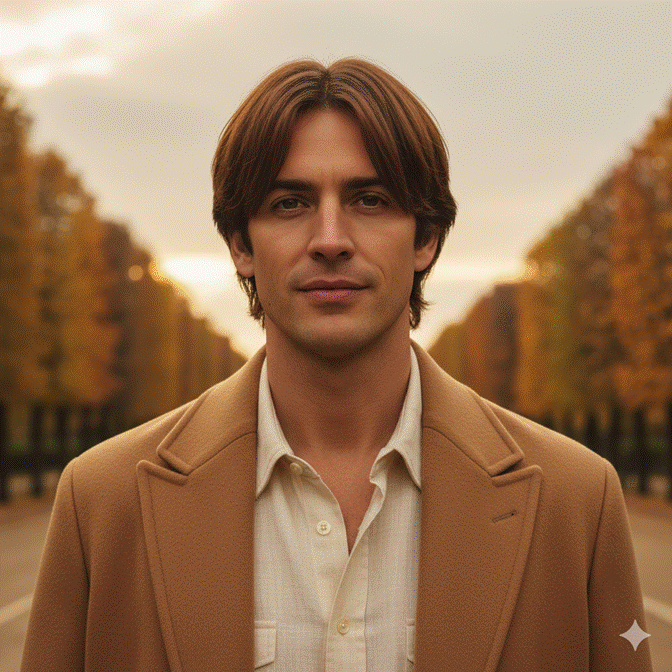
3. The Mid-Length Curtain Fringe — Autumn’s Most Romantic Haircut
The curtain fringe is one of those rare hairstyles that manages to feel simultaneously of the moment and entirely timeless. Parted — either down the centre or slightly off-centre — and falling softly on either side of the forehead, it frames the face with a gentle, almost painterly quality that suits autumn’s warmer, more romantic visual register.
At mid-length, the curtain fringe works with the season’s wardrobe in a particularly harmonious way. Tucked behind the ear with an unbuttoned coat, it reads effortlessly cool. Pushed slightly forward as the temperature drops, it adds an intimacy and warmth that shorter styles cannot achieve. It is the most versatile haircut on this list in terms of seasonal adaptability.
✦ Barber Tip: Let the curtain fringe air-dry about seventy percent before blow-drying the centre section downward with a flat paddle brush. This creates the signature clean drape without stiffness. Finish with a light cream or paste through the ends for separation and a lived-in quality that prevents the style from looking over-styled.
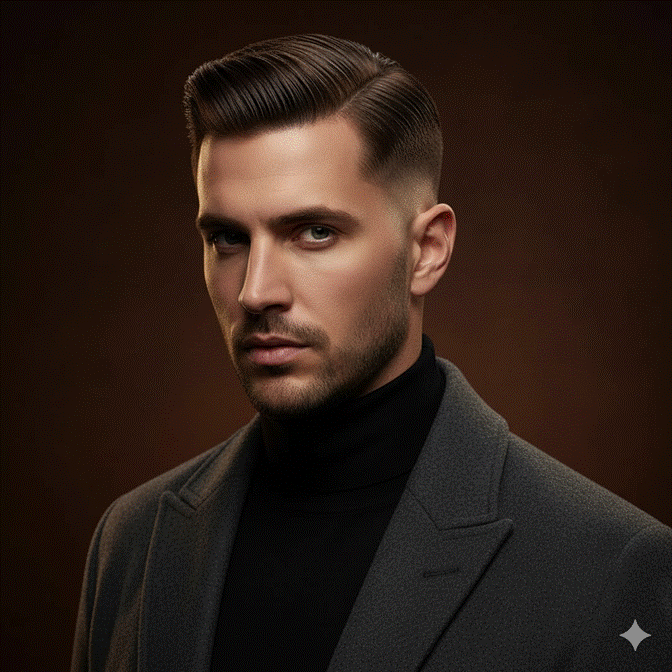
4. The Slick Back Undercut — Autumn’s Most Sophisticated Statement
There is a version of the undercut that belongs entirely to spring and summer — high, stark, and maximum contrast. And then there is the autumn version: the slick back undercut, where the longer top section is pulled deliberately back and the skin fade transitions the eye smoothly from forehead to nape. It is the same architecture, reconfigured for a more sophisticated seasonal register.
Fall’s wardrobe — tailored overcoats, fitted turtlenecks, formal eveningwear — finds its perfect hair counterpart in the slick back undercut. The exposed forehead and clean sides create a face-forward impact that reads as confident and deliberate, while the slicked top adds a quality of controlled elegance that looser styles cannot match.
✦ Barber Tip: Use a medium-hold pomade with a subtle satin finish rather than a high-gloss gel for the fall version of this style. The satin finish reads as more elevated and less aggressively groomed than high shine, which better suits autumn’s more sophisticated wardrobe context. Comb straight back with long, deliberate strokes.
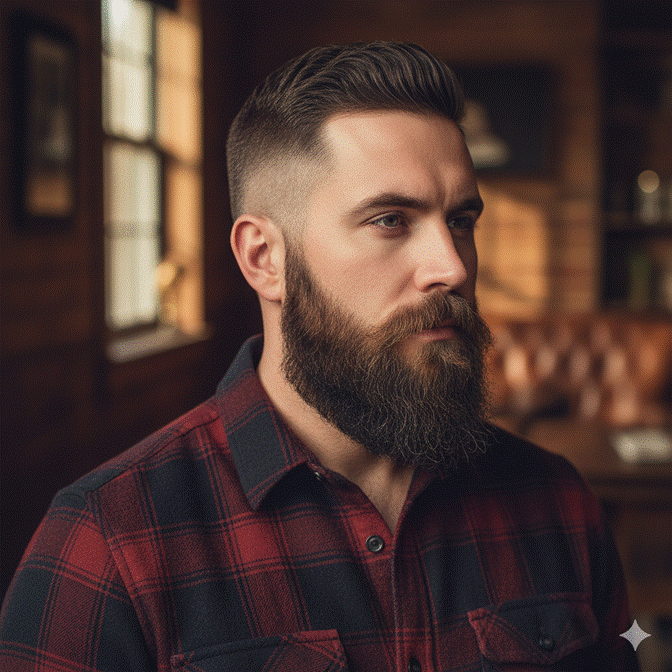
5. The Taper Fade with Beard — The Complete Fall Look
If the taper fade is one of the most refined short haircuts available, pairing it with a well-maintained beard creates something even more complete: a head-to-toe grooming statement that feels entirely considered and entirely appropriate for the season. Fall is the natural beard season — the dropping temperatures provide both practical and aesthetic justification for fuller facial hair.
The relationship between a clean taper fade and a well-groomed beard is one of beautiful contrast: the precision and closeness of the fade against the warmth and texture of the beard creates a visual tension that is simultaneously polished and masculine. The beard’s warmth suits autumn’s palette — warm neutrals, deep earth tones, rich textures — with perfect symmetry.
✦ Barber Tip: Maintain the beard’s line where it meets the taper with a precise edging at every barber visit. The crispness of the line between fade and beard is the detail that separates a well-executed taper-and-beard from a casually grown-out one. Use a beard oil daily to maintain softness and prevent the dryness that autumn’s colder air accelerates.
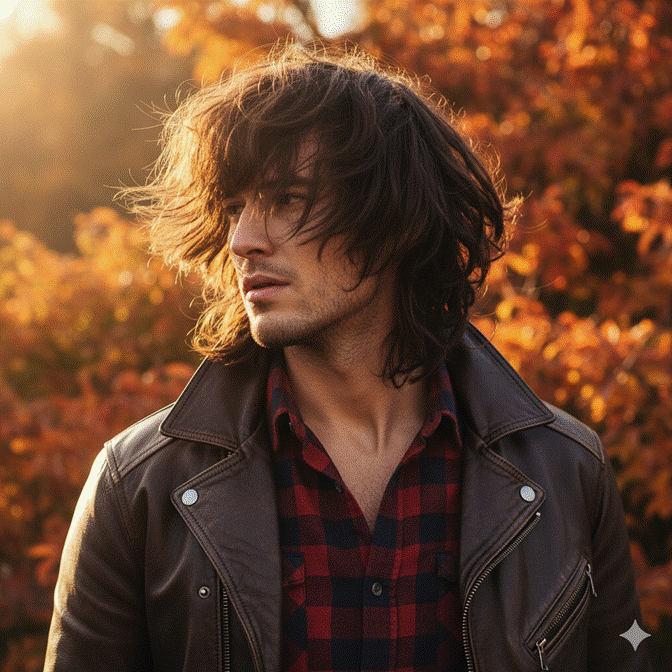
6. The Wolf Cut — Layered, Textured, and Intentionally Wild
The wolf cut arrived from the intersection of 1970s rock aesthetic and contemporary fashion editorial — and it has established itself as one of the most visually dynamic men’s haircuts of the current era. Shaggy layers throughout the crown and sides, longer at the back and nape, with a natural movement that seems to organize itself differently with each passing hour.
Autumn is the wolf cut’s most sympathetic season. The layered texture creates a natural insulation quality, the length sits beautifully against jacket and coat collars, and the style’s inherent ability to absorb imprecision means that wind, hat-removal, and autumn weather all seem to improve rather than destroy it. This is the haircut that gets better when the weather gets worse.
✦ Barber Tip: Diffuse-dry the wolf cut using a low-heat setting and a cupped hand, scrunching upward from the ends to activate natural movement in the layers. A texturizing spray applied to dry hair after diffusing enhances the separation between layers and maintains the effortless, undone quality that defines this style at its best.
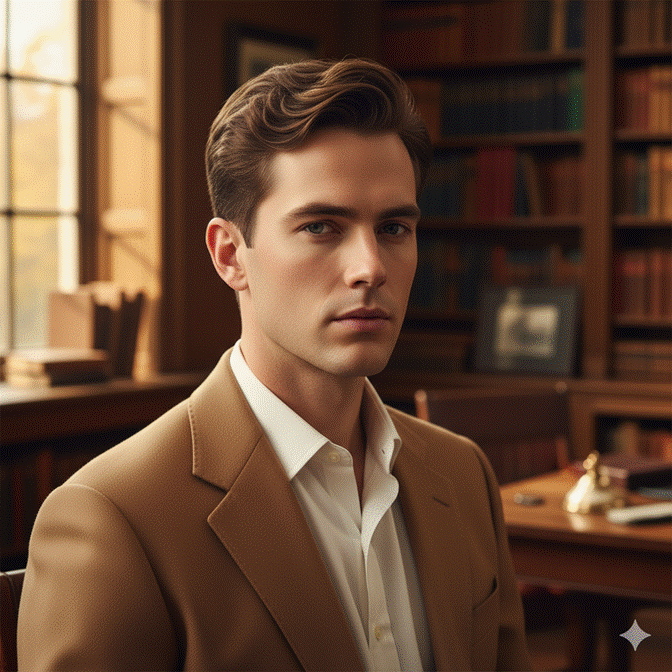
7. The Ivy League Cut — Quiet Confidence for the Fall Season
Rooted in the heritage of East Coast academic tradition, the Ivy League cut carries a quiet confidence that feels particularly well-suited to autumn’s more contemplative, settled energy. A longer version of the classic crew cut — side-parted with a slight wave or natural lift on top — it reads as inherently polished without requiring visible effort.
Fall’s wardrobe is this haircut’s natural home: blazers, Harrington jackets, wool trousers, heritage boots. The Ivy League cut sits among all of these pieces with a sense of having always belonged there — as if the style grew up in the same wardrobe it now accompanies. It is the haircut of a man who has nothing to prove, which is often the most powerful statement available.
✦ Barber Tip: A small amount of light-hold cream or pomade worked through slightly damp hair is the only product this style requires. Apply to the side-part area with fingertips, then comb through once in the direction of the natural part. The Ivy League should look like your hair simply falls this way — not like it required significant intervention.
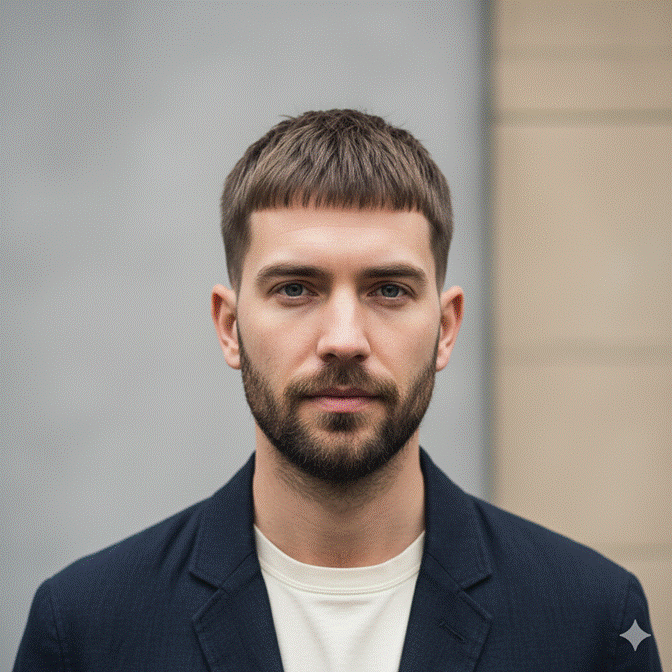
8. The French Crop with Textured Fringe — Minimal, Sharp, and Seasonal
The French crop translates beautifully from summer into fall through a single adjustment: introducing texture into the top and fringe section that was previously kept clean and flat. The addition of light textural work to the horizontal fringe softens the otherwise graphic geometry of the cut, making it feel warmer, more organic, and more suited to the season.
This textured fall version of the French crop pairs particularly well with the season’s more relaxed, layered dressing — open-collar overshirts, unstructured jackets, chunky knitwear. The fringe’s horizontal line still provides the defining structure of the cut, but the added texture prevents it from reading as too precise or corporate for autumn’s more relaxed weekend context.
✦ Barber Tip: Ask your barber to razor-texture the fringe rather than cutting it bluntly — this removes bulk from the tips and creates a natural, slightly feathered edge that moves with the forehead and catches autumn light with much more dimension than a blunt-cut fringe can achieve.
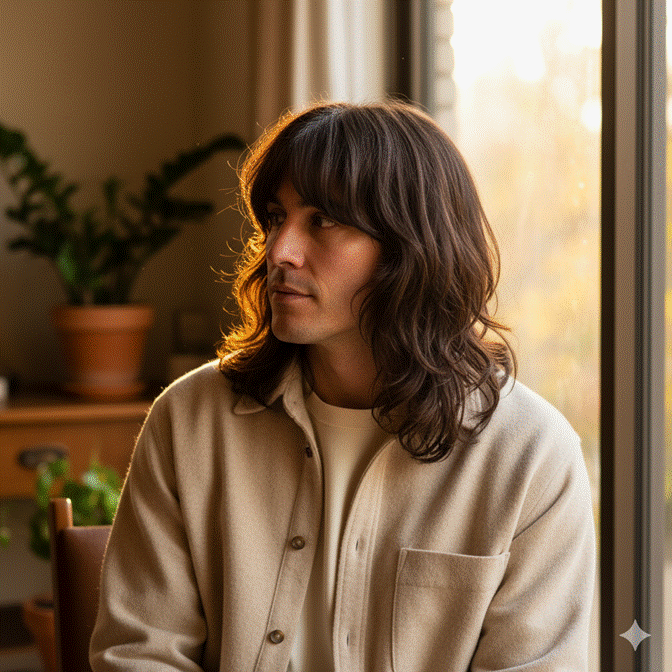
9. The Long Shag — The Most Carefree Haircut of the Season
The long shag leans fully into autumn’s invitation to grow — heavier, warmer, more layered. Characterized by cascading layers throughout the length with a curtain fringe or center part, the shag is simultaneously the most relaxed and one of the most carefully constructed cuts on this list. The art is in making it appear as though it simply evolved rather than being deliberately designed.
Fall amplifies every quality of the long shag: the layers gain volume in the cooler, lower-humidity air; the longer length becomes a natural insulator around the neck and ears; and the style’s inherent ability to absorb the effects of hat-wearing and collar-pulling means it continues to look intentional regardless of what the season’s weather does to it.
✦ Barber Tip: Use a few drops of lightweight argan or marula oil applied to dry lengths for definition and a natural, healthy sheen that stops short of looking oily. Scrunch gently from the ends upward to enhance the layer movement. Avoid silicone-heavy products, which create buildup that flattens the layers and removes the organic lightness the shag depends on.
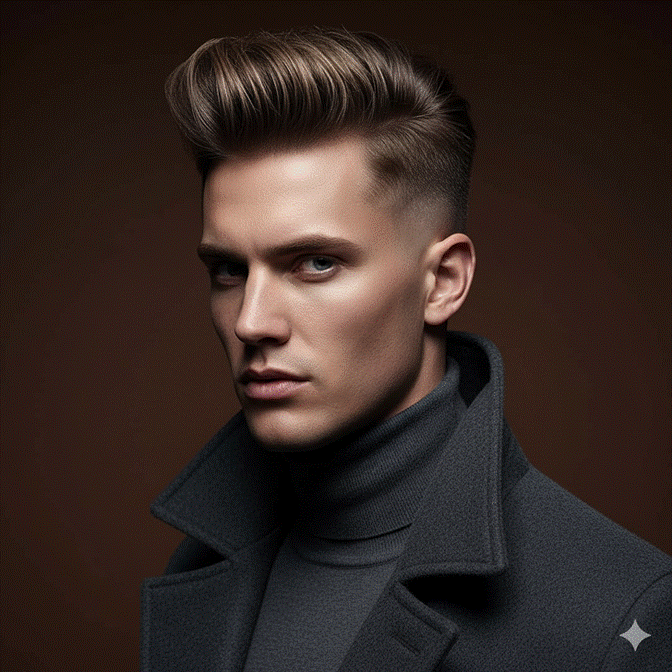
10. The Quiff with High Fade — Height, Drama, and Autumn Confidence
The quiff has been one of men’s hairstyling’s most reliable expressions of deliberate style for decades — and paired with a high skin fade, it achieves its most modern, fashion-forward incarnation. The elevated front section provides height and visual drama; the high fade provides the maximum contrast that makes that height read so powerfully.
In fall, the quiff’s volume and structured quality create a visual counterweight to the heaviness of layered coats, thick scarves, and the generally more voluminous wardrobe the season demands. Where the body is wrapped in layers, the clean silhouette of the quiff-and-fade creates a visual clarity at the top of the frame that reads as precisely assembled.
✦ Barber Tip: Blow-dry the front section upward and slightly forward using a medium round brush — the direction of this blow-dry sets the quiff’s shape and volume, and the round brush creates the slight curl at the front that gives the quiff its signature lift. Finish with a medium-hold pomade for all-day retention without the stiffness that heavy products create.
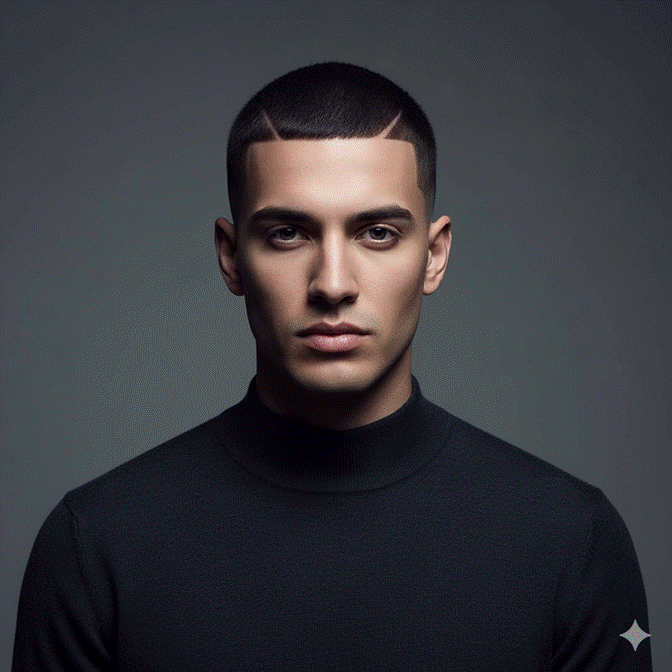
11. The Buzz Cut with Line-Up — Minimal, Precise, and Undeniably Sharp
The buzz cut, in its most refined fall interpretation, is about the quality of what remains rather than what is removed. A clean, even buzz with a precise line-up — the hairline at the forehead, temples, and nape defined with geometric exactness — creates a style of concentrated precision that requires nothing else to make its statement.
Fall’s wardrobe interacts with the buzz cut in a particularly interesting way. Against the visual richness of heavy fabrics, layered clothing, and accessories, the buzz cut’s extreme minimalism creates a striking contrast — a clean, uninterrupted silhouette that makes every piece below the neck more visible and more impactful.
✦ Barber Tip: The line-up is the detail that makes or breaks the buzz cut’s aesthetic in autumn. Visit your barber every ten to fourteen days to keep the line-up sharp — an overgrown line-up transforms this style from precisely architectural to merely closely cropped. The difference is everything. The investment in frequency pays back immediately in visual quality.
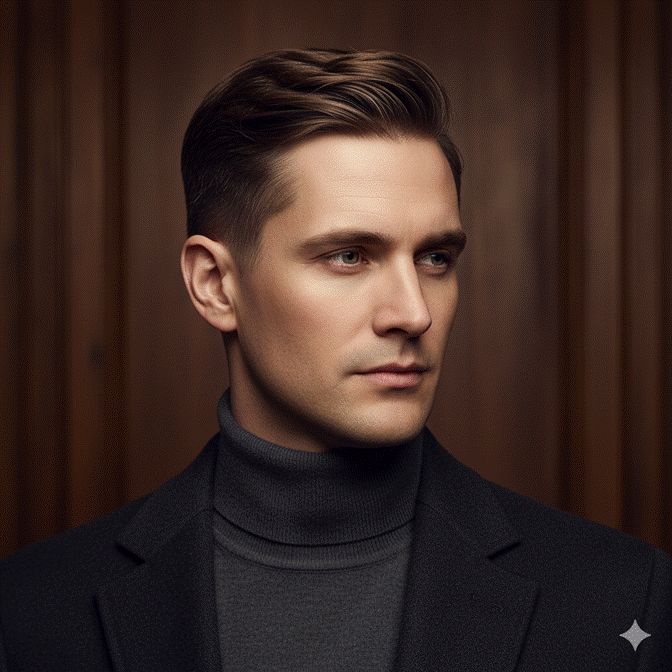
12. The Side Part with Low Taper — Timeless Elegance for the Fall Season
Some haircuts transcend season entirely. The side part with a low taper is one of them — and its particular appeal in autumn lies in how completely it complements the season’s more formal, tailored wardrobe moments. This is the haircut that belongs with a camel overcoat and leather gloves, with a tailored charcoal suit and a pocket square, with any combination of pieces that speak to the considered dressing that fall inspires.
The low taper — gradual, refined, keeping length on the sides — softens what might otherwise read as an overly corporate style and gives it a contemporary edge. The natural side part adds an element of casual confidence that pure precision would remove. It is a haircut that has been continuously worn by well-dressed men for over a century, which is not an accident.
✦ Barber Tip: Have your barber leave the part natural rather than shaved or hard-defined — a natural part reads as significantly more contemporary and less rigidly formal than a shaved line. Apply a small amount of light pomade or styling cream and comb through once, then leave it to settle. The side part with taper should look like your hair simply falls this way — and the best version does.
Conclusion — Your Fall Haircut Awaits
Autumn rewards preparation. The man who walks into the season with the right haircut — one chosen with care and aligned with both his aesthetic and his wardrobe — carries a confidence that extends well beyond the chair where the cut was given.
The 12 trending fall haircuts in this guide cover the full range of what is possible right now: from the textured precision of the drop fade to the organic freedom of the wolf cut, from the timeless authority of the side part to the contemporary audacity of the modern mullet. Every one of them belongs to this season — and one of them belongs to you.
Find your barber. Bring this guide. Step into fall looking exactly the way you intended.
Frequently Asked Questions
Q: What are the best fall haircuts for men in 2024?
A: The most compelling fall haircuts for men in 2024 include the textured crop with drop fade, the modern mullet, the curtain fringe at mid-length, the wolf cut, and the side part with low taper. These styles balance the season’s practical requirements — working well under hats and against coat collars — with the visual sophistication that autumn’s wardrobe demands. The Ivy League cut and slick back undercut are also consistently strong choices for men who prefer a more polished, tailored look for the cooler months.
Q: How do I maintain a fall haircut between barber visits?
A: Maintenance between visits depends on the style. High-contrast styles like the taper fade, buzz cut, and slick back undercut require the most frequent visits — every two to three weeks — to stay sharp. Textured and longer styles like the wolf cut, curtain fringe, and long shag can extend to five or six weeks between appointments. Daily product use — matte clay for textured crops, pomade for slick styles, argan oil for longer cuts — maintains the style’s quality between professional visits.
Q: Which fall haircuts work best under a hat or beanie?
A: The wolf cut, modern mullet, long shag, and curtain fringe all recover beautifully after hat removal because their textured or layered quality integrates hat-compression naturally into the style’s character. The Ivy League cut and side part also recover well with minimal restyling. Avoid wearing beanies over freshly slicked styles like the quiff or slick back — the compression distorts the shape and requires the entire styling process to be repeated.
Q: What fall haircut suits my face shape?
A: The textured crop, wolf cut, and Ivy League are the most universally flattering cuts because they adapt to the barber’s customization for different face shapes. Round faces benefit from height at the crown — the quiff with high fade and slick back undercut both add desirable vertical length. Square faces are softened by textured, layered styles like the wolf cut and long shag. Oval faces carry virtually every cut on this list with ease. The side part with taper flatters a very wide range of face shapes through its adaptable length and proportions.
Q: How do I ask my barber for a fall haircut?
A: The most effective barber consultations combine a reference image — from this guide, your barber’s portfolio, or a trusted style source — with a clear description of your lifestyle requirements: how much daily styling time you have, whether you wear hats frequently, how often you can visit for maintenance. Tell your barber what you want the cut to feel like — textured and relaxed, clean and sharp, effortless but intentional — and let them translate that direction into the specific technique that works for your hair type and face shape.