Introduction
The French crop is one of contemporary men’s grooming’s most quietly brilliant achievements — a hairstyle that manages to feel simultaneously effortless and deliberate, casual and considered, universally wearable and distinctly personal. In a landscape crowded with styles that demand significant effort and product investment to maintain, the French crop offers something increasingly rare and increasingly valued: genuine elegance through restraint.
Its defining characteristics are deceptively simple: short, textured hair on top with a fringe that sits naturally across the forehead, paired with shorter sides and back that taper cleanly away from the top section. Within this fundamental architecture, however, lies an extraordinary range of expression. The French crop can be worn close-cropped and minimal, or textured and voluminous. It can carry a skin fade on the sides or a scissor-tapered finish. It can be finished matte or with a subtle sheen, swept forward or left to fall naturally.
In this guide, we explore 12 of the most compelling French crop haircuts available today — each one a distinctive expression of this versatile and enduringly stylish form. Whether you are approaching the French crop for the first time or refining an existing relationship with the style, there is a version here that will serve your particular face shape, hair texture, and lifestyle with complete authority.
1. The Classic French Crop
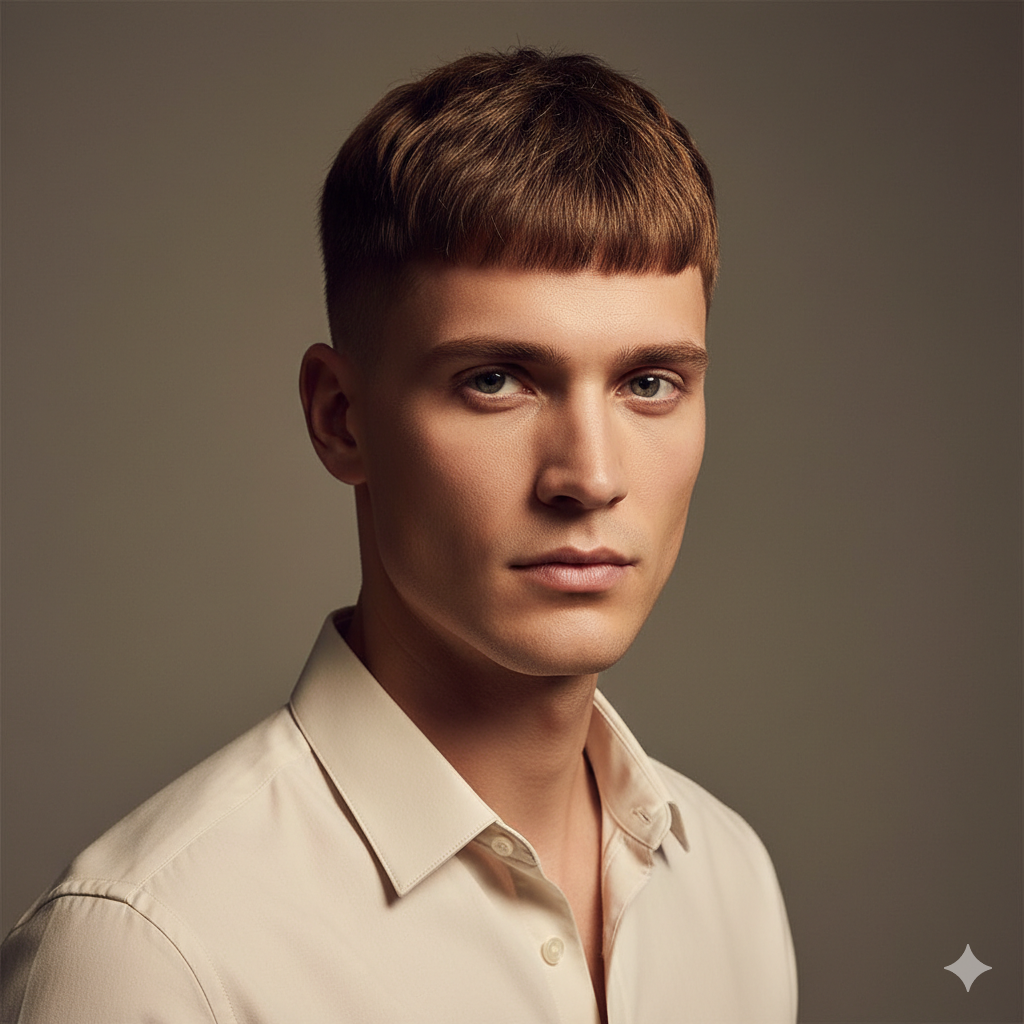
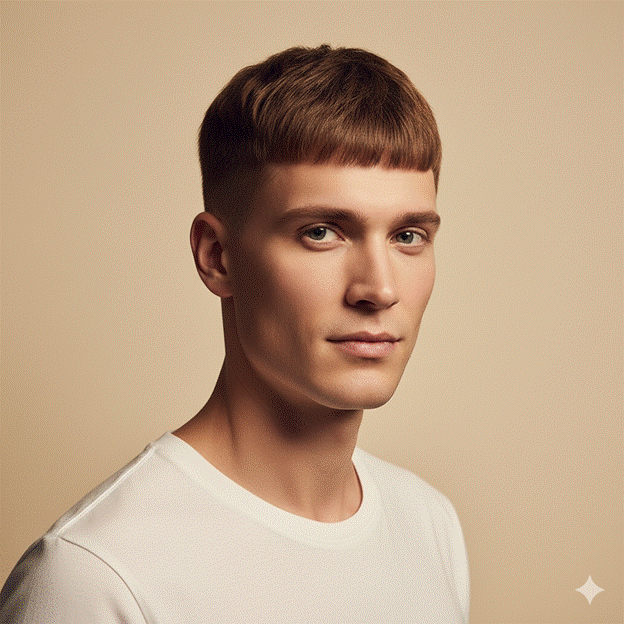
The classic French crop is the foundational form — the version against which all variations are measured and from which all interpretations depart. Short textured hair on top with a natural fringe sitting at or just above the eyebrows, tapered sides and back in a clean scissor finish, and a matte or low-sheen product application that gives the style its characteristic relaxed, unpretentious quality.
What distinguishes the classic French crop from other short styles is the fringe — the forward movement of the top section that creates a softness at the forehead entirely absent from the crew cut or buzz cut. The fringe frames the face with a gentle horizontal line that is simultaneously practical and genuinely stylish, requiring minimal daily adjustment to sit exactly where it belongs.
The classic French crop is also the most universally flattering short haircut available. Its proportions work across virtually every face shape — softening strong jawlines, adding definition to rounder faces, and complementing oval faces with a natural harmony that requires no particular adjustment. It is, in the truest sense of the phrase, a cut for everyone.
Styling Tip: For the most authentic classic French crop result, ask your barber to cut the top section with a scissor-over-comb technique rather than clippers — this creates the soft, textured surface that defines the style’s character. At home, a small amount of matte clay applied to slightly damp hair, worked through with the fingertips, and allowed to air dry produces the style’s characteristic effortless finish.
2. The French Crop with Skin Fade
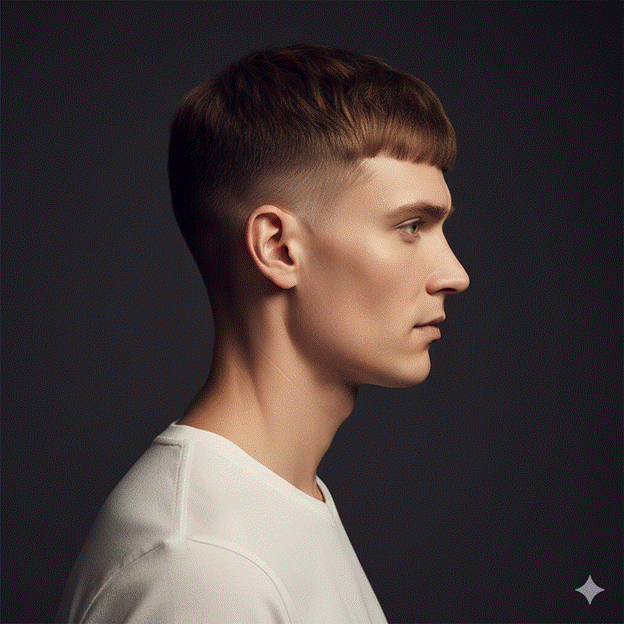
The French crop with skin fade brings contemporary barbering precision to the classic form — replacing the traditional scissor taper with a clean gradient that descends to bare skin at the temple and nape, creating a contrast between the close-cropped natural base and the textured top section that reads as thoroughly modern and sharply considered.
The fade’s gradient transforms the French crop’s silhouette considerably. Where the classic version has a relatively uniform weight from top to sides, the skin fade creates a visual architecture — a clean lower section that draws the eye upward to the textured crown and fringe, amplifying the top section’s character by contrast. The result is a French crop with significantly more visual impact than its classic counterpart.
This version of the French crop has become one of the most requested haircuts in contemporary barbering — appearing in portfolios around the world as an expression of the balance between approachable style and technical skill. It suits men who want the French crop’s easy wearability with an added dimension of grooming precision.
Styling Tip: The skin fade’s maintenance requirement is the primary consideration for this style. A high skin fade will require barbershop attention every two weeks to maintain its defining precision; a lower fade can extend to three weeks. Discuss the fade height with your barber at the outset — a mid-fade starting at the mid-ear offers the best balance between visual impact and maintenance convenience for most men.
3. The Textured French Crop
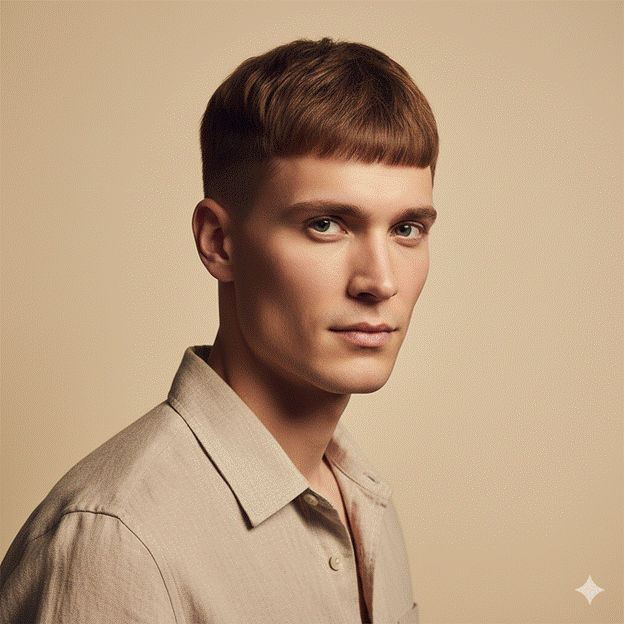
The textured French crop celebrates the surface quality of the hair above all else — building deliberate piece-y separation, natural movement, and tactile dimension into the top section through both the cutting technique and the product application. Where the classic French crop settles into a clean, unified surface, the textured version revels in the individual character of each section.
The texture is achieved through point-cutting and razor work during the cut — techniques that remove weight from specific sections of the hair while leaving others intact, creating a naturally variable surface that catches light differently in different areas and moves with a freedom that blended, uniform cutting prevents. The result is a French crop that looks naturally inhabited rather than freshly styled.
This is the French crop for the man who prefers a slightly dishevelled, worn-in quality in his personal style — one who wants his hair to suggest that he has been somewhere interesting and arrived looking better for it. The textured version has a casual confidence that few other short styles achieve.
Styling Tip: Apply a pea-sized amount of matte paste or texture clay to completely dry hair rather than damp — this creates the most authentic piece-y separation and prevents the smooth, blended finish that the textured French crop is specifically trying to avoid. Work the product in using a scrubbing motion with the fingertips rather than combing or brushing through.
4. The French Crop with Fringe
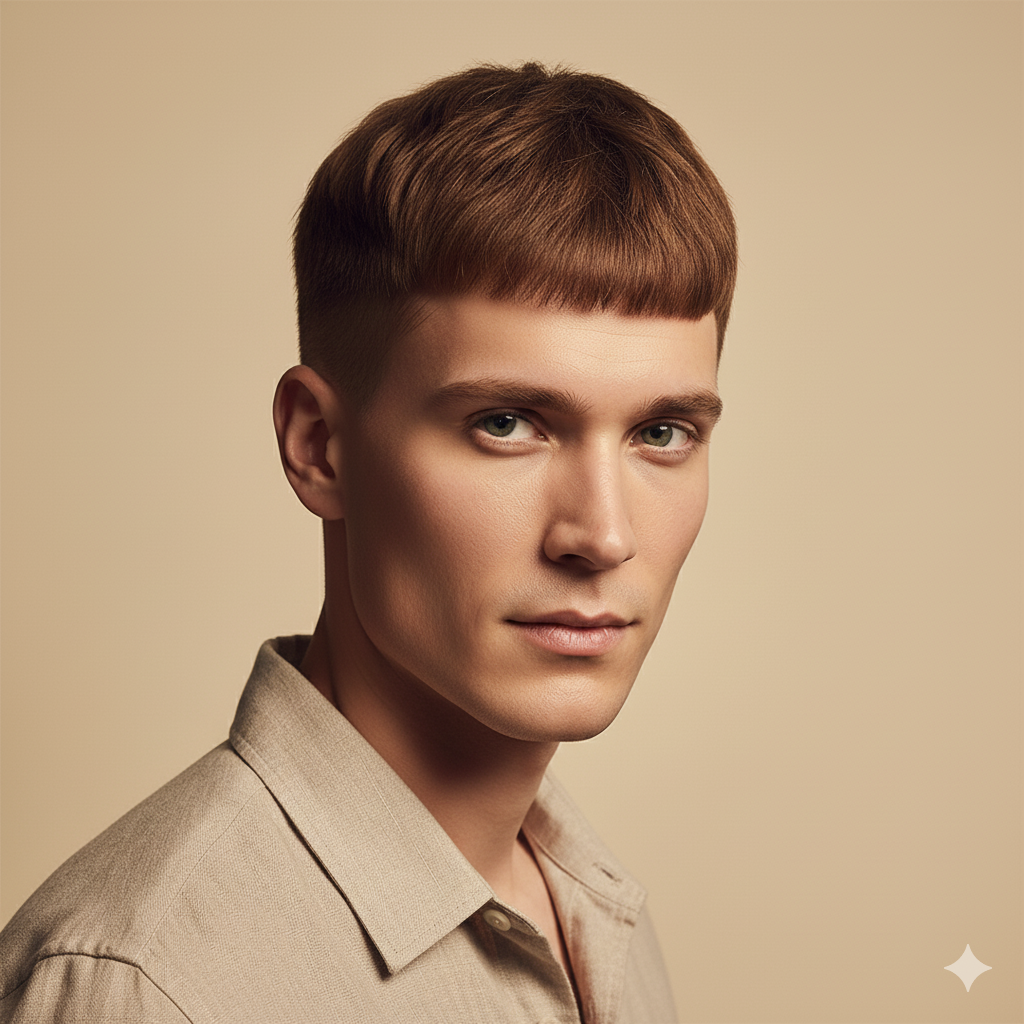
The French crop with a more pronounced, deliberately styled fringe pushes the forward element of the style to its fullest expression — the fringe falling with intention and weight across the forehead in a way that frames the face with genuine visual authority. Rather than sitting lightly at the brow, the styled fringe becomes the defining feature of the entire hairstyle.
The fringe can be worn blunt — a clean horizontal edge that creates a strong, graphic line across the forehead — or soft and textured, with point-cut ends that give it movement and prevent the severity that a perfectly blunt fringe can sometimes project. The blunt fringe suits men with strong, defined features; the soft fringe is more forgiving and more universally appropriate.
The length of the fringe is the most consequential decision in this style. A fringe that sits at the upper eyebrow level creates a more confident, fashion-forward impression; one that falls to the lower eyebrow or slightly below creates a softer, more romantic quality. Most men find the mid-brow length the most versatile and consistently flattering option.
Styling Tip: When asking for a French crop fringe, bring a specific reference image and discuss the precise length relative to your eyebrow position rather than using general descriptors. The difference between a fringe that sits one centimetre above, at, or below the brow is significant to the overall impression of the style, and verbal descriptions alone rarely communicate this precision reliably.
5. The Short French Crop
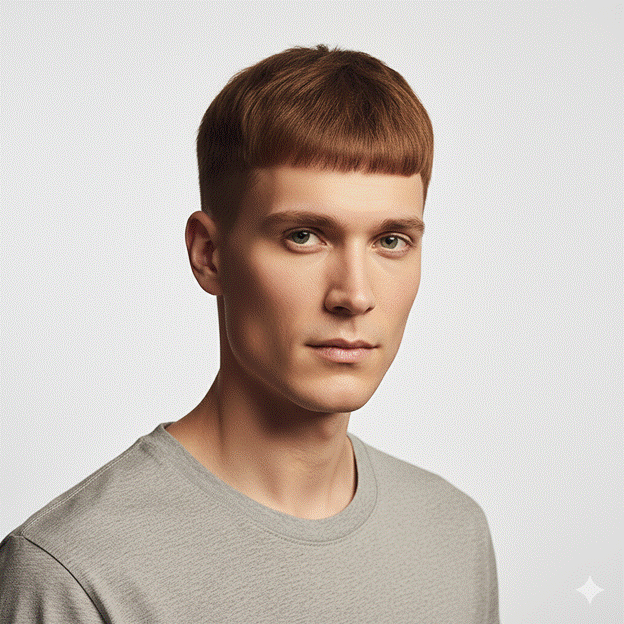
The short French crop takes the style’s fundamental architecture and applies it at the most minimal length — keeping the top section very close to the scalp, typically no more than one to two centimetres, while maintaining the essential forward fringe direction that distinguishes the French crop from a simple buzz cut or crew cut. The result is a style of extreme practicality and clean, understated elegance.
At shorter length, the French crop’s defining characteristics become even more dependent on texture and direction than on volume. The slight forward movement of the hair at the crown, even at very short length, creates the fringe impression that gives the style its name and its character. Product is minimal or absent — the natural direction of the hair, established through the cutting technique, does the work.
This is the most maintenance-free interpretation of the French crop — the style that approaches the wash-and-wear ideal most closely while retaining enough character and intentionality to read as genuinely styled rather than merely cut. It is the ideal choice for men with active lifestyles, warm climates, or simply a preference for grooming simplicity without sacrificing style.
Styling Tip: The short French crop is entirely dependent on the quality of the initial cut — there is no product or styling technique that compensates for imprecise technique at this length. Invest in finding a barber who understands the specific construction of the French crop and can execute the forward direction at very short length without resorting to a generic clipper-all-over approach.
6. The French Crop with Taper
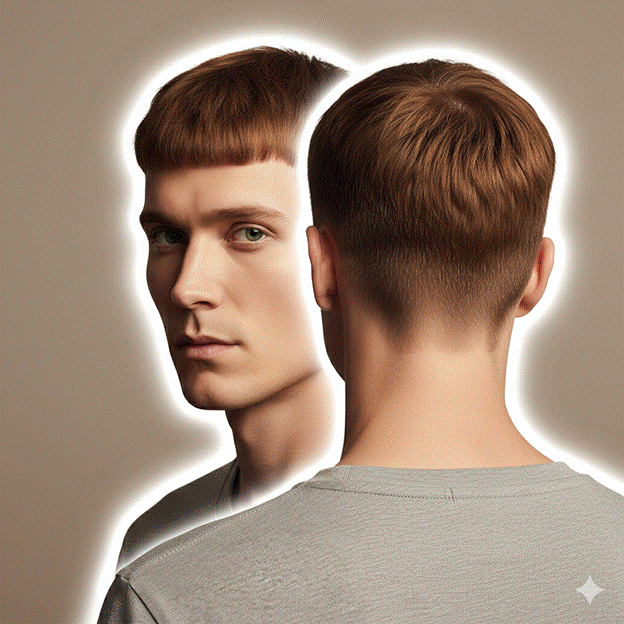
The French crop with a taper preserves the organic, unhurried quality of the classic French crop’s sides and back while adding a subtle graduation that creates more definition and visual cleanliness at the nape and temple than the simple scissor finish provides. The taper begins close at the skin at the nape and hairline and gradually increases to the hair’s natural length at the point where it meets the top section.
This is the French crop for the man who wants something between the fully natural scissor finish and the more dramatic skin fade — a style with grooming precision but without the maintenance demands or the high-contrast drama of the fade. The taper brings definition to the lower section while maintaining the softer, more relaxed character of the traditional French crop silhouette.
The taper also makes the French crop more formally appropriate than either the classic or skin fade versions — its restrained precision suits professional environments while its lack of dramatic contrast avoids the fashion-specific associations of the high fade. It is the most versatile version of the French crop in terms of context appropriateness.
Styling Tip: A neckline taper is particularly important for the overall polish of this style — request a tapered rather than blocked neckline to maintain the soft, organic silhouette quality of the French crop family. A blocked neckline creates a visual finish that is at odds with the natural, flowing character of the style above it.
7. The Messy French Crop
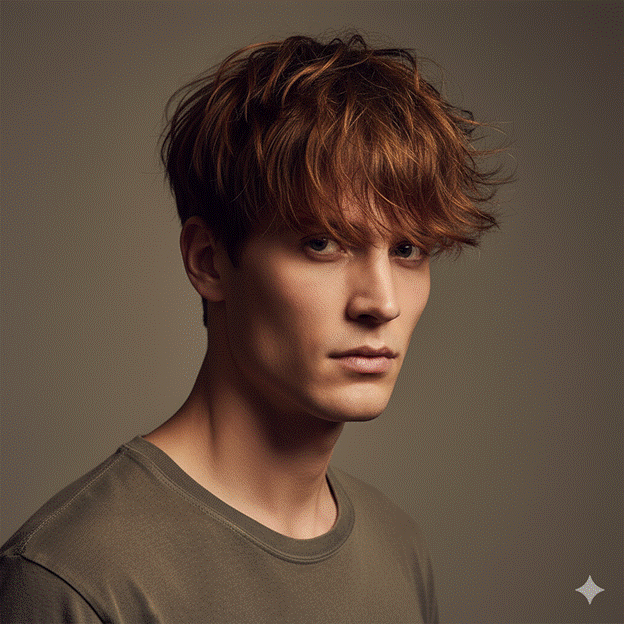
The messy French crop is the most deliberately undone version of the style — one that treats disorder as a design principle rather than a grooming failure. The top section is cut with deliberate weight removal that encourages natural movement and section separation, then styled with minimal product to enhance rather than suppress its natural tendency toward the dishevelled.
The beauty of the messy French crop lies in its apparent effortlessness — and the considerable technique required to make that effortlessness convincing. A truly well-executed messy French crop is as carefully considered as any more formally styled variation; it simply looks as though it arrived at its current state without assistance. This quality, the appearance of artless ease in what is actually artful construction, is one of the most valued qualities in contemporary men’s grooming.
This version suits men who prefer their personal style on the relaxed, anti-establishment side of the spectrum — those who find the perfectly polished groomed look slightly too studied and prefer a style that communicates a certain joyful indifference to conventional standards of careful presentation.
Styling Tip: The key to a convincing messy French crop is product restraint. Apply less than you think you need — a small amount of lightweight matte paste worked through dry hair with a roughly scrubbing motion, then left entirely untouched to settle into its natural position. Any subsequent touching or adjusting smooths the very texture you are attempting to create. Apply, scrub, release, and leave alone.
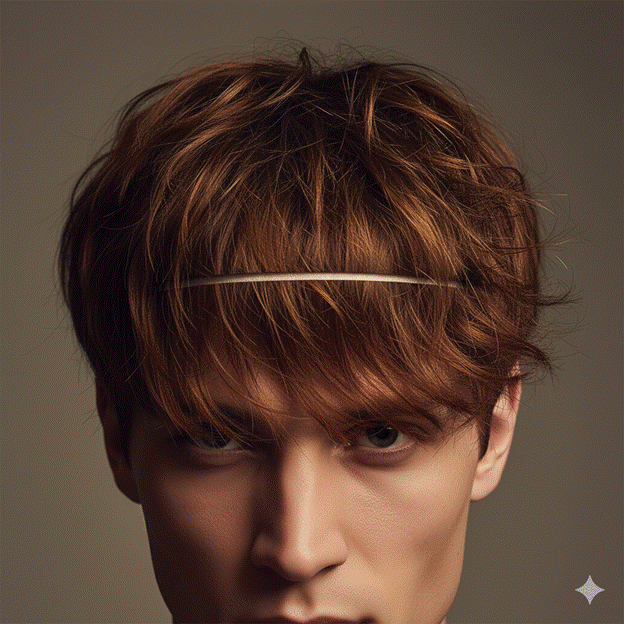
8. The French Crop with Hard Part
The addition of a razor-shaved hard part to the French crop introduces a graphic precision that transforms the style’s character fundamentally — from the soft, organic quality of the traditional cut to something more architectural and deliberately designed. The clean white line of the shaved part against the dark hair on either side creates a geometric contrast that gives the style an editorial, fashion-forward quality.
The hard part in a French crop typically runs from the front hairline back toward the crown on one side, creating a clean visual separation that anchors the forward direction of the fringe while adding a secondary design element below it. The part line and the fringe create two parallel horizontal elements — one defined by razor precision, the other by hair movement — that give the style a composed, layered quality.
This version suits men who approach their personal grooming as an expression of design sensibility — those who are interested in precise, considered style choices and who understand that a well-placed line can communicate as much about personality as any more overtly expressive choice.
Styling Tip: The hard part requires regular maintenance to retain its defining sharpness — a detail trimmer or straight razor applied every ten to fourteen days keeps the part line precise. Between barbershop visits, you can refresh the part yourself using a detail trimmer held at 90 degrees to the scalp along the original line. The precision of the part is the entire argument of the style — allow it to grow out and the style loses its defining character entirely.
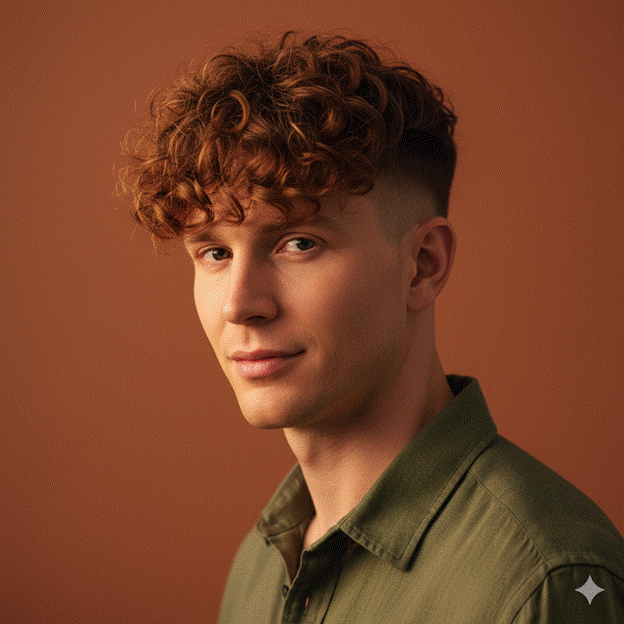
9. The French Crop for Curly Hair
The French crop for curly hair is one of the most exciting and most underexplored territories in contemporary men’s barbering — a style that takes the French crop’s fundamental architecture and allows natural curl texture to define its surface character entirely. The result is something that belongs simultaneously to the French crop tradition and to the natural hair movement, carrying the best qualities of both.
The curl pattern creates a fringe of natural volume and bounce that the straight-hair French crop can only approximate through product and technique. The organic movement of the curls falling forward across the forehead has a warmth and life to it that is genuinely beautiful, and the slight shortness of the sides and back in a French crop proportion allows the curl pattern to express itself at the crown without excess weight pulling it down.
This style particularly suits men with type 2 and type 3 curl patterns — the looser spiral and wave textures that naturally fall forward with the right length and weight distribution. For tighter coil patterns, a slightly longer top section may be required to allow gravity to bring the curls toward the forehead in a fringe direction.
Styling Tip: Do not attempt to replicate the straight-hair French crop’s flat, smooth surface when working with curly hair — the goal is to work with the curl’s natural direction rather than against it. Ask your barber to cut the top section while the hair is dry in its natural curl state rather than wet and stretched, so the cut is calibrated to the hair’s actual behaviour. Apply a curl cream or light gel to damp hair and diffuse on low heat to encourage the forward fringe direction.
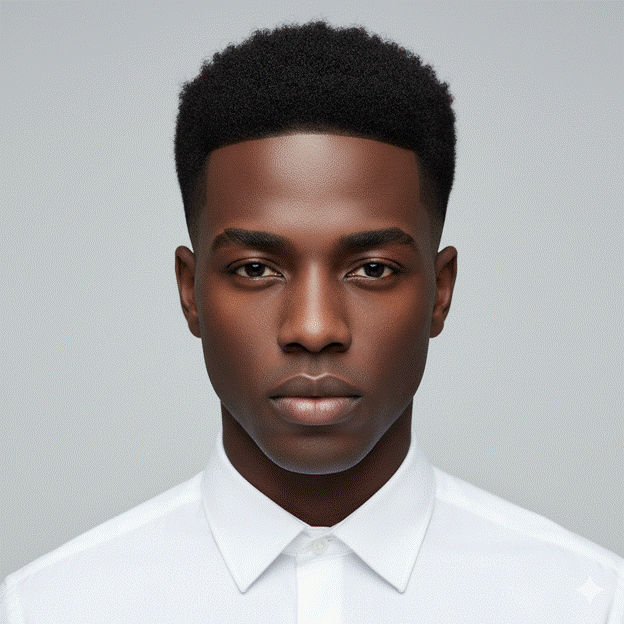
10. The French Crop with Fade and Line Up
The French crop with fade and line up is the most precisely executed and formally groomed expression of the style — combining the clean gradient of a fade on the sides and back with the razor-sharp geometric definition of a line up at the forehead, temple, and sideburn. It is a hairstyle of extraordinary precision — one where every edge has been rendered with absolute intentionality.
The line up adds a structural frame to the French crop fringe — the clean, right-angled edge at the forehead hairline creating a visual container for the top section’s forward movement. The fringe, seen against the sharp line-up edge, reads as even more deliberately styled — its organic texture contrasting with the geometric perfection of the hairline below it.
This is the French crop at its most formally polished — appropriate for men who move in environments where the highest standards of professional grooming are expected and appreciated, and who want a style that meets those standards while maintaining the French crop’s essential casual elegance.
Styling Tip: The forehead corners of the line up — where the horizontal front hairline transitions to the vertical temple — are the most technically demanding and most visible elements of this style. Request that your barber take particular care at these corners, using a straight razor or precision trimmer to create a genuinely right-angled transition. Rounded or imprecise corners undermine the entire geometric argument of the line up.
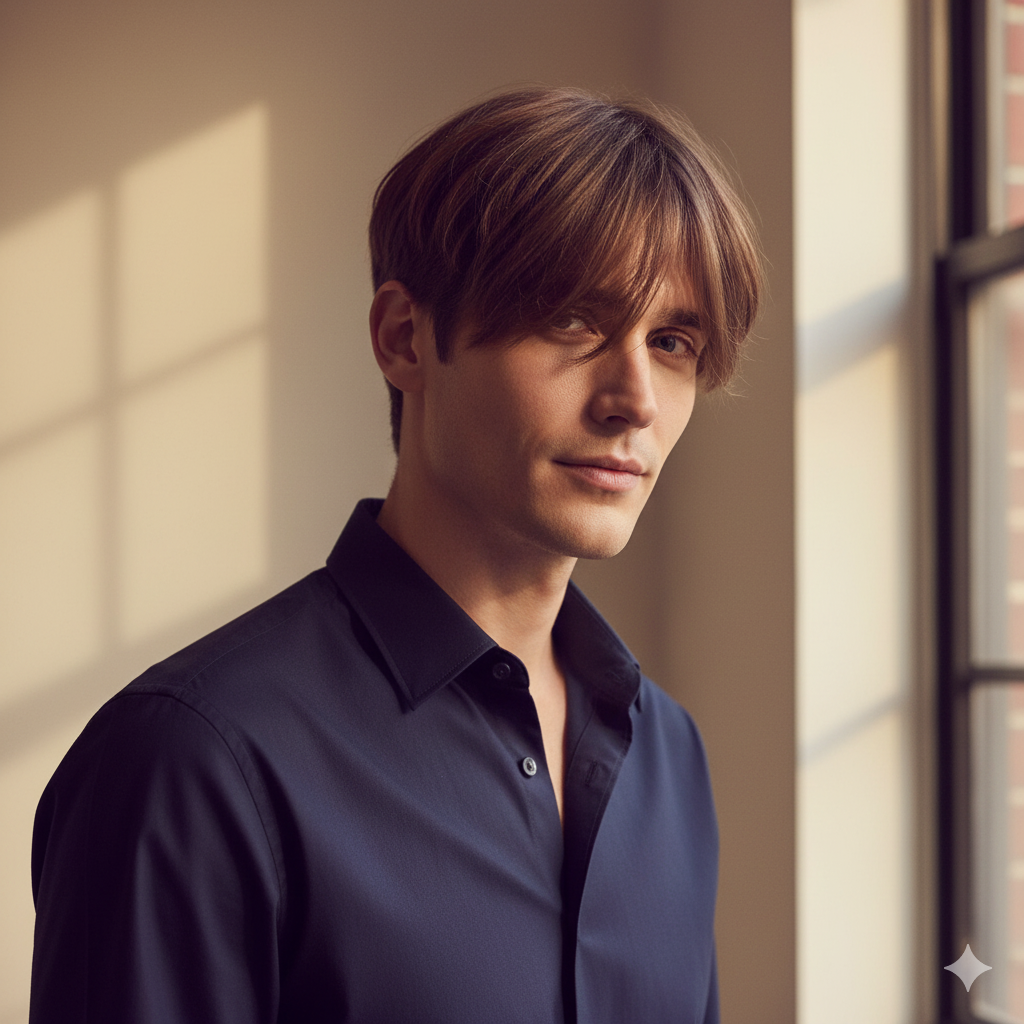
11. The Long French Crop
The long French crop extends the top section beyond the conventional French crop length — pushing the fringe lower across the forehead and allowing the sides and back to retain more length than the standard interpretation. The result is a style that sits between the traditional French crop and the longer textured cuts that populate contemporary men’s fashion editorial, combining the French crop’s forward direction with a more generous, flowing surface quality.
At longer length, the fringe becomes a more significant design element — it has enough weight and movement to be genuinely expressive, falling across the forehead with a textural richness that the shorter versions cannot match. The sides and back, while still shorter than the top, retain enough length to give the overall silhouette a softer, less cropped quality.
This version bridges the gap between the classic French crop and the longer, more voluminous men’s cuts that share the fringe-forward direction. It suits men who want to grow beyond the standard French crop without losing its essential character — and who have the slightly longer styling commitment that the additional length requires.
Styling Tip: At longer lengths, the French crop fringe has a tendency to split or separate unevenly throughout the day, particularly in humid conditions. A light-hold spray applied to the fringe section after styling — from a distance of 30cm in a sweeping motion — creates enough flexibility hold to keep the fringe together without stiffening it. Avoid heavy wax or pomade on the fringe at longer lengths, as their weight causes uneven separation.
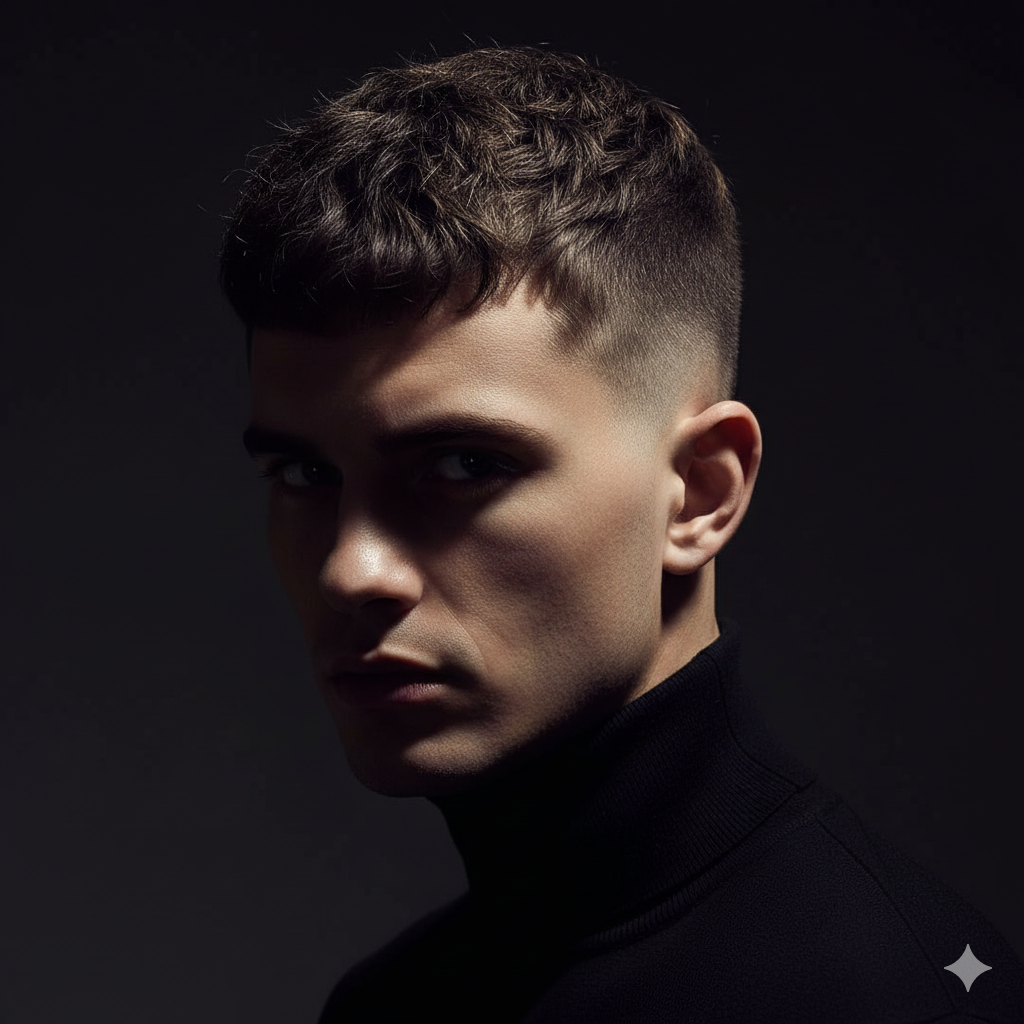
12. The Disconnected French Crop
The disconnected French crop applies one of contemporary barbering’s most architecturally striking techniques to the French crop form — the deliberate absence of any graduation between the longer top section and the closely cropped sides creates a sharp, graphic line of separation that transforms the style from a flowing form into a composition of contrasting planes.
The disconnect creates an immediate visual drama that the graduated styles in this collection do not possess. The viewer’s eye registers the sharp transition between the rich texture of the top section and the close-cropped sides as a deliberate design decision — and that intentionality communicates a level of style sophistication that more conventional cuts cannot match.
The disconnected French crop is a bold choice — one for the man who is genuinely comfortable making a strong visual statement through his grooming. It is worn confidently by some of the most style-forward men in contemporary fashion and music, and its cultural associations carry a creative, independent quality that more conservative interpretations of the French crop lack.
Styling Tip: The disconnection line — the sharp, ungraduated boundary between the top and side sections — must be maintained with absolute precision to retain the style’s defining character. Any blurring or growing-out of this line immediately undermines the style’s visual argument. Visit your barber every two to three weeks specifically to re-establish the disconnection line, even if the overall length does not yet require a full cut.
Conclusion
The French crop’s enduring appeal rests on a quality that is deceptively simple to describe and remarkably difficult to achieve: it makes looking good look easy. Across all 12 of the interpretations explored in this guide — from the pure minimalism of the short French crop to the graphic boldness of the disconnected version — this quality of effortless style remains the constant.
What makes the French crop such a worthy investment of grooming attention is its extraordinary versatility. It is a style that grows with you — that can begin as a conservative classic crop and evolve, through incremental choices about fade, texture, fringe length, and detail work, into something increasingly personal and increasingly expressive. Few haircuts offer this kind of stylistic journey within a single fundamental form.
Find the French crop that fits your face, your lifestyle, and your aesthetic vision. Find the barber who understands its specific construction and can execute your chosen variation with genuine skill. And wear it with the easy, unhurried confidence that the French crop has always carried — and always rewarded.
Frequently Asked Questions
Q1. What is a French crop haircut?
A French crop is a men’s hairstyle characterised by short, textured hair on top with a fringe that sits naturally across the forehead, combined with shorter sides and back that taper or fade away from the top section. Its defining features are the forward direction of the top section and the fringe, which together create a soft, approachable quality that distinguishes it from other short men’s hairstyles. It is one of the most versatile and widely worn short haircuts in contemporary men’s grooming.
Q2. What face shape suits a French crop?
The French crop is one of the most universally flattering men’s haircuts precisely because its proportions work across most face shapes. For round faces, the slightly longer top section and forward fringe add vertical interest and definition. For square faces, the soft fringe reduces the visual impact of a strong jawline. For oval faces, any version of the French crop works naturally. For oblong or rectangular faces, a slightly fuller top with less height suits best. The fringe’s horizontal line is generally softening in its effect, which makes the French crop particularly well-suited to men with angular or strong facial features.
Q3. How do you style a French crop at home?
The French crop’s daily styling requirement is genuinely minimal. For the classic and short versions, a small amount of matte clay or paste applied to slightly damp or dry hair and worked through with the fingertips, followed by air drying, produces the authentic finish. For the textured version, apply to dry hair with a scrubbing motion and leave untouched. For the longer French crop, a blow-dryer on medium heat directed forward and slightly downward while the hair is damp will establish the fringe direction before product application. The fundamental principle is always the same: minimal product, forward direction, and the restraint to leave the hair alone once it is set.
Q4. How often should you get a French crop cut?
The maintenance frequency depends on the specific version and how quickly your hair grows. French crops with skin fades or line ups require the most frequent attention — typically every two to three weeks to maintain the fade’s precision and the line’s sharpness. Classic scissor-tapered versions can be maintained every four to six weeks. The fringe length is often the most time-sensitive element — once it begins to fall below the eyebrows, the style’s characteristic proportions start to shift. Many men find a light self-trim of the fringe between barbershop visits the most practical way to manage this.
Q5. Is a French crop suitable for thin or fine hair?
The French crop is an excellent choice for men with thin or fine hair. The shorter length significantly reduces the weight that causes fine hair to lie flat, and the textured cutting technique used in most French crop variations creates the appearance of greater density and volume. Matte products rather than heavy pomades or wax are best for fine hair in a French crop — heavy products weigh fine hair down and reduce the body that the cut creates. A slight blow-dry forward from the roots before product application adds further volume lift for men with the finest hair textures.