Introduction
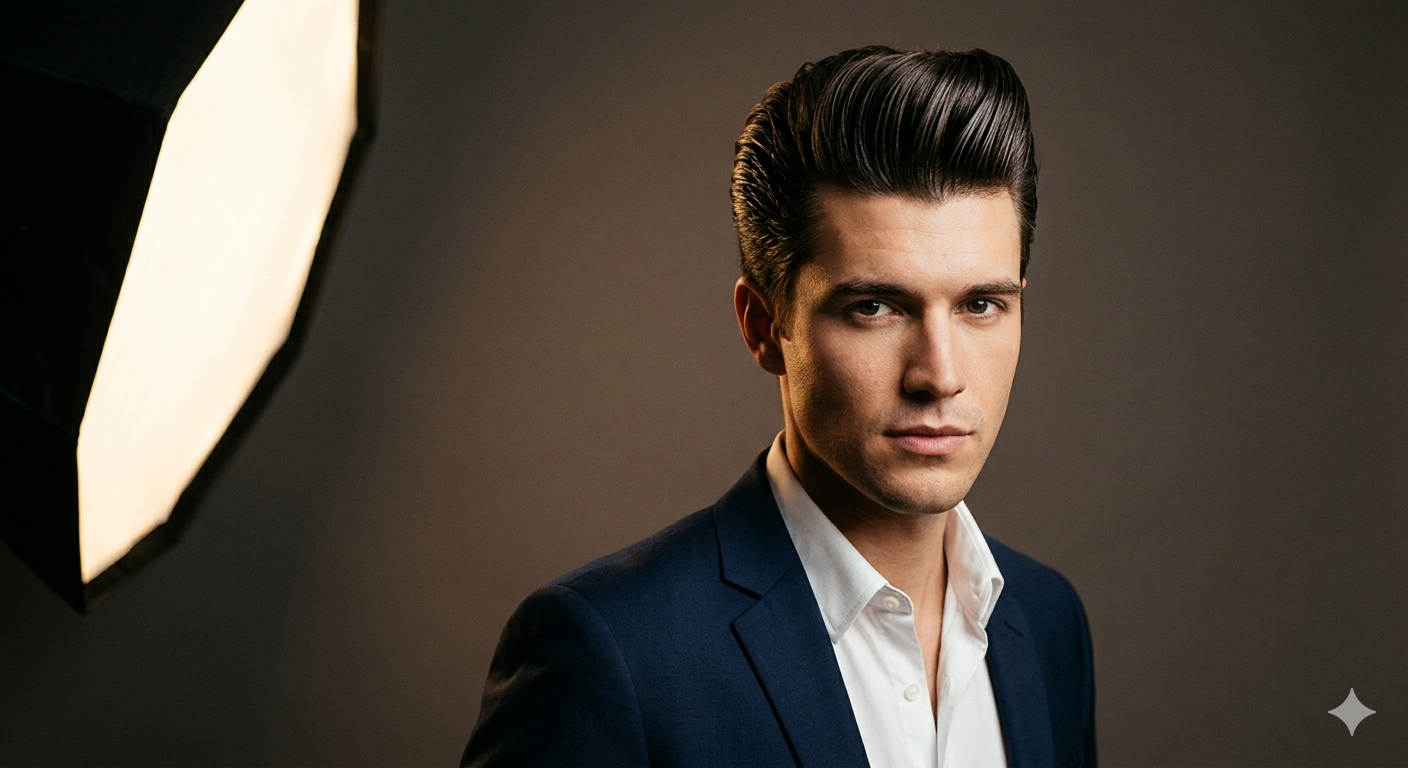
Few hairstyles in the history of men’s grooming carry the cultural weight, visual drama, and enduring relevance of the pompadour. Born in the salons of 18th-century France, reinvented by the icons of 1950s rock and roll, and continuously reimagined by successive generations of style-conscious men, the pompadour is one of those rare hairstyles that manages to feel simultaneously historical and entirely contemporary.
What makes the pompadour so enduringly compelling is its essential quality: volume swept upward and back from the forehead with an architectural confidence that communicates care, personality, and a deliberate engagement with personal style. It is a hairstyle that announces its wearer as someone who has made a conscious choice — and is entirely comfortable with the attention that choice attracts.
In this guide, we explore 12 of the most compelling pompadour hairstyles for men available today — from the classic high-volume sweep that references the style’s golden age to the refined modern interpretations that bring it firmly into the contemporary grooming landscape. Each style is paired with expert styling guidance to help you find and maintain the pompadour that best expresses who you are.
1. The Classic High-Volume Pompadour
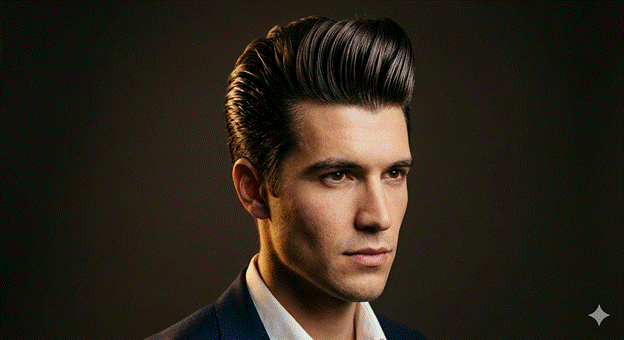
The classic high-volume pompadour is the original — the definitive expression of everything the style was created to achieve. Swept dramatically upward from the forehead and back toward the crown, it creates a towering volume that is simultaneously theatrical and genuinely elegant. In its purest form, it is one of the most visually commanding hairstyles in the entire canon of men’s grooming.
The high-volume pompadour requires length on top — typically four to six inches — and shorter, tapered sides that allow the crown’s volume to read without competition. The sides are usually cut with a scissor taper or a soft fade that maintains the traditional character of the style while providing the clean silhouette that contemporary barbering demands.
The product finish matters enormously in the classic pompadour. A petroleum-based pomade or a high-shine water-based alternative provides the hold and luminosity that defines the style’s most iconic expressions — the lacquered, light-catching surface that has graced the covers of style publications for seven decades.
Styling Tip: To build the classic pompadour’s signature height, blow-dry the hair upward and backward from the forehead using a round brush, working against the natural growth direction. Apply a medium-hold pomade to slightly damp hair before drying, then finish with a light application of high-shine pomade on the dry surface for the characteristic lustre that defines the style
2. The Modern Pompadour with Skin Fade
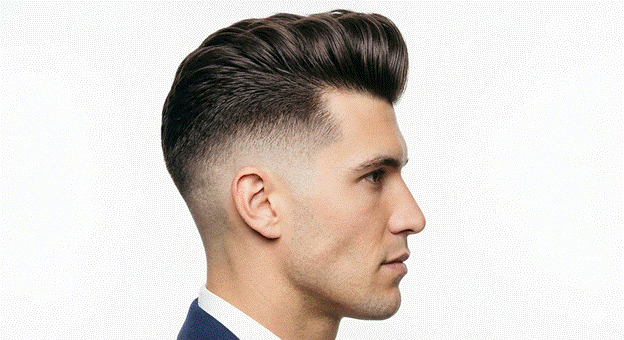
The modern pompadour with skin fade is the contemporary barbering world’s most accomplished reinterpretation of the classic style — one that preserves the essential character of the pompadour while updating its silhouette for the current aesthetic landscape. The skin fade on the sides and back creates a precise, architectural contrast with the voluminous top that reads as deliberately modern and impeccably groomed.
The gradient of the fade — from bare skin at the temple to gradually increasing length toward the crown — creates a visual movement that complements rather than competes with the sweep of the pompadour above. The cleanness of the fade at the hairline and around the ears is the technical signature of this style; it demands the most precise barbering technique and rewards it with a look of extraordinary refinement.
This is the pompadour for the man who wants the style’s iconic volume and presence with a contemporary edge — someone who values both the heritage of the form and the precision of its modern execution.
Styling Tip: Request a high skin fade — a zero at the skin graduating to a two or three at the occipital — rather than a low fade for the most dramatic contrast with the pompadour volume. Visit your barber every two to three weeks to maintain the fade’s precision; a grown-out skin fade detracts significantly from the overall impression of the style.
3. The Textured Pompadour
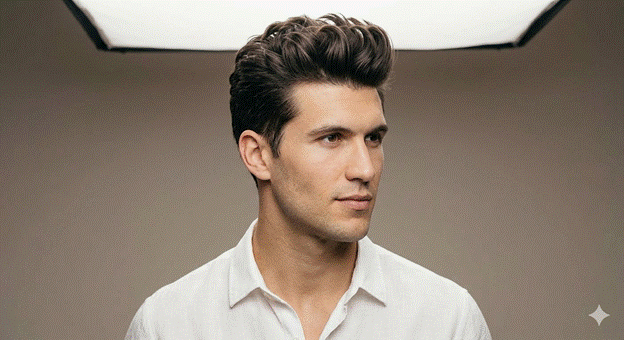
The textured pompadour replaces the sleek, lacquered surface of the classic style with a deliberately dishevelled, piece-y texture that feels entirely at home in the current men’s grooming aesthetic. Rather than the smooth, unified sweep of the traditional pompadour, the textured version celebrates individual sections and natural movement — a more relaxed, confident interpretation of the same essential form.
The textured approach makes the pompadour accessible to men with naturally wavy or curly hair, as it works with the hair’s natural movement rather than requiring it to be suppressed under product. It also suits men who prefer a lower-maintenance routine — the textured pompadour is more forgiving of imprecise styling and looks equally good whether freshly styled or at the end of a long day.
Product choice is critical for the textured pompadour. Matte clay, paste, or wax rather than shiny pomade creates the separation and definition that the style requires, while maintaining the dry, natural finish that distinguishes it from its classic counterpart.
Styling Tip: Apply a small amount of matte clay to towel-dried hair and distribute evenly with the fingertips before rough blow-drying in a backward direction. Once dry, work a pea-sized amount of wax between the palms and apply with the fingertips to define individual sections. Avoid combing — the fingertip application is what creates the intentional texture that defines this style.
4. The Disconnected Pompadour
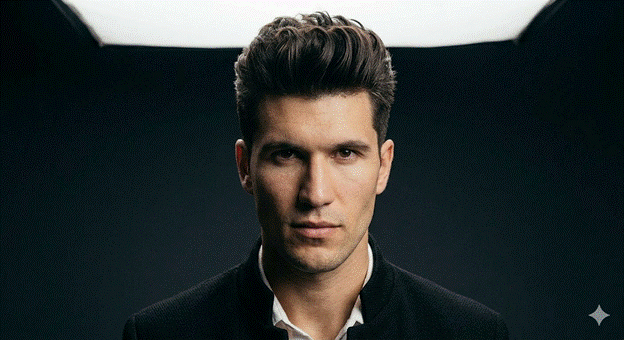
The disconnected pompadour is one of the most architecturally bold interpretations of the style available — characterised by a sharp, defined line of separation between the long top section and the closely cropped sides, with no gradual transition between the two. The contrast is deliberate, pronounced, and produces a silhouette of remarkable visual impact.
The disconnect creates a graphic quality that photographs extraordinarily well and reads as fashion-forward in a way that more graduated styles do not. It is a hairstyle that has found particular resonance within the worlds of high-fashion editorial, music, and creative culture — environments where the willingness to make a strong visual statement is a social and professional asset.
The disconnected pompadour requires confidence to wear — it is not a style that allows for ambivalence. Worn with the right attitude, however, it is among the most compelling and distinctive hairstyles available to the contemporary man.
Styling Tip: The precision of the disconnection line is everything in this style. Ask your barber to create a hard part — a razor-defined separation between the top and side sections — that is geometrically clean on both the natural side part and at the temple. The sharpness of this line determines the visual impact of the entire style.
5. The Pompadour with Beard
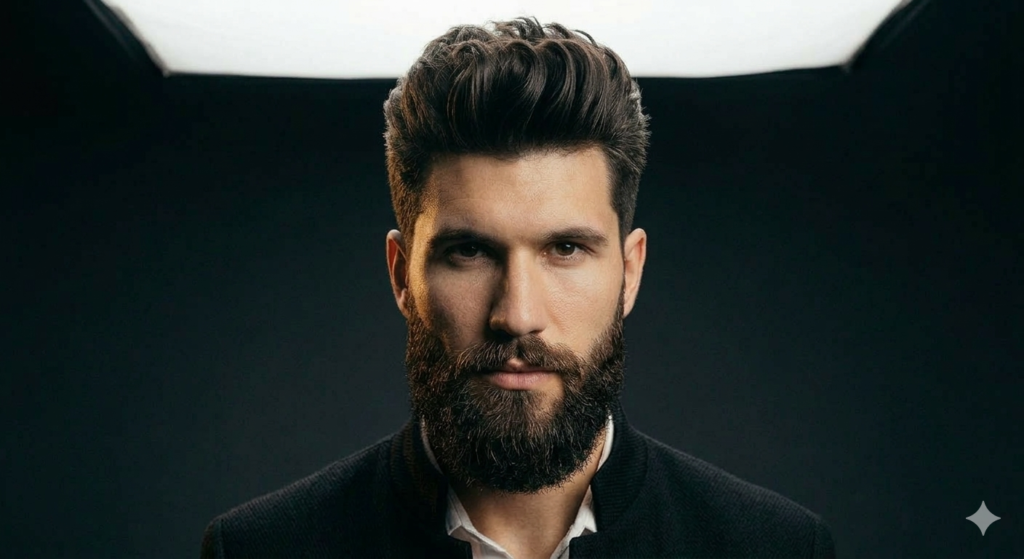
The combination of a full pompadour with a well-groomed beard is one of contemporary men’s grooming’s most powerful aesthetic statements — a pairing that references both the masculine heritage of mid-century style and the modern appreciation for facial hair as a deliberate design element of overall personal presentation.
The beard provides a lower anchor to the face that balances the upward energy of the pompadour, creating a complete facial composition that frames the features from jawline to crown with confident intentionality. The most effective versions of this combination maintain a clear stylistic relationship between the two elements — both should be equally groomed, equally considered, and equal participants in the overall look.
The scale of the beard should respond to the scale of the pompadour. A very high-volume pompadour pairs most naturally with a fuller, more substantial beard; a lower-volume textured pompadour sits more comfortably beside a shorter, more refined beard.
Styling Tip: Ensure that the transition between the fade and the beard is executed with equal precision to both elements. The area where the fade meets the beard line — the sideburn zone — is technically the most challenging part of this combination and the most visible indicator of barbering quality. Request that this transition be blended rather than hard-edged for the most natural and polished result.
6. The Low Pompadour
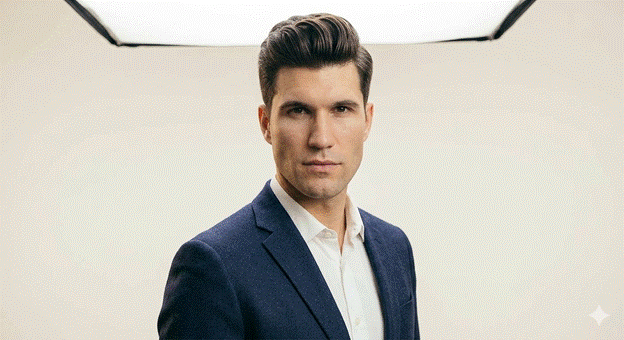
The low pompadour is the refined, understated member of the pompadour family — less theatrical than the classic high-volume style but no less elegant, and considerably more versatile in its daily wearability. The volume is present but restrained, swept back from the forehead at a lower angle that suits a wider range of face shapes and professional contexts than its more dramatic counterparts.
This is the pompadour for the man who wants the style’s essential character — the clean lines, the forward momentum of the swept volume, the sense of deliberate personal grooming — without the theatrical commitment of the full high-volume interpretation. It is equally at home at a creative agency as it is in a boardroom, which makes it one of the most practically versatile pompadour styles available.
The low pompadour also suits men with naturally finer hair, as the reduced height demand makes it easier to achieve convincing volume without the heavy product load that the classic style requires.
Styling Tip: For the low pompadour on fine hair, apply a volumising mousse to damp hair at the roots before blow-drying upward and backward with a paddle brush rather than a round brush. The paddle brush creates a slightly flatter, more controlled volume than the round brush — perfect for the low pompadour’s measured, restrained character.
7. The Pompadour with Hard Part
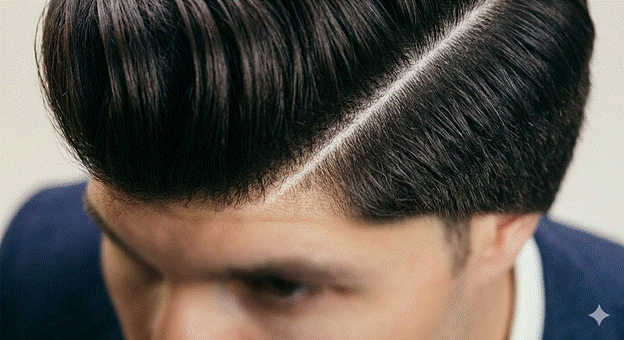
The hard part — a razor-defined parting line shaved directly into the scalp — adds a geometric precision to the pompadour that transforms the style from a purely volumetric statement into something that also carries strong graphic design sensibility. The sharp white line of the shaved part creates a contrast against the darker hair on either side that is instantly arresting.
The hard part provides a clean visual anchor for the pompadour’s sweep, making it absolutely clear where the style begins and in which direction it moves. It also resolves one of the pompadour’s occasional styling challenges — the tendency of a natural parting to migrate slightly between styling sessions — by creating a permanent reference point that keeps the style consistent.
The hard part suits men with strong facial features and clear personal style. It is a grooming choice that communicates precision and attention to detail — qualities that extend far beyond the barbershop into the broader impression of personal presentation.
Styling Tip: Position the hard part at your natural parting line rather than creating an artificial one elsewhere. A hard part that follows the natural parting looks intentional and precise; one that fights the natural growth pattern looks forced and is harder to maintain between barbershop visits. Refresh the part with a straight razor or trimmer edge every two weeks to maintain its defining sharpness.
8. The Curly Pompadour
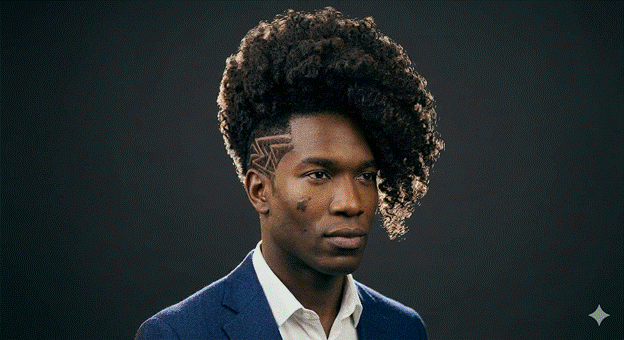
The curly pompadour represents one of the most exciting and underexplored territories in contemporary men’s hairstyling — a celebration of natural curl texture within the architectural framework of one of history’s most iconic styles. Rather than suppressing or smoothing curl pattern, the curly pompadour allows natural texture to define the volume and surface character of the style.
The result is something entirely its own: the upward sweep and intentional volume of the pompadour, expressed through the organic, three-dimensional complexity of natural curl. The visual impression is simultaneously bold and natural — a style that feels genuinely personal rather than copied from a reference image.
For men with type 3 or type 4 curl patterns, the curly pompadour offers a way to wear a classic style that fully respects — and showcases — the natural character of their hair. It requires a cutter who genuinely understands curl mechanics and can shape the top section to maintain volume and definition as the curl dries.
Styling Tip: Apply a curl-defining cream to wet hair from root to end before diffusing on a medium heat setting. Once dry, lift the roots gently with a pick or wide-tooth comb to maximise the volume at the crown without disturbing the curl definition at the surface. Finish with a light-hold curl gel to seal the definition without stiffness.
9. The Side-Swept Pompadour
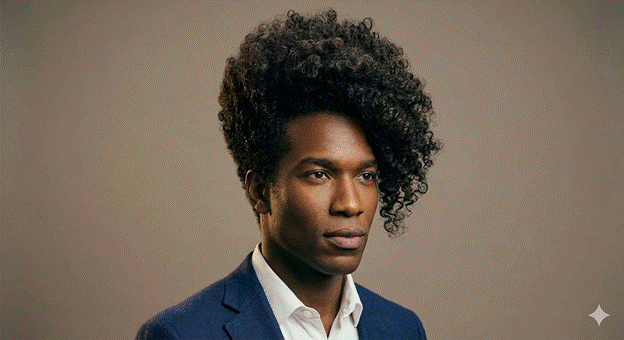
The side-swept pompadour introduces asymmetry and diagonal movement into the classic form — redirecting the sweep not purely backward but across the head in a flowing diagonal that adds dynamism and a sense of effortless momentum to the style. It softens the more frontal, symmetrical quality of the traditional pompadour and gives the style a more relaxed, fashion-forward character.
The side sweep works particularly well for men with oval and heart-shaped faces, as the diagonal direction of the hair draws the eye across the face rather than directly upward, creating a flattering visual width at the temples and forehead. It also suits men who find the full frontal pompadour volume somewhat intimidating — the side-swept version achieves comparable elegance with marginally less theatrical commitment.
The side-swept pompadour has found significant popularity within the men’s fashion editorial world, appearing regularly in both print and digital publications as a hairstyle that bridges the classic and contemporary with unusual grace.
Styling Tip: Establish the direction of the side sweep before applying any product, while the hair is still damp from washing. Use a wide-tooth comb to train the hair in the intended direction, then apply product and blow-dry with the airflow following the established sweep. Once dry, a final light pass with a fine comb defines the sweep’s edge and surface with precision.
10. The Pompadour Fade with Design
The pompadour fade with shaved design is the most expressive and individualistic interpretation of the style — a combination that treats the faded sides as a canvas for geometric or organic pattern work carved directly into the closely cropped hair. The result is a hairstyle that is as much an artwork as a grooming choice.
Design elements range from simple geometric lines — a single shaved stripe parallel to the fade line, a subtle diamond or zigzag at the temple — to complex graphic compositions that reference abstract art, architectural patterns, or personal symbols. The pompadour volume above provides the grand gesture; the design below provides the intimate detail that rewards closer inspection.
This is a style that demands both a highly skilled barber and a wearer who is genuinely comfortable with the attention it attracts. It is bold, individual, and entirely unambiguous about its intention: to make an impression and leave a lasting one.
Styling Tip: When commissioning a fade design, bring a very specific visual reference rather than describing the pattern verbally. Discuss the scale of the design in relation to the fade length — too small and the design disappears into the hair texture; too large and it competes with the pompadour volume above. A single, well-placed element at the temple is almost always more elegant than multiple design elements on both sides.
11. The Long Pompadour
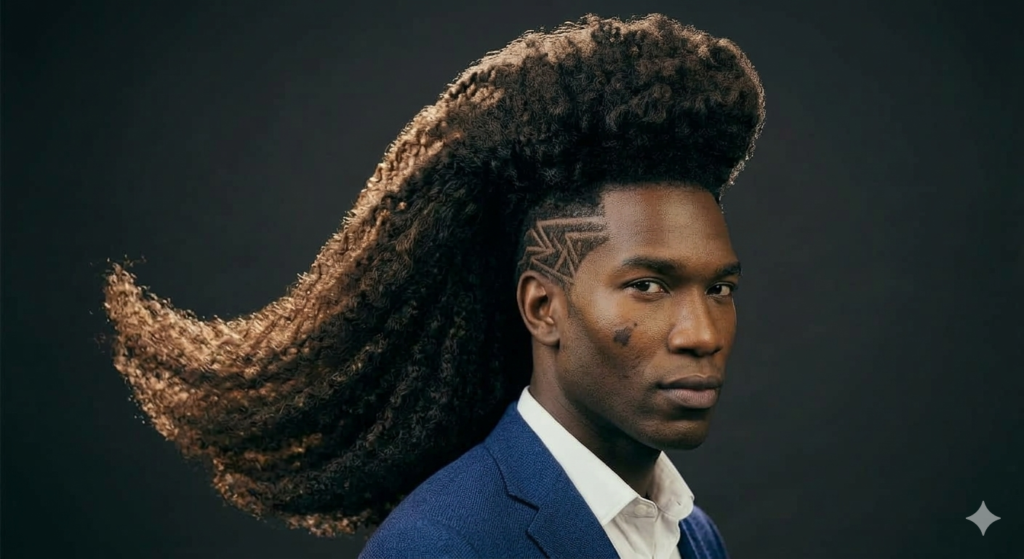
The long pompadour pushes the style’s volumetric ambitions to their furthest expression — extending the top section beyond the conventional pompadour length to create a silhouette of extraordinary height and dramatic visual presence. This is a hairstyle that requires serious commitment in terms of both growth time and daily styling, but the result is something genuinely spectacular.
At greater length, the pompadour develops a flowing quality that shorter versions cannot achieve — the hair moves and catches light in ways that add a cinematic dimension to the overall effect. The long pompadour has been worn by some of the most visually distinctive figures in contemporary music and fashion, and its cultural associations carry significant creative weight.
Maintaining the health of longer hair is essential to this style’s success. Regular trims to remove split ends, consistent deep conditioning, and careful heat protection during blow-drying are all non-negotiable elements of the long pompadour’s care routine.
Styling Tip: The long pompadour’s weight can cause it to collapse throughout the day, particularly in warmer or more humid environments. To maintain height and hold, apply a light-hold hairspray to the finished style from a distance of 30cm, using a sweeping motion rather than concentrating the spray on one area. This creates a flexible hold that preserves movement while preventing collapse.
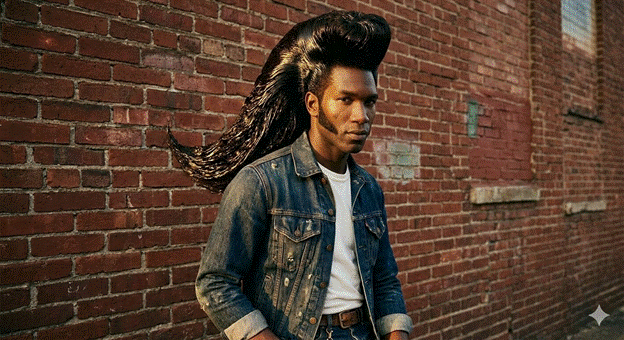
12. The Rockabilly Pompadour
The rockabilly pompadour is the style in its most romantically pure and culturally specific expression — the form as it was worn by the architects of mid-century rock and roll, with all the greased-up, high-shine, larger-than-life energy that that era and musical tradition demanded. It is a hairstyle with a complete aesthetic philosophy embedded in its very structure.
The rockabilly pompadour is characterised by extraordinary height, maximum product shine, extended sideburns, and an overall impression of carefully maintained excess. It is worn as an act of cultural tribute and personal declaration — a statement that the wearer has engaged deeply with the history of the style and chosen to embody its most committed expression.
The revival of rockabilly culture in successive generations — from the 1970s through to the present day — has kept this interpretation of the pompadour perpetually alive within a passionate and knowledgeable enthusiast community. Wearing it is to join a living tradition.
Styling Tip: Authentic rockabilly pompadour styling requires a petroleum-based pomade with genuine hold — products such as Murray’s Superior or Black and White Pomade are the traditional choices of the rockabilly community. Apply liberally to dry hair and use a wide-tooth comb to build the volume before defining the surface with a fine-tooth comb. The sideburns should be maintained at a precise length, typically level with the mid-ear, and the overall silhouette should be generous and unapologetic.
Conclusion
The pompadour hairstyle’s extraordinary longevity — from the courts of 18th-century France through the recording studios of 1950s Memphis to the fashion editorials of today — is the most persuasive possible argument for its fundamental rightness as a form. It works because it does something genuinely beautiful: it takes the raw material of hair and, through the simple act of elevation and sweep, creates a visual statement that is simultaneously personal and universal.
The 12 interpretations explored in this guide demonstrate the pompadour’s remarkable versatility — its capacity to express anything from rock and roll rebellion to corporate refinement, from classic elegance to contemporary edge, depending entirely on the choices made in cut, product, and finish.
Find the pompadour that speaks to your aesthetic vision, invest in finding the barber who understands how to execute it, and wear it with the unhesitating confidence that this most confident of hairstyles has always demanded and always rewarded.
Frequently Asked Questions
Q1. What face shape suits a pompadour hairstyle?
The pompadour is one of the most versatile hairstyles in terms of face shape compatibility. It is particularly flattering on oval and oblong faces, where the vertical height of the style is proportionally appropriate. For round faces, the pompadour adds desirable length and definition. For square faces, a softer, textured pompadour with a rounded rather than sharp silhouette works best. For heart-shaped faces, a low pompadour or side-swept variation balances the wider forehead. The style is most challenging on very strong square jaw shapes, where the pompadour’s height can over-emphasise width at the forehead.
Q2. What products are best for styling a pompadour?
The ideal product depends on the finish desired. For the classic high-shine pompadour, a high-hold water-based pomade offers the luminosity and hold of traditional petroleum products with easier washing out. For the textured pompadour, a matte clay or paste creates definition without shine. For the curly pompadour, a curl cream followed by a light-hold gel preserves natural pattern while building volume. As a general rule, apply products to damp rather than dry hair for the most even distribution and most reliable hold throughout the day.
Q3. How long does your hair need to be for a pompadour?
The top section requires a minimum of three to four inches of length for a convincing classic pompadour. The low pompadour and textured pompadour can be achieved with slightly less — around two and a half to three inches — while the long pompadour requires six or more inches of top length. The sides are typically cut much shorter, from a skin fade at the most extreme to a number three or four at the most conservative. Most men growing into a pompadour from a short style will require four to six months of growth before the top section has sufficient length.
Q4. How do you maintain a pompadour between barbershop visits?
The daily maintenance routine for a pompadour involves washing or wetting the hair, applying the appropriate styling product to damp hair, blow-drying in the backward and upward direction of the style, and finishing with a comb or fingers depending on the desired surface texture. The sides and back require barbershop attention every two to three weeks for skin fade and disconnected styles; less frequently for scissor-tapered versions. A daily two-minute styling routine, once the technique is established, is all that is required to maintain the pompadour’s essential character.
Q5. Is a pompadour appropriate for professional environments?
Yes — with important qualifications. The classic pompadour, low pompadour, side-swept pompadour, and textured pompadour are all entirely appropriate in professional environments, including conservative corporate settings, when executed with a polished product finish and maintained to a high standard of cleanliness and precision. The disconnected pompadour, rockabilly pompadour, and pompadour with shaved design are more naturally suited to creative industries where personal style expression is welcomed or actively valued. The pompadour with beard bridges both worlds effectively, depending on the beard’s length and grooming precision.