Introduction
A short beard is one of the most powerful grooming tools available to a man — and one of the most underestimated. In the space between a clean shave and a full beard lies a rich landscape of styles, each one communicating something distinct: precision, ease, creativity, authority, or quiet confidence.
Short beard styles for men are not simply about hair that happens to be close to the face. They are about the deliberate use of a small amount of growth to frame the face, define the jaw, and complete a personal style with the kind of considered detail that elevates an entire look. The right short beard does for the face what the right pocket square does for a suit — it finishes the composition.
These 12 short beard styles for men span the full range of aesthetic intention — from the effortless nonchalance of the five o’clock shadow to the graphic precision of the anchor beard. Each one is paired with practical grooming guidance so you can choose your style, refine your technique, and wear the result with the confidence it deserves.

1. Designer Stubble — The One to Two Millimetre Classic
Designer stubble occupies a unique position in the short beard spectrum — it is the style that requires the least growth yet communicates the most considered grooming intention. At one to two millimetres, the shadow of hair across the jaw and cheekbones softens the face, defines the angles, and creates an effortless masculine appeal that the clean shave and the full beard both cannot quite replicate.
In 2025, designer stubble remains one of the most universally worn short beard styles across every age group, profession, and style aesthetic. It photographs beautifully, transitions seamlessly between dress codes, and suits virtually every face shape with equal flattery. Its genius lies in appearing effortless while demanding consistent attention to maintain.
Grooming Tip: Use a precision trimmer set to a 1.5mm guard and trim every two to three days to keep the length exact. Define the neckline cleanly one finger-width above the adam’s apple and allow the cheek line to remain natural — the understated elegance of designer stubble depends on its appearing unlaboured.
2. The Five O’Clock Shadow
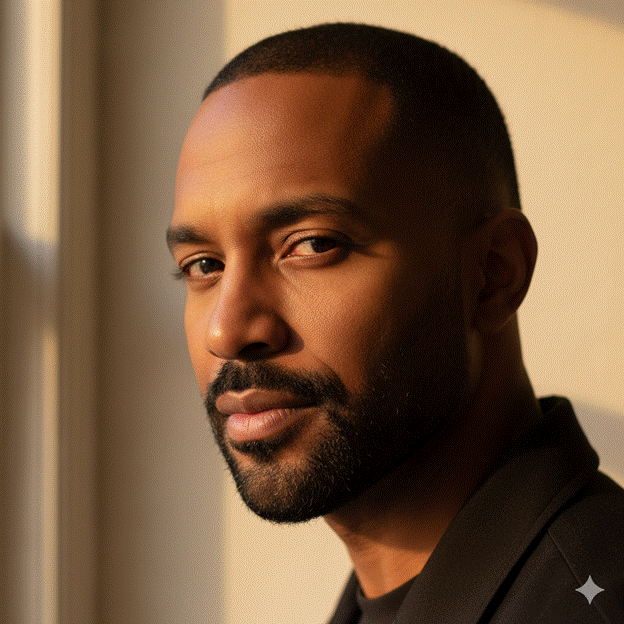
The five o’clock shadow sits at the very beginning of the short beard journey — a growth of less than one millimetre that appears by evening on a man who shaved that morning and reads as simultaneously clean and rugged. It is one of fashion’s most enduring grooming contradictions: a style that exists in the space between shaved and bearded and looks better than either extreme.
The five o’clock shadow suits square and angular face shapes with particular power, accentuating the jaw and cheekbone definition that these face shapes are built around. Worn with a well-tailored shirt or a clean crewneck, it communicates a relaxed authority — the kind that comes from knowing you look good without needing to announce it.
Grooming Tip: To achieve a consistent, maintained five o’clock shadow rather than simply unshaved growth, use a sensitive foil shaver without a guard for a single pass every morning. This keeps the growth even, prevents patchiness, and maintains the look’s essential quality: controlled informality.
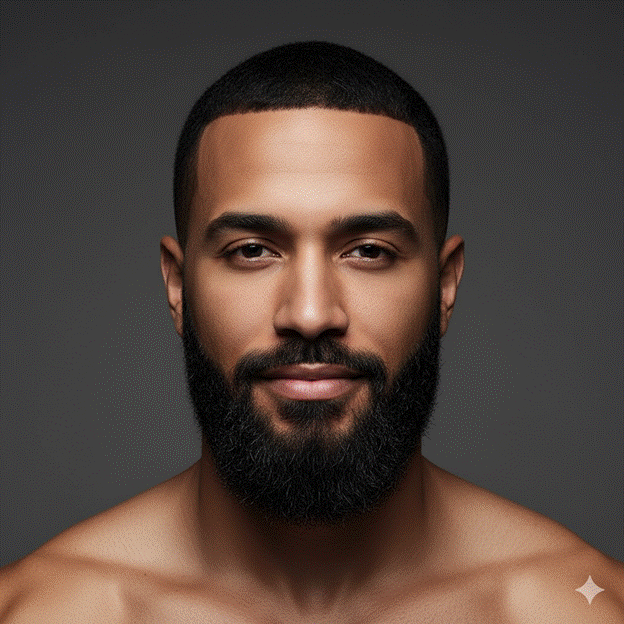
3. The Short Boxed Beard
The short boxed beard is the foundational short beard style — grown to a length of half an inch to one inch and shaped into clean, angular lines at the cheeks, jaw, and neckline. It is the beard equivalent of a well-tailored suit: structured, intentional, and communicating grooming discipline with every clean edge.
What separates the short boxed beard from other styles at this length is the geometry of its lines. The cheek line is set low and natural or slightly sculpted depending on face shape. The neckline is defined cleanly below the jaw. The overall shape is rectangular — adding definition and angularity to rounder face shapes with particular effectiveness.
Grooming Tip: Trim the overall length with a clipper guard every four to five days, then use a detail trimmer or a straight razor for the cheek and neck lines. The sharper and cleaner the edges, the more architectural and considered the boxed beard reads. Treat the edges as the most important element of the style — they are what transform grown hair into a designed beard.
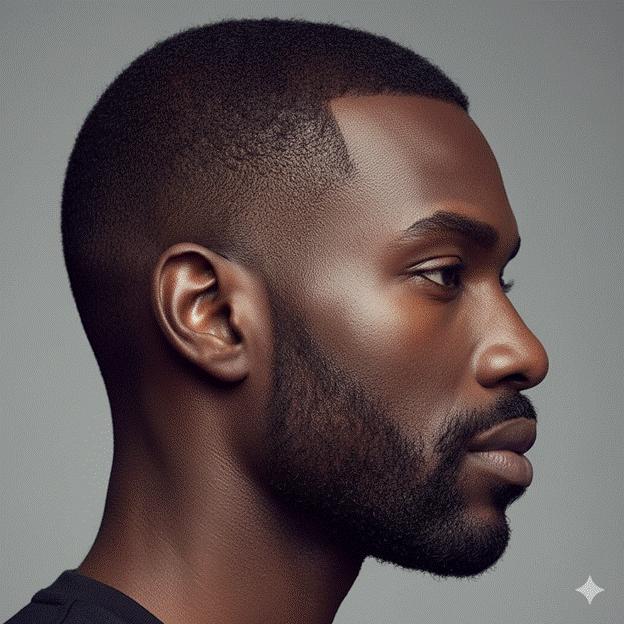
4. The Short Stubble Fade
The short stubble fade combines the clean discipline of a fade haircut with an equally graduated approach to beard growth, creating a seamlessly connected look where scalp transitions to stubble transitions to a slightly fuller jaw without any hard line of demarcation. The result is a head-and-face grooming combination that feels completely unified and considered.
This short beard style is particularly powerful for men who wear their hair in a high-and-tight, undercut, or close-cropped style, as the fade creates a visual continuity between the hairline and the beard that reads as both technically impressive and effortlessly natural.
Grooming Tip: Work with your barber to establish the fade connection point between the hair and beard at your temples. Maintaining this style requires a barber visit every two to three weeks for the hair fade, and daily personal trimming of the beard portion to keep the gradient clean and uninterrupted.
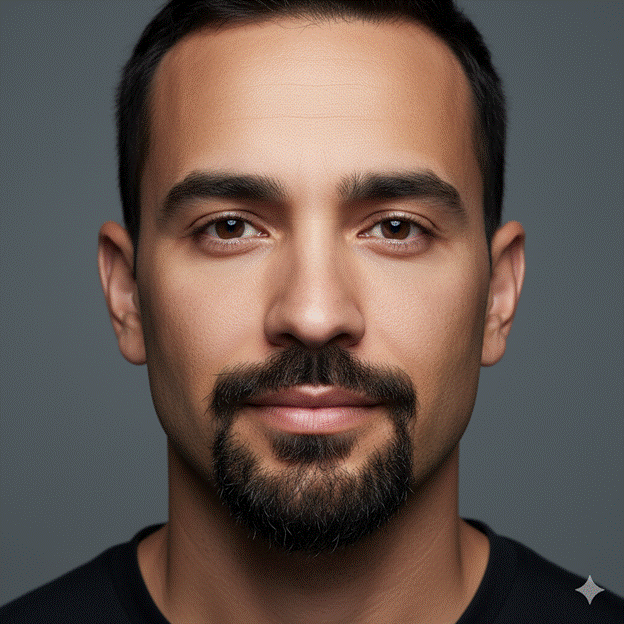
5. The Short Goatee
The short goatee concentrates hair at the chin and mouth area while the cheeks remain clean-shaved, creating a focal point that draws the eye to the lower face and adds definition to the chin and jaw. At short length — trimmed to half an inch or less — the goatee reads as deliberate and contemporary rather than rooted in any particular decade.
The modern short goatee in 2025 is worn with significantly tighter edges than its predecessors. Clean, sharp lines define its perimeter with razor precision, and the overall shape is compact and intentional. Paired with a well-maintained haircut, it reads as a complete grooming statement rather than a standalone feature.
Grooming Tip: Use a fine detail trimmer for the overall length and a straight razor to define the perimeter edges. The neatness of the edges is the entire visual argument of the short goatee — without crisp lines, it reads as incomplete growth rather than a deliberate style. Revisit the edges every three to four days.
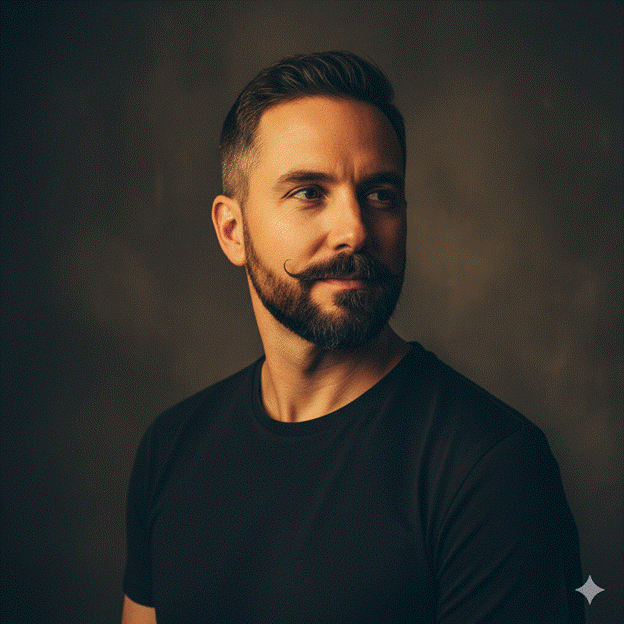
6. The Short Van Dyke
The Van Dyke separates the moustache and chin beard into two distinct, unconnected elements, creating one of the most graphic and characterful of all short beard styles. Named after the seventeenth-century Flemish painter whose portrait defined it, the contemporary short Van Dyke is worn with considerably more precision and considerably less wax than its historical antecedent.
The visual interest of the Van Dyke comes from its deliberate disconnection — the clean-shaved cheeks create negative space that gives the moustache and chin beard room to be seen clearly as individual designed elements. At short length, it reads as refined, creative, and quietly distinguished.
Grooming Tip: The gap between the moustache and the chin beard must be maintained precisely for the Van Dyke to read correctly. Use a straight razor to keep the cheeks completely clean and the connecting area between the two elements sharply separated. Even a few days of growth in the connecting zone erodes the defining characteristic of the style.

7. The Short Patchy Beard Worn with Confidence
Not every man grows a uniform, dense beard — and the short patchy beard, worn deliberately and confidently, has become one of the most honest and genuinely stylish approaches to facial hair available. The key philosophical shift is from concealment to celebration: the patchy beard is not a problem to be solved but a natural characteristic to be worn with full intention.
At short length, the patchy beard’s unevenness becomes a texture — a quality that makes the face more interesting and authentic rather than less. Men who attempt to grow through the patchy phase in the hope of achieving density further down the line often wait unnecessarily long; the short, confident patchy beard is a complete, compelling style in its own right.
Grooming Tip: Keep all areas of growth at exactly the same length regardless of density — a uniform trim makes patchy growth look deliberate and even. Define the neckline and cheek lines clearly so the overall beard has a shaped perimeter even where the density is uneven. Beard oil applied daily adds sheen and visual fullness even in thinner areas.
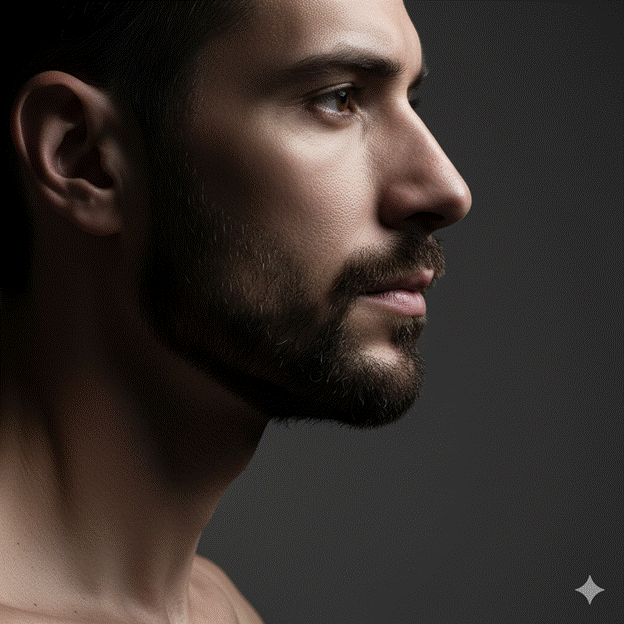
8. The Short Chinstrap
The short chinstrap is one of the most graphic and architecturally deliberate of all short beard styles — a narrow line of precisely maintained hair that runs along the jaw from one sideburn point to the other, tracing the lower face’s entire profile. At short length, the chinstrap reads as a bold, almost illustrative mark that functions more like a design element than a natural beard.
This style suits strong, angular jaw lines most powerfully and is particularly striking on men with defined cheekbones and a clean, tapered haircut above it. The chinstrap at short length communicates that the wearer has a very clear, considered personal aesthetic — it is a style that does not happen by accident.
Grooming Tip: The width of the strap determines the entire character of the look. A very narrow strap of under a quarter inch reads more graphic and edgy; a slightly wider strap of around half an inch reads more balanced and architectural. Choose your width deliberately and use a straight razor to maintain absolute consistency on both sides. Symmetry is everything with this style.

9. The Short Corporate Beard
The corporate beard occupies a unique position in short beard styles — it is the style most explicitly designed for professional environments, offering the warmth and personality of a beard within the visual discipline that formal contexts require. Grown to a length of three-quarters of an inch to one inch, trimmed uniformly, and maintained with precise edges, it reads as polished and deliberate without demanding a second glance.
The corporate beard suits men in office environments, client-facing roles, and formal social settings where a full or more expressive beard might feel at odds with the dress code. It communicates that the wearer values his appearance, maintains his grooming with care, and considers the impression he makes — qualities that read well in any professional context.
Grooming Tip: The corporate beard should be trimmed to exactly the same length throughout using a clipper guard — avoid any length variation that might read as uneven growth. Keep the neckline and cheek lines particularly sharp, as these are the elements that signal professional intention most clearly to a casual observer.
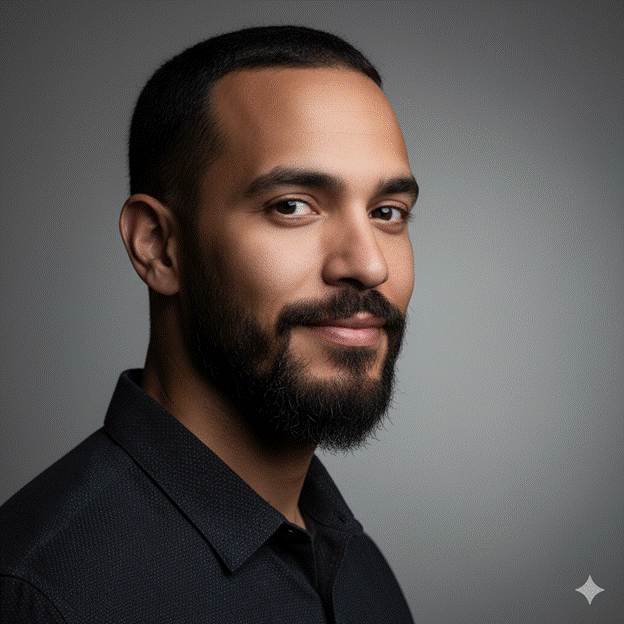
10. The Short Extended Goatee
The extended goatee — sometimes called the tailback or the landing strip — expands the traditional goatee by extending the chin beard backward along the jaw toward the ears without connecting to a full cheek beard. At short length, it creates a clean, interesting silhouette that adds more jaw definition than a standard goatee while retaining the clean-shaved cheeks that give the style its distinctive open quality.
The extended goatee works particularly well for men who want more structure and presence than a standard goatee provides but prefer the aesthetic clarity of the clean cheek. It elongates the face slightly and adds chin definition in a way that suits oval, round, and heart-shaped faces with equal flattery.
Grooming Tip: The line where the extended chin beard terminates along the jaw must be kept meticulously consistent on both sides — any asymmetry reads immediately against the otherwise precise character of the style. Use a fine detail trimmer for the overall shape and a straight razor with a fresh blade for the edge definition.
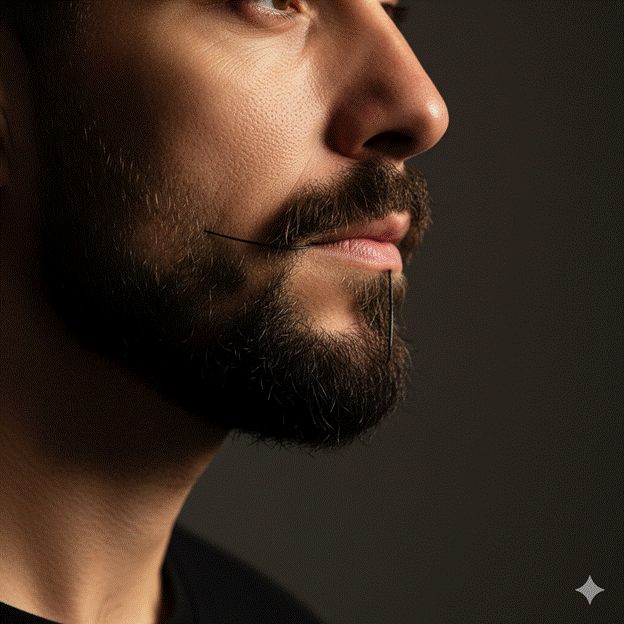
11. The Short Anchor Beard
The short anchor beard is a masterclass in precision — and one of the most distinctive short beard styles in this entire list. A pointed chin beard combined with a moustache connected by a thin line running along the lower jaw creates a shape that, from below, mirrors the silhouette of a nautical anchor. At short length, each element of the anchor is crisp, contained, and deeply intentional.
The anchor works as both a grooming style and an expression of character — it communicates a creative, detail-oriented personality with a clear aesthetic sensibility. It suits oval and oblong face shapes most beautifully and pairs well with creative, editorial, and fashion-forward clothing aesthetics.
Grooming Tip: The connecting line between the moustache and chin beard must be kept exceptionally thin — no wider than three to four millimetres — to maintain the anchor’s distinctive graphic quality. Any thickening of this line begins to transform the anchor into a full goatee. Use a detail razor for this area every two to three days.

12. The Short Beardstache
The beardstache is the short beard style that tips the balance of emphasis decisively in favour of the moustache — a full, prominent moustache grown to a noticeable length combined with a shorter, more closely maintained beard below that functions as a supporting element rather than a co-equal feature.
In 2025, the beardstache is experiencing its most refined, contemporary iteration. The moustache is grown with genuine commitment — thick, well-groomed, and shaped either as a natural full moustache or a more styled chevron — while the beard below is kept at a clean, even stubble or short crop length that grounds the moustache without competing for attention.
Grooming Tip: The beard portion of the beardstache should be kept at least two millimetre lengths shorter than the moustache to maintain the intentional length differential that defines the style. Use a light moustache wax to shape and hold the upper lip hair, and a beard trimmer with a fixed guard for the lower portion to maintain consistent contrast between the two elements.
Conclusion
Short beard styles represent one of men’s most accessible, most versatile, and most enduringly stylish grooming choices. Unlike longer beards, which demand patience and weeks of commitment, short beard styles deliver their aesthetic impact immediately — requiring only the right trimmer, the right technique, and the confidence to wear the result with full intention.
Whether you choose the understated sophistication of designer stubble, the architectural precision of a short boxed beard, or the creative distinction of a Van Dyke or anchor beard, the most powerful element of any short beard style is the consistency with which it is maintained. Grooming is not the act of a single day — it is the discipline of every day, expressed in the quiet, considered details that others notice without always being able to name.
FAQs
Q1: What is the most popular short beard style for men?
Designer stubble and the short boxed beard remain the most consistently popular short beard styles across all age groups and style aesthetics. Designer stubble offers the lowest maintenance commitment with the highest versatility, while the short boxed beard provides more defined structure and suits men who prefer a groomed, architectural finish. Both are perennially relevant and work across virtually every face shape.
Q2: Which short beard style suits a round face?
For a round face, short beard styles that add length and definition to the chin and jaw work best. The short goatee, extended goatee, anchor beard, and Van Dyke all concentrate visual interest at the chin, creating the illusion of a longer, more angular face shape. Avoid styles that add width at the cheeks, such as a wide short boxed beard, as these can accentuate the roundness of the face.
Q3: How do I maintain a short beard at home?
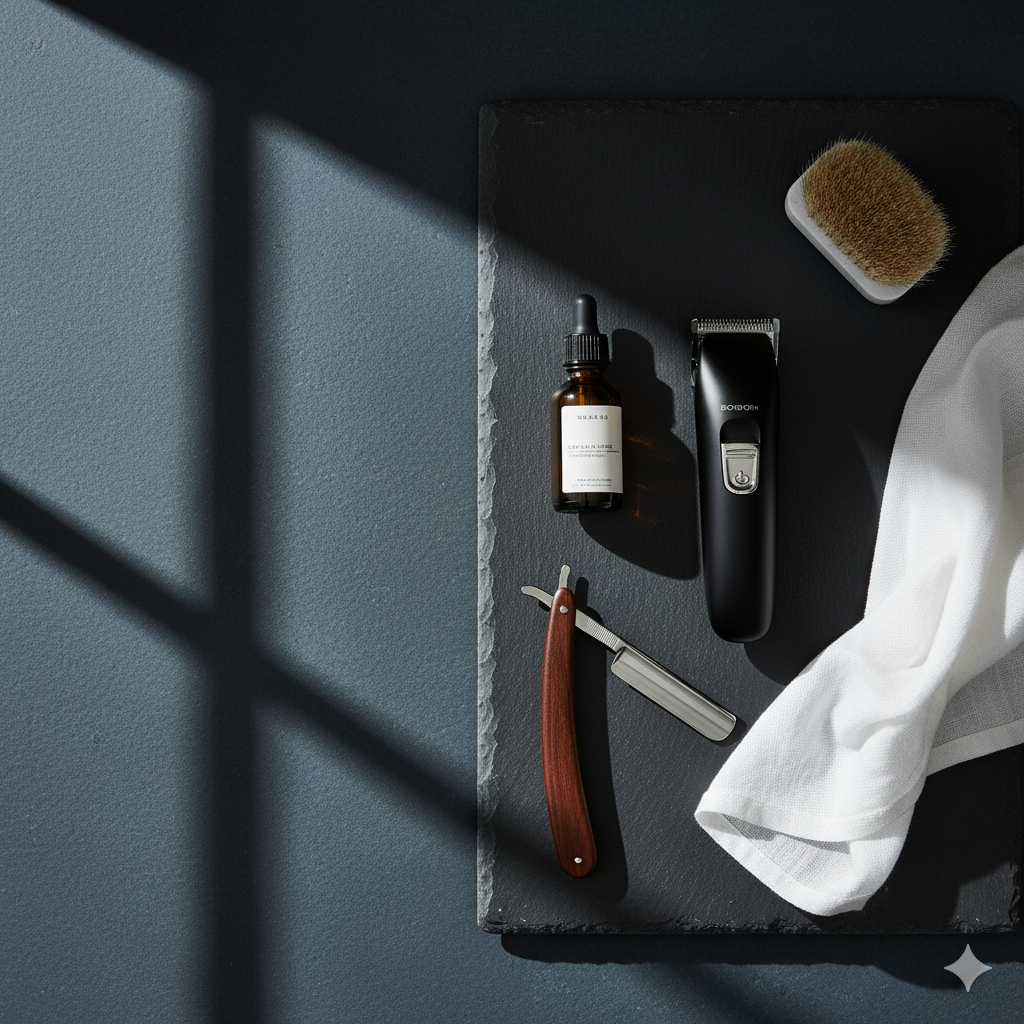
Maintaining a short beard at home requires three basic tools: a quality beard trimmer with multiple guard lengths, a detail trimmer or straight razor for edge definition, and a daily beard oil or balm. Trim the overall length every three to five days to keep it consistent, redefine the cheek and necklines weekly, and apply a few drops of beard oil every morning to keep the skin beneath moisturised and the hair conditioned and visually healthy.
Q4: What products do I need for short beard styles?
For most short beard styles, the essential products are a precision beard trimmer, a daily beard oil applied in the morning, and an occasional beard balm for styles that benefit from a slightly more defined hold. Straight razors or detail trimmers are invaluable for keeping cheek and neckline edges sharp. For the beardstache specifically, a light moustache wax is an additional essential product for shaping and holding the upper lip hair.
Q5: Are short beard styles appropriate for professional settings?
Short beard styles are entirely appropriate for professional settings when maintained with evident care and precision. The corporate beard, designer stubble, and the short boxed beard are all particularly well suited to formal environments. The key in any professional context is neatness — sharp necklines, defined cheek lines, and consistent length all communicate grooming discipline and the kind of personal attention to detail that translates well into professional credibility.