Introduction
The outfit gets you dressed. The pose makes the photograph.
Understanding how to present yourself in front of a camera — how to hold the body, engage with the environment, and communicate through posture and movement what the outfit alone cannot express — is the difference between a photograph that simply records an outfit and one that genuinely captures a moment of style, personality, and authentic beauty. The best fashion photographs are never accidental. They are the result of knowing not just what to wear but how to inhabit what you are wearing with complete, natural confidence.
Posen für Bilder — poses for photographs — are the styling decisions that happen after the outfit is assembled. They are the final, essential layer of the fashion image: the angle of the head, the direction of the gaze, the position of the hands, the relationship between the body and the background, and the quality of genuine presence that no amount of post-production can manufacture if it was not there in the original moment.
These twelve outfit and posing ideas cover every photographic occasion — from quiet lifestyle content to dynamic street style captures, from minimalist editorial compositions to warmly personal everyday images. Each one is built around a specific outfit approach and the posing philosophy that makes it most beautifully, most completely visible in a photograph.
1. The Walking Shot with a Flowing Outfit
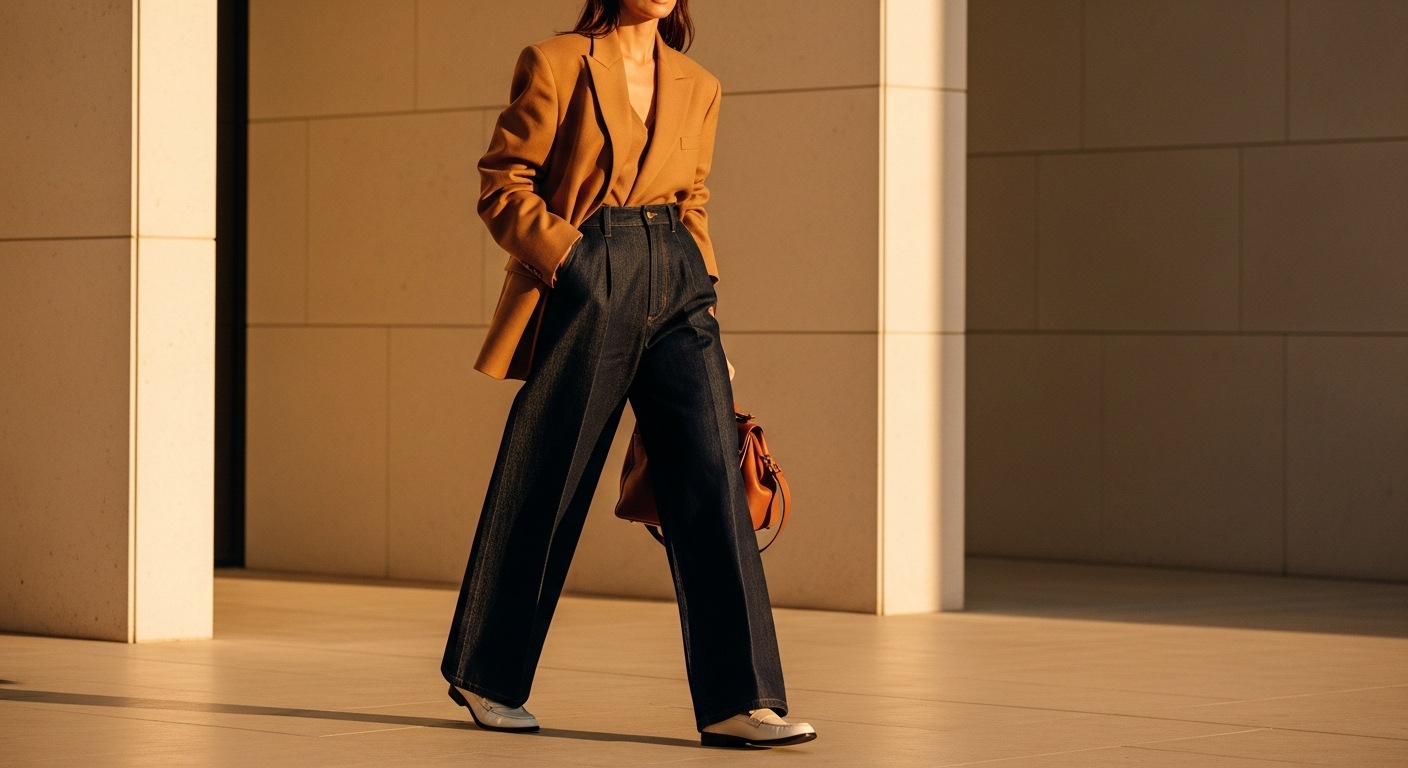
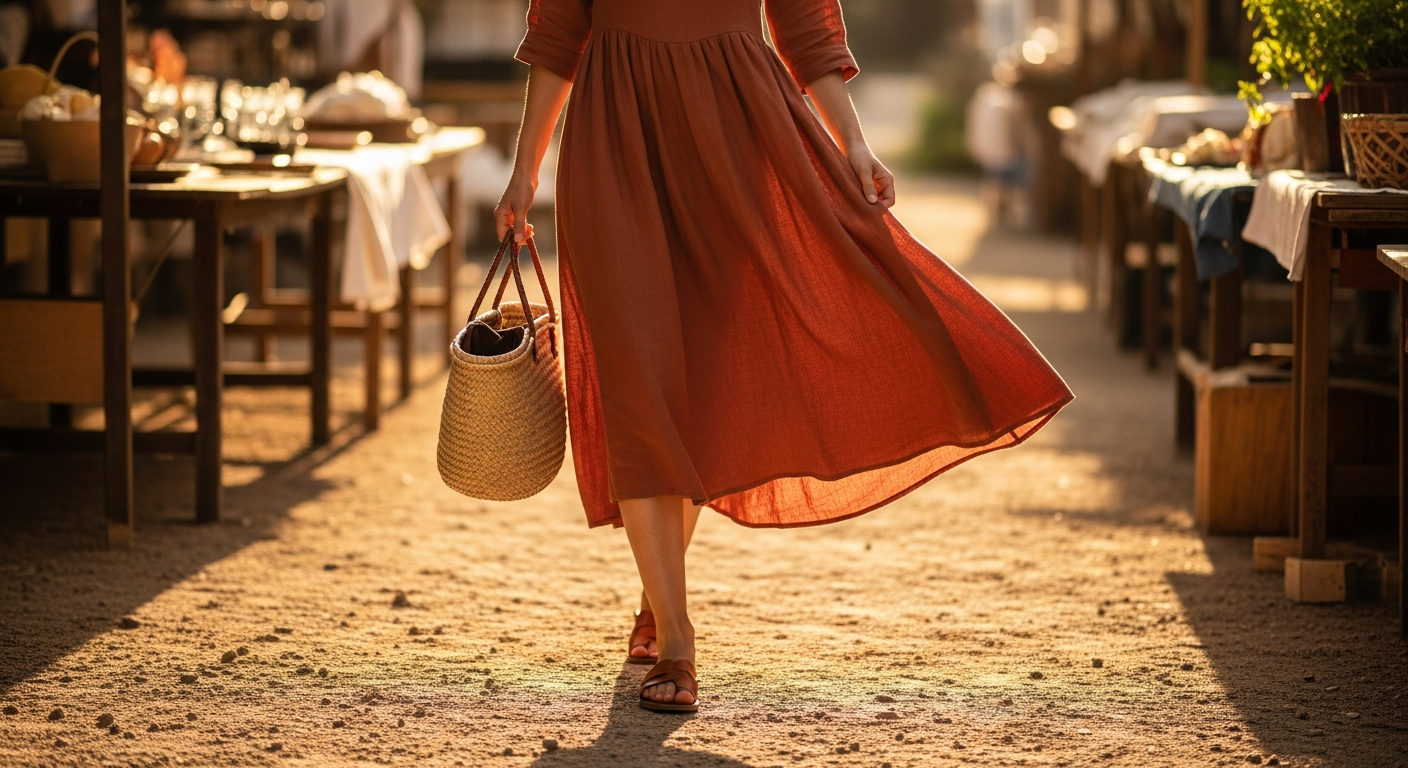
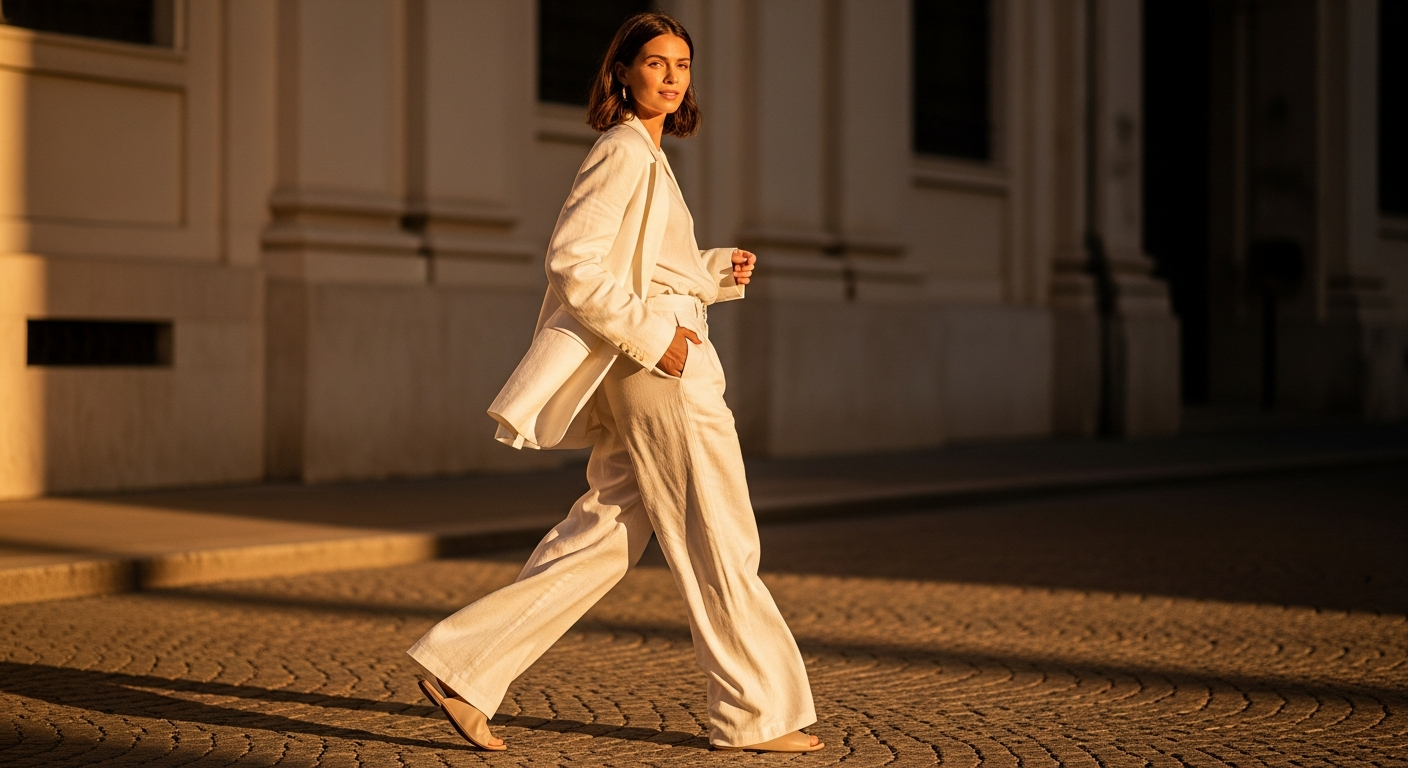
The walking photograph is the most movement-rich and most dynamically beautiful of all fashion posing approaches — and it requires an outfit that has the capacity for genuine motion. A flowing midi dress, wide-leg trousers, a long linen coat, or any garment with natural movement becomes most beautiful when photographed in the act of walking toward or past the camera.
Styling Tip: Choose an outfit in a fabric with natural, organic movement — linen, satin, chiffon, or a quality jersey — in a warm neutral or a rich, considered tone. For the walking shot, the key posing principle is to look slightly past or away from the camera rather than directly into the lens — this creates a sense of genuine movement and authentic moment rather than a posed, static quality. Ask your photographer to shoot at a slightly faster shutter speed to freeze the fabric movement at its most beautiful point of flow. Warm, outdoor light — golden hour or soft morning light — creates the most cinematic and most genuinely beautiful walking fashion photographs.
Walking shots look most powerful when the environment participates in the image — a clean architectural street, a path through a park, or the edge of a beautiful building all provide context that makes the outfit’s movement most compelling and most visually complete.
2. The Looking Away Candid Pose with a Casual Outfit
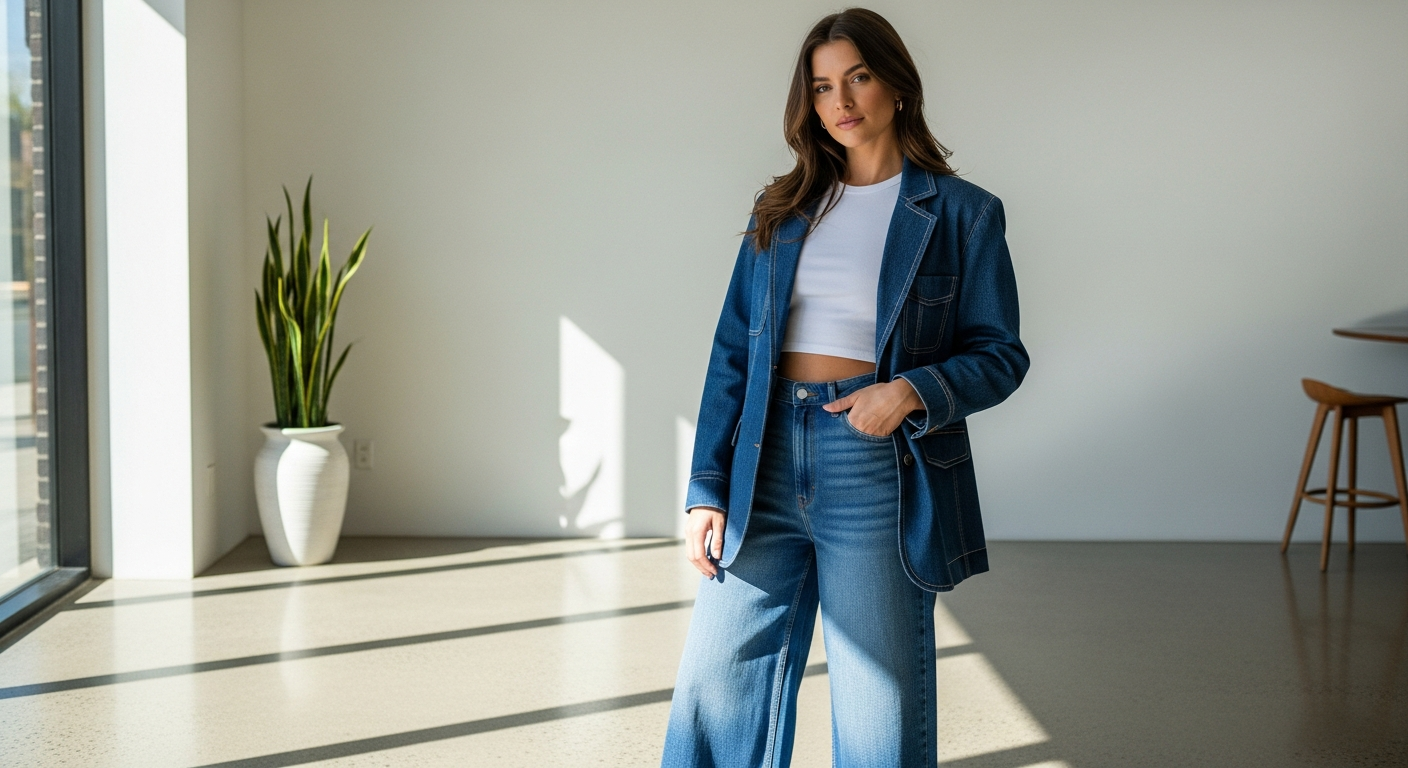
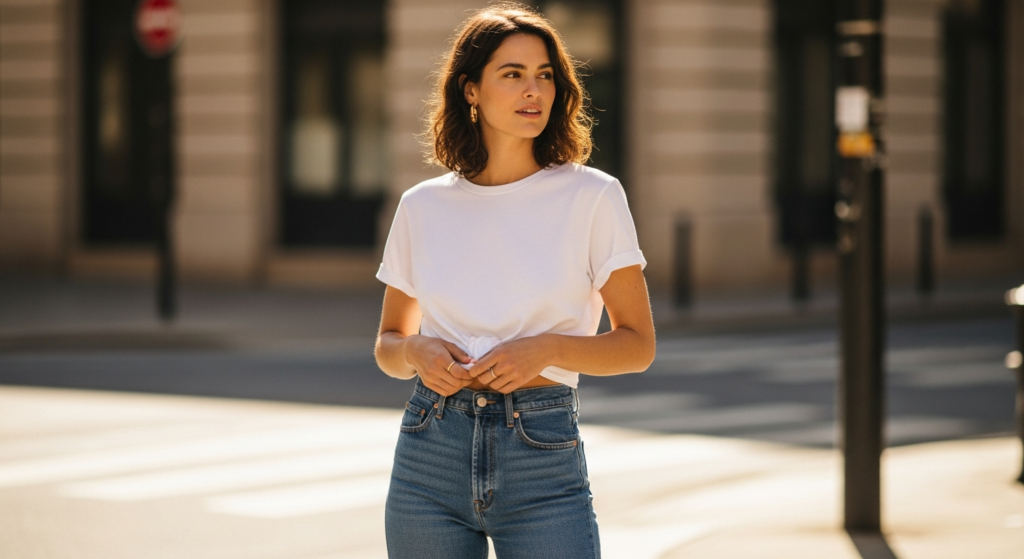
The looking-away candid pose — where the subject gazes into the middle distance rather than at the camera — is the posing approach that creates the most authentic, most editorial, and most widely admired fashion photograph quality. Paired with a carefully chosen casual outfit, it creates images that feel genuinely real rather than staged.
Styling Tip: Choose a casual outfit with considered simplicity — a quality white tee with straight-leg jeans, a linen co-ord in a warm neutral, or a relaxed blazer over minimal basics. The outfit should feel effortlessly assembled rather than elaborate — the looking-away candid pose is most beautiful with clothes that have the same quality of considered ease. For the pose, direct your gaze to a specific point approximately two metres beyond the camera’s plane — a genuine focal point rather than an unfocused drift. Soften the jaw, relax the shoulders, and allow the hands to rest naturally — one in a pocket, one at the side, or both loosely held in front of the body.
This photograph works most beautifully in warm, diffused natural light — open shade outdoors or soft window light indoors — where the face and the outfit are both evenly illuminated without harsh directional shadows.
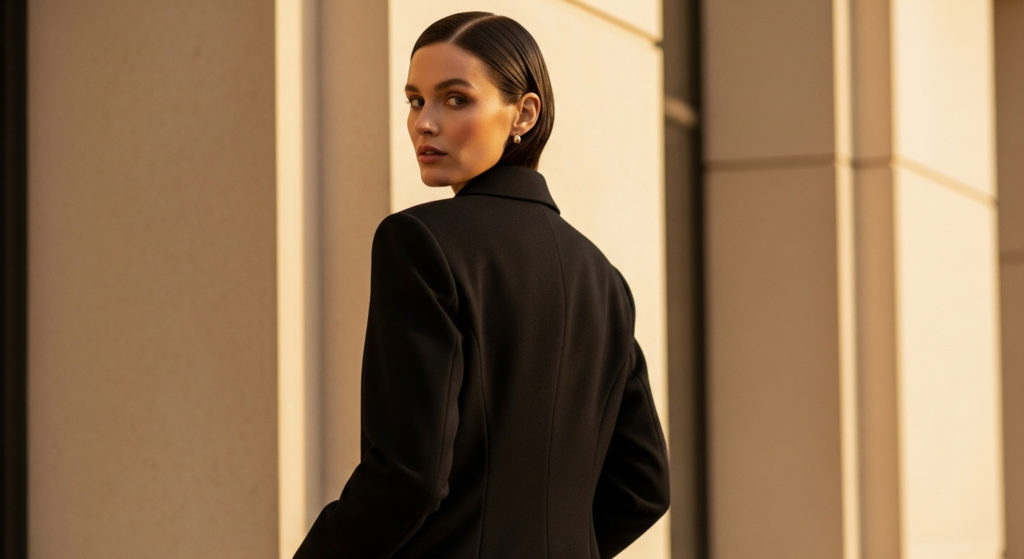
3. The Over-the-Shoulder Look for Dramatic Outfits
The over-the-shoulder glance — where the body faces away from the camera and the face turns back to look directly or slightly past the lens — is the most dramatic and the most consistently beautiful posing approach for outfits with significant back detail, strong silhouette, or a design that reads most powerfully from behind.
Styling Tip: This pose is most powerful with outfits that have genuine design interest at the back — a beautifully structured open-back dress, a dramatic coat with a strong shoulder line, a richly textured knit seen from behind, or any garment with a detail that the front-facing pose conceals. Choose outfits in bold, deep tones — rich burgundy, deep forest green, classic black, or warm camel — that read most clearly and most dramatically from behind. For the pose, position the body at approximately forty-five degrees away from the camera, then turn the face back fully or three-quarters toward the lens. Allow the hair to fall naturally — the interaction of hair, neck, and face at the over-the-shoulder angle is what creates this pose’s characteristic, timeless beauty.
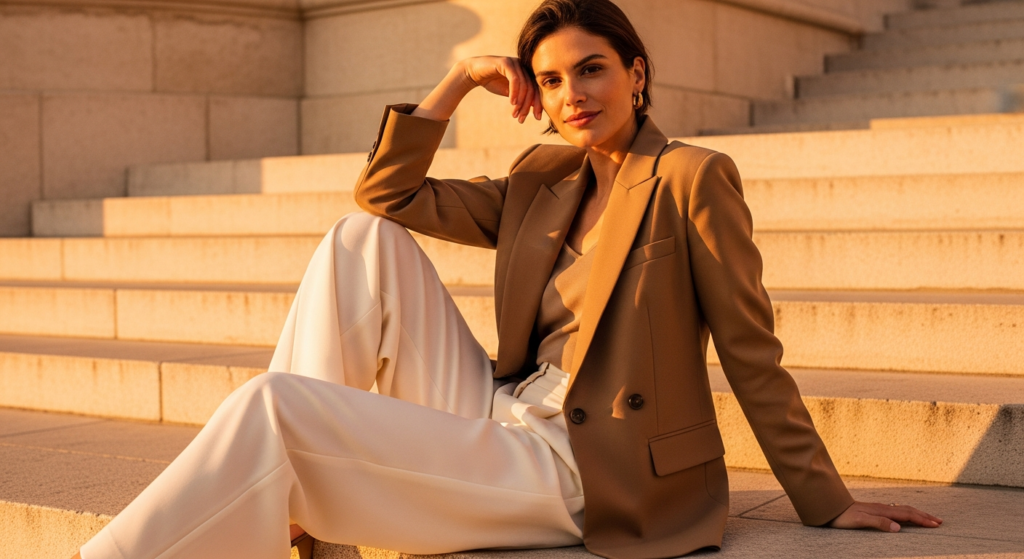
4. The Sitting on Steps Architectural Pose
The sitting-on-steps pose — where the subject uses the steps or architectural base of a building as a seating surface and the architectural geometry of the location as a compositional frame — creates one of the most relaxed, most personally engaging, and most visually interesting of all fashion photograph compositions. It works beautifully for casual, smart-casual, and editorial outfit categories alike.
Styling Tip: Choose an outfit with genuine visual interest in its upper body detail — a beautiful top, an interesting neckline, or a quality outerwear layer — since the sitting pose naturally draws attention upward from the lower body. A blazer and tailored trousers, a silk blouse and wide-leg jeans, or a quality knit and midi skirt all work beautifully in a sitting architectural pose. For the pose, sit on the steps with a slight angle — never completely face-on to the camera — with the body at thirty to forty-five degrees for the most flattering and most naturally relaxed result. Rest one arm on a knee, allow the other to sit naturally at the side or rest lightly on the lower step. Look directly at the camera or slightly away depending on the mood desired.
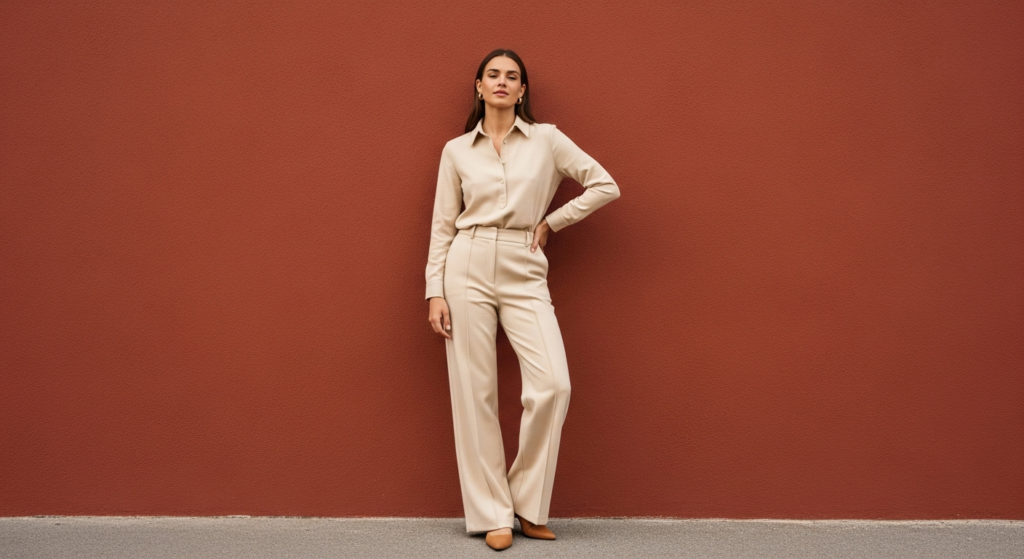
5. The Against the Wall Minimal Pose
Leaning or standing against a clean, beautifully coloured or textured wall is the most minimal and the most architecturally elegant of all fashion posing approaches — the simplicity of the background allows the outfit and the person wearing it to be the complete visual focus of the photograph without environmental distraction.
Styling Tip: The wall colour and texture is as important a styling decision as the outfit itself for this pose. A warm greige, deep terracotta, clean white, or rich forest green wall all create beautiful backgrounds for different outfit palettes — choose a wall whose colour creates either a strong complementary contrast or a beautiful tonal harmony with the outfit. For the pose, stand with the back lightly against the wall — not pressing flat but gently touching — with one foot slightly in front of the other for a natural, non-rigid posture. Allow one hand to rest lightly on the hip and one to fall naturally at the side. The gaze can be directed toward the camera for a confident, direct quality or slightly away for a more editorial, reflective mood.
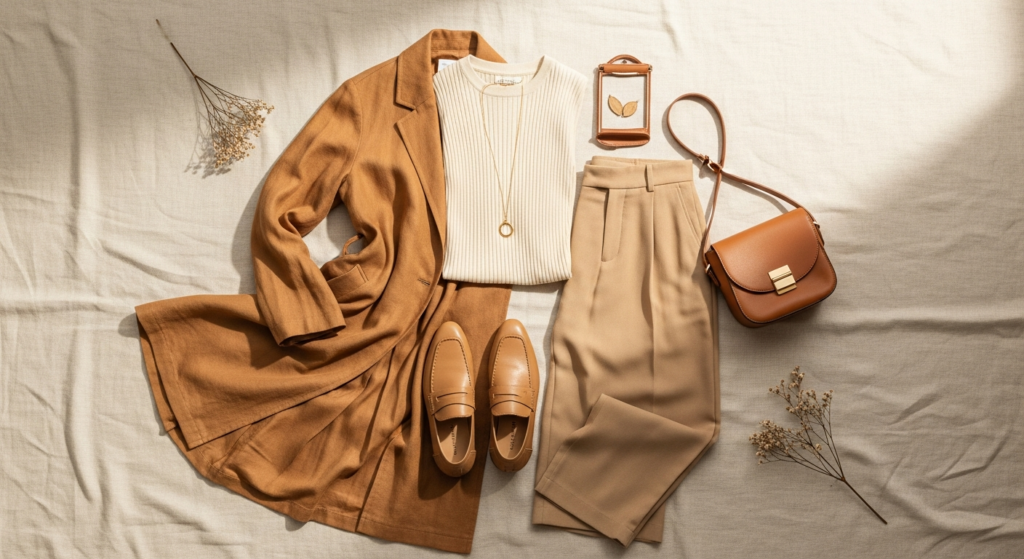
6. The Full-Length Flat Lay Fashion Pose
The flat lay fashion photograph — where the outfit is arranged on a clean, beautiful surface and photographed from directly above rather than worn on the body — is the most editorial and the most intentionally curated of all fashion image approaches. It communicates aesthetic intelligence, careful curation, and the same design sensibility that makes beautifully styled interiors most compelling.
Styling Tip: Choose a clean, warm surface for the flat lay — cream linen, a warm timber floor, pale marble, or a quality textured fabric background. Arrange the outfit’s key pieces — the main garment, accessories, footwear, and one or two styling objects — in a natural, non-rigid composition that suggests a real person might be about to put these pieces on rather than a clinically symmetrical display. Add small complementary objects — a single flower, a simple gold jewellery piece, a small ceramic vessel — that add warmth and context without overwhelming the clothing. Shoot from directly overhead with a 35mm lens in bright, diffused natural light for the cleanest and most editorial flat lay fashion result.
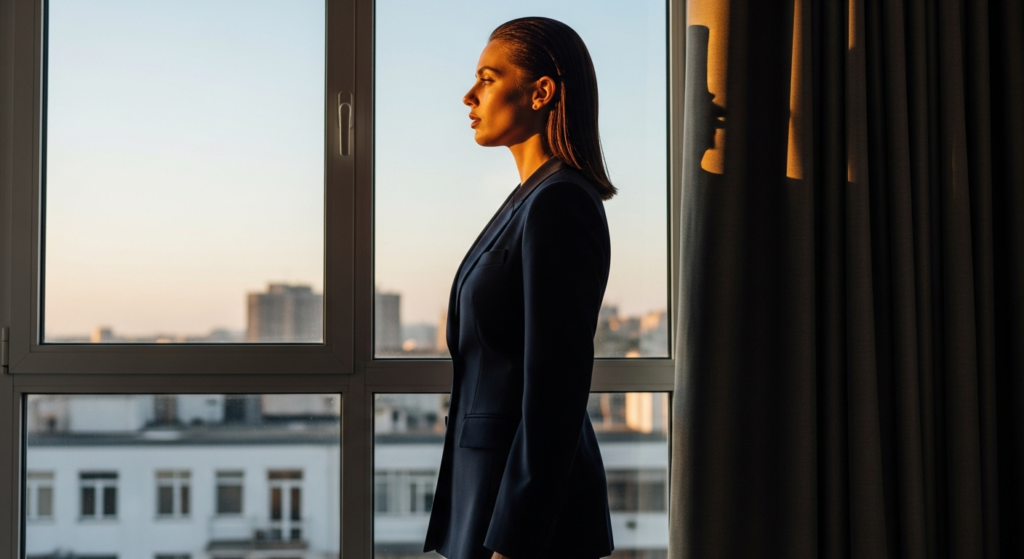
7. The Window Light Profile Pose for Evening Outfits
A profile pose near a window — where natural or warm artificial light falls from the side, illuminating one half of the face and the full silhouette of the outfit while creating beautiful shadow on the other — is the most dramatically beautiful and the most cinematically rich of all fashion posing approaches for evening and occasion outfits.
Styling Tip: Choose an evening outfit with a strong, clean silhouette for the profile pose — a beautifully cut suit, a structured midi dress, an elegant long gown, or any garment where the shape reads most beautifully from the side. A rich, deep tone — midnight navy, classic black, deep emerald, or warm champagne — creates the most dramatic and the most atmospheric window light profile image. For the pose, stand in genuine profile — ninety degrees from the camera — beside a window with warm natural light or a quality interior light source falling on the near side of the face and body. Keep the chin slightly lifted, the shoulders back, and the gaze forward or slightly downward for the most elegant and the most genuinely cinematic profile quality.
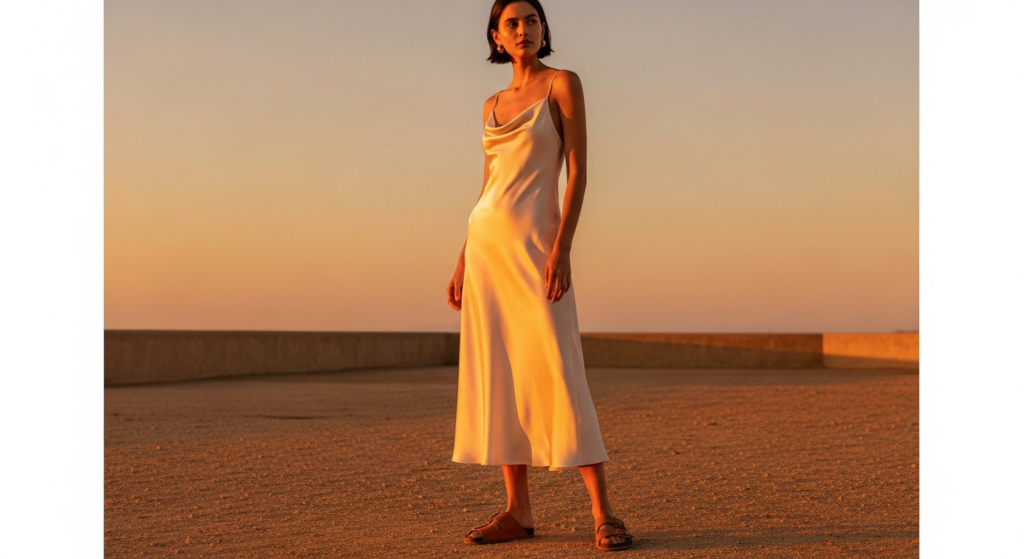
8. The Golden Hour Outdoor Full-Length Pose
The golden hour outdoor full-length pose — photographed in the warm, low-angled light of the hour before sunset — is the fashion photograph that requires the least additional styling and delivers the most reliably, consistently beautiful result. The light does the work; the outfit and the pose simply inhabit it with the required presence and confidence.
Styling Tip: Choose an outfit in a warm, light-catching fabric — satin, linen, a quality jersey — in a tone that responds beautifully to warm golden light. Warm cream, dusty rose, camel, warm terracotta, and soft ivory all become extraordinary in golden hour light. For the pose, face toward or at an angle to the light source for the most luminous, glowing effect — direct golden hour backlight creates a beautiful rim-lit quality but requires the face to be slightly turned toward a reflective surface or fill light for balanced facial illumination. Relax the body, allow one hand in a pocket or at the side, keep the chin slightly up and the gaze confident. Move during the shoot rather than holding a rigid pose — the most beautiful golden hour fashion photographs almost always happen between the formal poses.
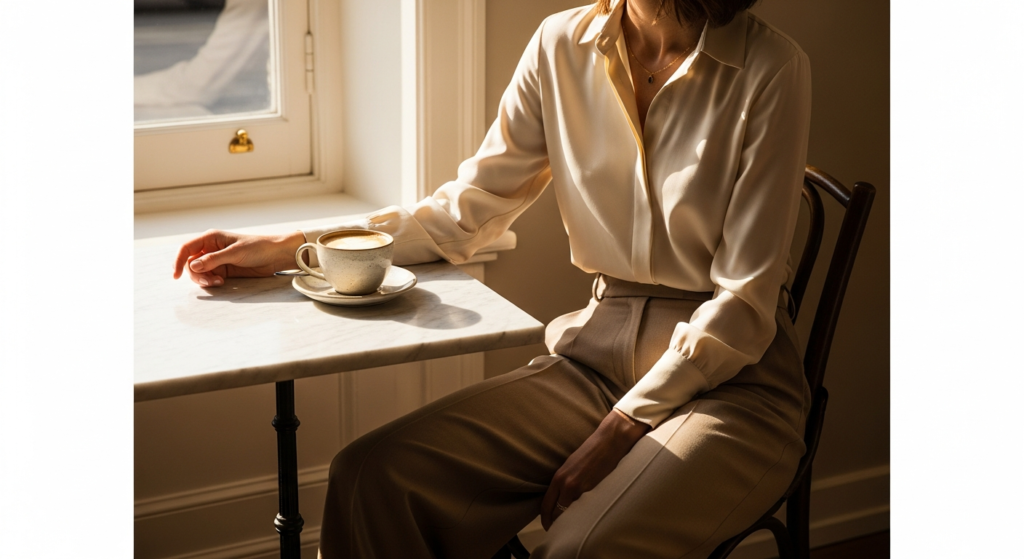
9. The Sitting at a Café Table Editorial Pose
The café table sitting pose — a woman seated at a small table in a warm, beautiful café environment with a quality coffee cup, good light, and a carefully chosen outfit — is the most warmly personal and the most widely relatable of all fashion photograph compositions. It captures the authentic, dailiness of a beautifully dressed life rather than the theatricality of a staged shoot.
Styling Tip: Choose an outfit that feels naturally appropriate to the café environment — a quality linen co-ord, a silk blouse and tailored trousers, a beautiful oversized blazer over a simple tee, or a casual but considered everyday look that communicates personal style rather than formal occasion dressing. For the pose, sit slightly angled away from the camera with the body at thirty to forty-five degrees, one arm resting on the table, the other hand holding the cup or resting in the lap. The gaze can be directed at the cup, out the window, or toward the camera with a natural, unstaged quality. Natural window light from the side creates the most beautiful café fashion photograph.
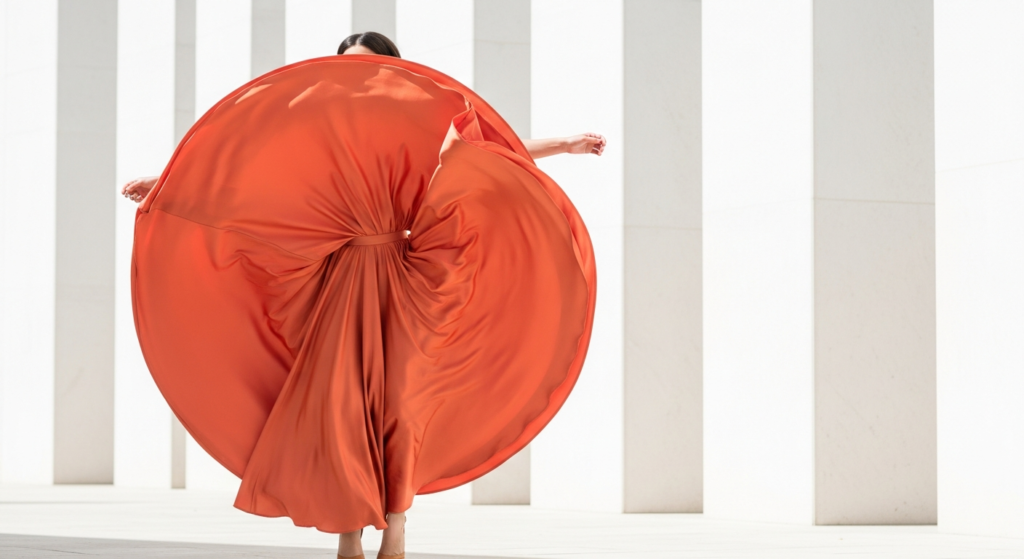
10. The Jumping or Movement Shot for Vibrant Looks
A jumping or movement-based pose — where the subject leaps, spins, or moves dynamically in front of the camera — creates the most energetically joyful and the most visually dynamic of all fashion photograph compositions. It requires an outfit and a location that both support and amplify the energy of the movement.
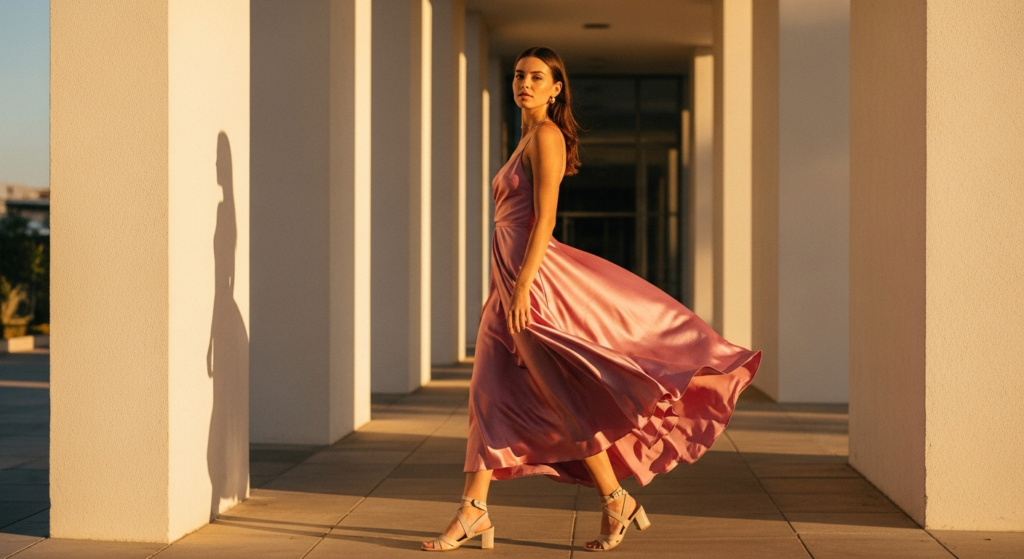
Styling Tip: Choose an outfit in a fabric with genuine movement potential — a full skirt that fans beautifully in flight, a wide-leg trouser that flares at the leg, or a flowing dress that creates dramatic arc shapes in motion. Bold, saturated colours in the outfit read most clearly and most beautifully in movement photographs where the background and environment provide contrast. For the pose, work with a photographer who can shoot at a high shutter speed — at minimum 1/500 second for the sharpest, most beautifully frozen movement. Choose a clean, uncluttered background — the outfit’s movement is the visual event and a busy background competes with rather than supports it.
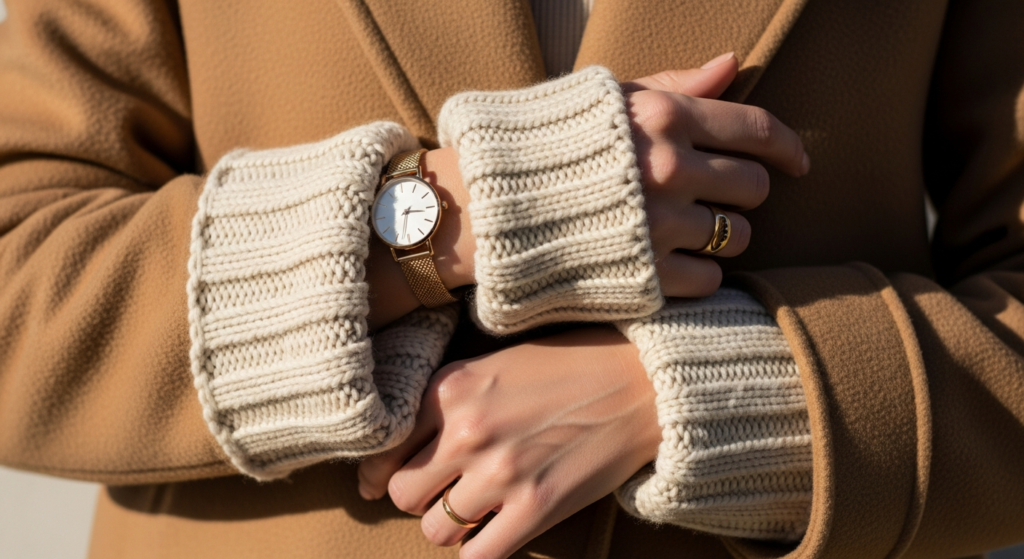
11. The Close-Up Detail Styling Shot
The close-up detail styling photograph — focused on a specific element of the outfit rather than the full look — is the most editorial and the most technically specific of all fashion posing approaches. It communicates a sophisticated understanding of what makes an outfit most beautiful, most interesting, or most worth seeing.
Styling Tip: Identify the most beautiful or most distinctive detail in the outfit — an interesting neckline, a beautiful cuff, a quality fabric texture, a stunning accessory combination, or a particularly elegant hand and ring composition — and build the photograph around that detail. Choose outfits with genuinely beautiful individual elements for this approach — delicate embroidery, quality leather, interesting buttons, a beautiful silk lining revealed at the hem. A 50mm macro lens in soft, directional natural light creates the most beautiful close-up fashion detail photographs — the directional light creates shadows within the fabric texture that reveal the quality and depth of the material most clearly and most compellingly.
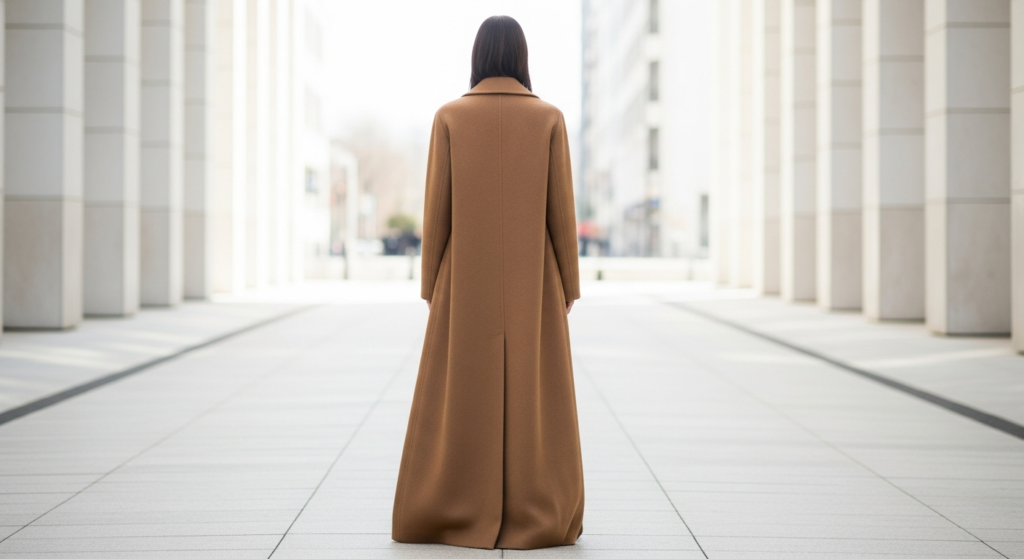
12. The Turned Away Full-Length for Minimal Outfits
The turned-away full-length pose — where the subject faces completely away from the camera in a clean, open environment — is the most mysteriously compelling and the most architecturally minimal of all fashion posing approaches. It makes the outfit itself the complete subject of the photograph, with no facial expression to direct or distract the viewer’s attention.
Styling Tip: This pose is most powerful with outfits that have a genuinely beautiful full-length silhouette — a dramatic long coat, a flowing maxi dress, a perfectly proportioned wide-leg trouser and structured top combination, or any look whose power comes from its overall shape rather than its individual details. Choose a clean, beautiful environment as the backdrop — a wide street, a path through a park, a corridor with architectural interest, or a minimal interior with generous negative space. The outfit tone should contrast or harmonise beautifully with the background — a warm camel coat against a clean white architectural wall, a flowing ivory dress against green foliage, or an all-black look against a warm brick urban setting.
Conclusion
The most beautiful fashion photographs are never simply about the clothes — they are about the complete visual story created when the right outfit meets the right pose, the right light, and the genuine presence of the person wearing it with real, unapologetic confidence.
The twelve outfit and posing ideas explored here cover the full range of photographic moments that a beautifully dressed life presents — from the dynamic energy of a walking shot and the joyful movement of a jump to the quiet intimacy of a window light profile and the considered minimalism of a turned-away full-length. Each one is both a styling approach and a posing philosophy — a complete framework for creating fashion photographs that communicate everything the outfit is meant to say and everything the person wearing it genuinely means.
Choose the poses and the outfits that feel most authentically like your own visual voice. Practice them in real light, with genuine presence, and with the understanding that the most powerful fashion photograph you will ever take is always the one where the outfit and the person wearing it are most completely, most honestly, most beautifully themselves.
FAQs
Q1: What are the best poses for fashion outfit photographs in 2025? The most effective fashion posing approaches for outfit photographs in 2025 include the walking shot with a flowing outfit, the looking-away candid pose, the over-the-shoulder dramatic look, the sitting on steps architectural pose, the against-the-wall minimal pose, and the golden hour outdoor full-length pose. These posing styles consistently produce the most editorial, most widely admired, and most naturally beautiful outfit photographs across every platform and every photographic context.
Q2: What outfits photograph best in full-length fashion poses? Full-length fashion poses are most beautiful with outfits that have a strong, clear silhouette — wide-leg trousers and a structured top, a flowing maxi dress, a beautifully proportioned coat and trouser combination, or a midi skirt and fitted turtleneck. Outfits in fabrics with natural movement — linen, satin, quality jersey — and in warm, considered colour palettes photograph most consistently beautifully across the full range of posing approaches. Avoid very busy or very small-scale prints for full-length fashion poses — they can appear confused in photographs rather than beautifully detailed.
Q3: What is the most flattering posing direction for outfit photographs? The most universally flattering posing direction for outfit photographs is a body angle of thirty to forty-five degrees from the camera — never fully face-on and never completely in profile. This slight angle elongates the body naturally, creates more visual depth in the photograph, and prevents the static, flat quality of a direct face-on pose. Combined with one foot placed slightly in front of the other and a relaxed, natural distribution of weight, the thirty to forty-five degree angle creates the most flattering and the most naturally elegant body line in almost every outfit and every posing context.
Q4: What lighting works best for fashion outfit photography? The most universally flattering and most beautiful lighting for fashion outfit photography is soft, diffused natural light — either open shade outdoors, soft window light indoors, or the warm, low-angled light of golden hour. Golden hour light is the most transformative and the most consistently beautiful natural light for fashion photography — it adds warmth, depth, and a cinematic quality to every image it illuminates. For indoor outfit photography, soft, directional natural window light from the side creates the most beautiful dimensional quality and the most flattering skin tone rendering.
Q5: How do I look more natural and less stiff in outfit photographs? The most effective strategies for appearing more natural and less stiff in outfit photographs include moving during the shoot rather than holding rigid poses — walking, talking, laughing, or adjusting the outfit creates genuinely candid-quality images that static posing rarely achieves. Directing the gaze slightly away from the camera rather than directly into the lens reduces the self-conscious, posed quality of the image immediately. Relaxing the hands — allowing them to rest naturally in pockets, at the sides, or holding a simple prop like a bag or coffee cup — prevents the tension that typically reads most clearly in fashion photographs. Finally, wearing an outfit that feels genuinely comfortable and genuinely like you makes the natural confidence that creates the most beautiful photographs far easier to access and maintain throughout the entire shoot.